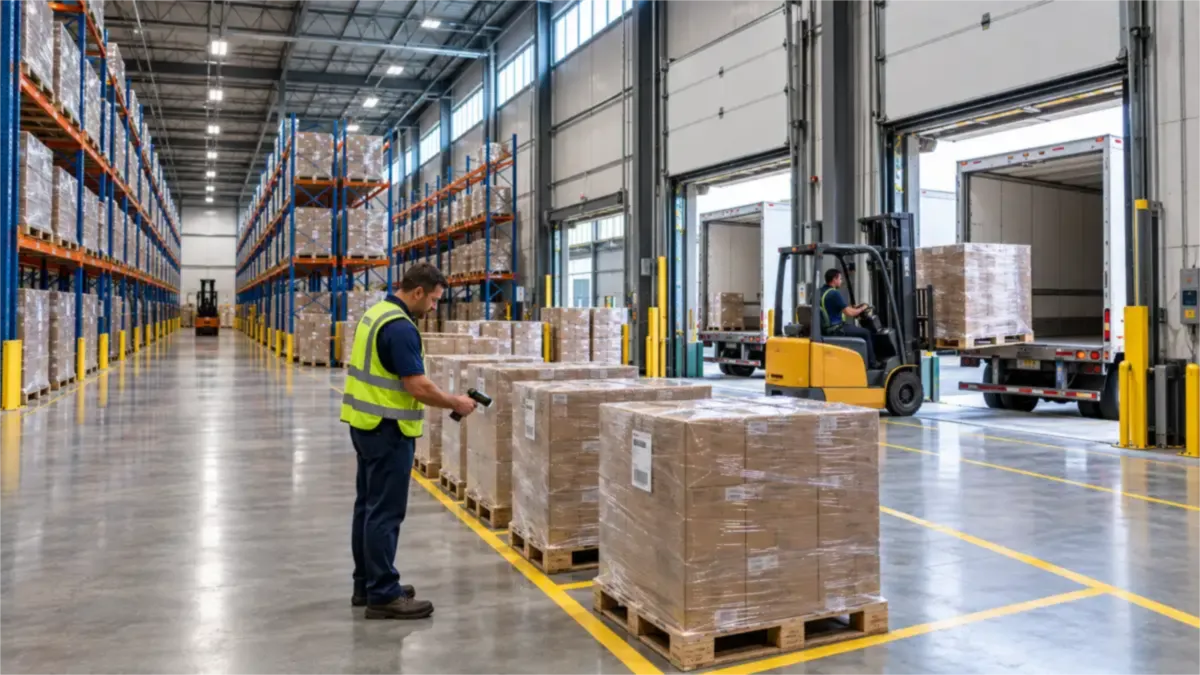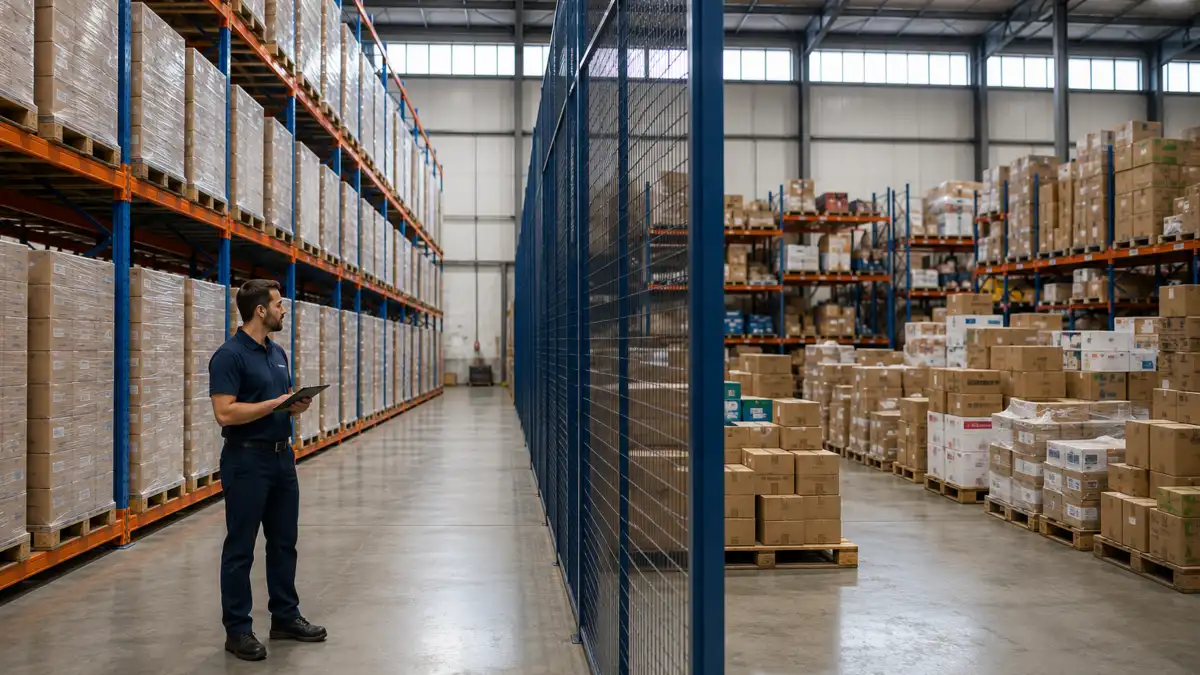


Peak season supply chain management is the coordinated preparation of inventory, warehouse, labour and transport capacity to handle a concentrated demand surge — Q4 for most retail and consumer categories, earlier for manufacturing and food. Enterprises that win peak start nine to twelve months out; those that treat it as a Q3 forecasting exercise buy spot capacity at the worst possible price.
Every year, the same crisis unfolds in boardrooms across manufacturing: a surge in consumer demand collides head-on with an unprepared supply chain. Freight capacity evaporates. Warehouse space disappears. Service levels crater—right when customer expectations are at their highest.
Peak season supply chain management is the discipline of designing, stress-testing, and executing logistics operations that scale dynamically with demand—without sacrificing cost efficiency, service quality, or supply chain visibility. For manufacturers generating $100M+ in annual revenue, failure to orchestrate peak season operations isn’t a minor inconvenience; it’s a material risk to margin, customer retention, and competitive positioning.
This guide breaks down the strategic frameworks, technology enablers, and operational imperatives that separate supply chains that absorb peak season pressure from those that buckle under it—and how partnering with the right 3PL transforms peak season from a liability into a competitive advantage.
What Is Peak Season Supply Chain Management?
Peak season supply chain management refers to the proactive planning, capacity reservation, and operational execution required to handle demand spikes—typically several times baseline volume—without degrading service levels, inflating costs, or exposing the business to inventory risk. For most B2B and B2C manufacturers, these surges occur between Q3 and Q4, though industry-specific peaks (back-to-school, construction season, agricultural cycles) can shift the timeline considerably.
What distinguishes a mature peak season strategy from a reactive scramble is Supply Chain Orchestration—the ability to coordinate procurement, warehousing, transportation, and fulfillment across a unified, data-driven operational layer. Rather than managing each function in a silo, orchestration enables end-to-end visibility and synchronized decision-making across the entire supply chain network.
Consider a mid-market consumer electronics manufacturer preparing for Q4: without orchestration, their procurement team orders components based on last year’s sales, their 3PL books warehouse space on historical averages, and their transportation team starts sourcing carriers in October—when spot rates have already climbed sharply. The result is a predictable and expensive mismatch between supply and demand.
With AI-driven demand sensing layered over integrated ERP and POS data, that same manufacturer can detect early demand signals in August, trigger Inventory Frontloading to pre-position stock across strategically located distribution centers, and lock in carrier commitments before Peak Season Surcharges (PSS) 2026 rates take effect. That’s the difference between a supply chain that reacts and one that leads.
Why Is Peak Season Supply Chain Strategy a Board-Level Priority?
The stakes rise every year with ecommerce volume. According to the U.S. Census Bureau, US ecommerce reached $340.2 billion in the second quarter of 2026 — 17.1% of all retail sales and 12.2% higher than the same quarter a year earlier. Peak lands on a higher baseline every cycle. And the National Retail Federation reports online returns at 19.3% of sales versus 15.8% overall, so reverse logistics has become peak-season-critical rather than a January cleanup exercise. A single missed peak now compounds through Q1.
For enterprise manufacturers, peak season is no longer an operational footnote—it’s a strategic inflection point that directly impacts EBITDA, customer lifetime value, and shareholder returns. The cost of getting it wrong is quantifiable and significant.
The business case for investment in peak season readiness spans four critical dimensions:
- Cost Control Through Predictive Capacity Matching: Reactive capacity procurement during peak season is brutally expensive. Spot trucking rates routinely run well above contract rates during Q4. Expedited air freight, emergency warehousing, and overtime labor can erode 3–8 percentage points of gross margin on high-volume SKUs. Predictive Capacity Matching—committing to carrier and warehouse capacity 90–120 days ahead—eliminates the premium associated with last-minute procurement and ensures continuity even when capacity is constrained across the network.
- Scalability Without Structural Overhead: Fixed-cost infrastructure is the enemy of seasonal agility. Manufacturers who own or lease large distribution networks year-round carry excess capacity for 8–9 months just to cover 3–4 peak months. An Elastic Logistics Infrastructure—built on variable-cost 3PL relationships, multi-modal flexibility, and on-demand labor pools—allows companies to scale throughput 2–4x during peak season without permanently inflating their cost base.
- Operational Efficiency at Scale: Peak season exposes every weak link in a supply chain: inefficient receiving processes, poor slotting logic, inadequate staffing ratios, and disconnected systems that create visibility gaps. Manufacturers with mature Total Value Optimization (TVO) frameworks—where every process is benchmarked and continuously improved—consistently achieve better throughput per labor hour during peak compared to those running on legacy processes.
- Service Level Protection During Maximum Exposure: Your most important customers are paying the most attention during peak season. A single order failure—whether a late delivery, a mispick, or a damaged shipment—during Q4 carries outsized reputational risk. Real-time Visibility (RTTVP) across every node in the supply chain allows operations teams to identify and resolve exceptions before they escalate into service failures.
What Defines a High-Performance 3PL Partner for Peak Season?
Not all 3PLs are equipped to handle the demands of enterprise peak season operations. The gap between a commodity warehousing vendor and a strategic logistics partner becomes brutally apparent when volume surges and complexity multiplies. Here’s what separates the two:
Technology & Systems Integration
A high-performance 3PL partner operates a Warehouse Management System (WMS) that integrates bidirectionally with your ERP (SAP, Oracle, NetSuite), eCommerce platforms (Shopify, Magento), and EDI networks. This isn’t a nice-to-have—it’s the foundation of operational accuracy at scale.
The most advanced 3PL partners are deploying Digital Twin Simulation technology, creating virtual replicas of warehouse operations to stress-test peak season scenarios before they happen. By modeling inbound volume surges, staffing constraints, and carrier capacity limitations, operations teams can identify bottlenecks and redesign workflows proactively—eliminating the guesswork that typically plagues peak season planning.
Look for 3PL partners who offer open API connectivity, real-time order tracking dashboards, and automated exception alerting. The ability to surface a delayed inbound shipment or a pick accuracy issue in real time—rather than discovering it in a weekly report—is what enables proactive operational management during the highest-stakes weeks of the year.
Nationwide Distribution Capabilities
Geographic reach directly impacts Last-Mile Delivery Optimization. A 3PL with strategically positioned distribution centers—ideally within two-day ground delivery of most of the U.S. population—allows manufacturers to reduce shipping zones, lower per-unit delivery costs, and meet consumer delivery expectations without relying on expensive air freight.
Multi-Modal Flexibility is equally critical. A mature 3PL maintains relationships with asset-based carriers, LTL networks, parcel carriers, and drayage operators—and can shift volume between modes dynamically as capacity constraints and cost considerations evolve throughout the peak season window. This flexibility protects your service levels when any single mode comes under pressure.
Inventory and Warehouse Management
Inventory management during peak season requires precision at speed. High-performance 3PLs deploy cycle counting protocols, velocity-based slotting, and wave pick optimization to ensure that your fastest-moving SKUs are positioned for maximum throughput efficiency—reducing travel time in the warehouse and increasing picks per labor hour.
Inventory Frontloading—pre-positioning stock against demand forecasts before the peak window opens—is another hallmark of mature 3PL operations. By working with AI-Driven Demand Sensing models, the best 3PLs can advise on optimal SKU positioning across the distribution network weeks before the surge begins, reducing both stockout risk and emergency replenishment costs.
Data Visibility and Analytics
Real-time Visibility (RTTVP) is the connective tissue of a peak-ready supply chain. Your 3PL partner should provide a unified visibility platform that surfaces inventory levels, order status, inbound freight ETAs, and outbound carrier performance across all nodes—accessible to your operations, procurement, and customer service teams simultaneously.
Forward-thinking 3PLs are also building ESG Traceability & Carbon Reporting capabilities into their visibility platforms. As enterprise customers increasingly require Scope 3 emissions data and sustainability reporting, a 3PL partner who can provide carrier-level carbon data and modal efficiency metrics gives your procurement and ESG teams a significant advantage in meeting corporate sustainability commitments.
How to Choose the Right 3PL Partner: A Decision Framework for Enterprise Manufacturers
Selecting a 3PL partner is one of the most consequential decisions an operations leader makes. The wrong choice—optimized for cost rather than capability—can set your peak season strategy back by years. Use this framework to evaluate candidates rigorously:
- Define Your Peak Season Profile First: Before issuing an RFP, document your peak-to-baseline volume ratio, SKU complexity, geographic distribution requirements, required service levels, and integration landscape. A 3PL that excels at DTC apparel fulfillment may be entirely ill-equipped for B2B industrial distribution. Know your operational profile in detail before evaluating partners.
- Evaluate Scalability Evidence, Not Just Claims: Ask for case studies with quantified outcomes. How much did volume scale? What was the service level performance? What was the cost-per-unit trajectory during the peak window? Providers who cannot produce data-backed evidence of peak season performance should not be shortlisted, regardless of their marketing.
- Conduct a Technology Audit: Request a live demonstration of WMS capabilities, integration architecture, and visibility dashboards. Specifically validate EDI and API connectivity with your existing systems. For eCommerce manufacturers, confirm native integration with your storefront platform. System incompatibilities discovered post-contract create delays and costs that disproportionately impact peak season readiness.
- Assess Labor and Capacity Commitments: Understand how your 3PL sources and retains peak season labor, what their staffing ramp timeline looks like, and whether they have contractual capacity commitments with carriers. Providers who depend entirely on temp agency labor with no guaranteed commitments are high-risk partners for enterprise-scale peak operations.
- Verify Financial Stability and Insurance Coverage: Your 3PL partner holds your inventory and represents your brand to your customers. Request audited financials, cargo insurance certificates, and liability coverage details. A financially distressed 3PL is an operational time bomb—the consequences of a partner failure during peak season are catastrophic.
- Evaluate Cultural and Strategic Alignment: The best 3PL relationships function as strategic partnerships, not transactional vendor arrangements. Evaluate whether the provider’s leadership team understands your industry, whether their account management model includes dedicated support, and whether they proactively bring innovation and process improvement recommendations—not just execute against SLAs.
Peak season strategies fall into two clear archetypes. The difference between them shows up in cost, not just performance:
| Dimension | Reactive Peak Strategy | Proactive Peak Strategy |
|---|---|---|
| Planning horizon | Q3 — three months out | Q1 — nine to twelve months out |
| Carrier capacity | Spot rates, best available | Contracted lanes at pre-agreed rates |
| Labour | Late seasonal hiring, wage premium | Retained pool + trained seasonal top-up |
| Warehouse capacity | Overflow rentals, ad hoc | Flex agreements with 3PL network |
| Systems | Same as run-rate, no changes | Load-tested pre-peak, monitored live |
| Returns handling | Cleanup starts in January | Reverse logistics scaled with forward |
| Cost signature | Variable, high, unpredictable | Higher fixed, materially lower total |
| Failure mode | Expedited freight, air, backorders | Contained within planned buffers |
What Are the Common Peak Season Supply Chain Challenges?
Even well-resourced operations teams encounter predictable peak season failures. Understanding their root causes is the first step toward eliminating them.
- Port Congestion and Inbound Freight Delays: West Coast port congestion, chassis shortages, and vessel schedule disruptions continue to plague importers. In 2024–2025, average dwell times at major U.S. ports rose sharply during peak import months, creating cascading delays that pushed peak season inventory arrival dates into the critical Q4 selling window. Manufacturers without contingency routing plans—including East Coast port alternatives and transload capabilities—faced significant stockout exposure.
- Labor Shortages and Workforce Volatility: The warehouse labor market remains structurally tight in most major distribution markets. Warehouse associate turnover runs high at many 3PLs, creating training backlogs and quality control gaps that are particularly damaging during high-volume periods. Operations teams that don’t validate their 3PL’s labor sourcing and retention strategies before peak season often discover the gap when throughput targets start slipping in week two of November.
- Demand Volatility and Forecast Accuracy Gaps: Traditional demand forecasting methods—rooted in historical sales data and seasonal indices—consistently underperform in markets characterized by social commerce virality, competitive pricing dynamics, and weather-sensitive demand. AI-Driven Demand Sensing models that incorporate real-time signals from social media engagement, search trend data, and point-of-sale velocity provide materially better 30–60 day forecasts, enabling more accurate inventory positioning decisions.
- Inventory Visibility Gaps Across the Network: Many enterprise manufacturers operate with fragmented visibility: accurate ERP data at the purchase order level, but limited visibility into in-transit inventory location, warehouse-level stock positions, and demand-weighted availability by distribution node. These gaps make dynamic inventory rebalancing nearly impossible during peak, resulting in simultaneous stockouts at some locations and excess inventory at others—a dual cost that compounds margin pressure.
- Peak Season Surcharge Inflation: Peak Season Surcharges (PSS) 2026 from major parcel carriers are expected to rise again year-over-year, continuing a multi-year trend of PSS escalation. Manufacturers who don’t negotiate multi-year carrier agreements with volume commitments during Q1–Q2 routinely pay 15–25% more per parcel during Q4 than competitors who secured contracted rates in advance.
How Cura Resource Group Delivers Peak Season Confidence at Enterprise Scale
Cura Resource Group was built specifically to serve the operational complexity of enterprise manufacturers—companies where supply chain performance is a direct driver of competitive advantage, not simply a cost center. Our approach to peak season supply chain management integrates proactive planning, technology-enabled execution, and dedicated account management into a smooth operational partnership.
Our Supply Chain Orchestration platform provides end-to-end coordination across warehousing, transportation, and fulfillment—replacing the fragmented, multi-vendor complexity that creates visibility gaps and accountability diffusion. With a single operational partner managing your logistics network, exception resolution is faster, root cause analysis is cleaner, and continuous improvement is measurable.
What sets Cura apart in peak season execution:
- Predictive Capacity Matching: We begin peak season capacity planning with our clients 90–120 days in advance, securing warehousing space, carrier commitments, and labor pools before the market tightens. This proactive approach consistently delivers lower peak season logistics costs compared to spot procurement.
- AI-Integrated Demand Sensing: Our technology platform integrates with your ERP and demand planning systems to provide real-time inventory positioning recommendations aligned with your latest demand signals—enabling dynamic inventory frontloading and rapid rebalancing as the peak season unfolds.
- Elastic Logistics Infrastructure: Our nationwide distribution network—spanning strategically positioned fulfillment centers across the contiguous U.S.—provides the geographic coverage and throughput capacity to scale with your peak volume without requiring fixed infrastructure investment on your part.
- Full ESG Traceability: Our visibility platform captures carrier-level emissions data and generates Scope 3 carbon reporting ready for ESG disclosure—meeting the growing compliance requirements from enterprise procurement teams and regulatory frameworks.
What Trends Are Reshaping Peak Season Supply Chain Operations?
The supply chain landscape is evolving rapidly, driven by technology advancement, shifting consumer expectations, and increasing regulatory complexity. Enterprise manufacturers who anticipate these trends—rather than reacting to them—will build durable competitive advantages in peak season execution.
- Generative AI in Demand Forecasting and Scenario Planning: Next-generation AI models are moving beyond pattern-based forecasting to generative scenario modeling—simulating thousands of possible demand outcomes based on macroeconomic indicators, competitive dynamics, and social sentiment signals. Combined with Digital Twin Simulation of warehouse and transportation operations, these tools will enable operations leaders to run fully realized peak season simulations months before execution, identifying failure modes and optimization opportunities with unprecedented precision.
- Autonomous Warehouse Operations: Robotics adoption in fulfillment centers is accelerating, with collaborative robot (cobot) deployments enabling 3–5x throughput improvements on high-velocity pick and pack operations. For peak season, autonomous systems solve the labor availability problem structurally—reducing dependence on temp labor pools that are increasingly constrained and expensive.
- Omnichannel Fulfillment Convergence: The separation between B2B and DTC fulfillment channels is dissolving. Manufacturers are increasingly required to fulfill store replenishment orders, marketplace orders, and direct-to-consumer orders from shared inventory pools—requiring fulfillment infrastructure that can switch execution modes dynamically based on order type and priority. 3PL partners with true omnichannel fulfillment capabilities—not bolted-on DTC operations—will be essential.
- ESG-Driven Carrier Selection and Network Design: Carbon pricing and Scope 3 reporting obligations are reshaping carrier selection criteria. By 2027, a significant portion of enterprise procurement teams will require verified carbon data from logistics providers as a condition of contract award. 3PLs who build ESG Traceability & Carbon Reporting into their core platform—rather than as an afterthought—will command a meaningful competitive advantage.
- Real-Time Freight Marketplaces and Dynamic Procurement: The emergence of real-time freight procurement platforms is enabling dynamic carrier selection based on live capacity availability, pricing, and carbon efficiency data. When combined with Multi-Modal Flexibility, these platforms allow supply chain teams to optimize every shipment against cost, speed, and sustainability criteria simultaneously—a capability that will become standard practice within the next 3–5 years.
Want peak season planned rather than survived?
Frequently Asked Questions
What is peak season in supply chain?
Peak season is the concentrated period each year when demand spikes above normal run-rate — typically Q4 for retail and consumer goods, but earlier for manufacturing and food. It stresses every part of the supply chain at once: inbound freight, warehouse labour, transportation capacity, and returns handling.
When should you start preparing for peak season?
Nine to twelve months before the peak itself, not three. Carrier contracts, seasonal labour agreements and warehouse capacity commitments all need to be locked in well before demand builds. By the time volume is visible in orders, the levers that would have helped are already priced at premium.
What is the biggest mistake enterprise manufacturers make in peak season planning?
Treating peak as a forecasting problem rather than a capacity problem. Better demand signals help, but capacity commitments — labour, transport, storage — take months to secure. Enterprises that only start acting once the forecast sharpens are always buying spot capacity at the worst price.
How does AI-driven demand sensing improve peak outcomes?
It shortens the lag between a demand signal and a supply response. Traditional forecasting refreshes weekly against historical patterns; demand sensing uses live retail, weather and external signals to update the picture daily. That extra clarity lets buffers shrink and reorders trigger faster without adding safety stock.
What is elastic logistics infrastructure?
Elastic logistics infrastructure is capacity that expands and contracts with demand — flex warehouse space, temporary labour, on-demand transport, and cloud-based systems that scale by usage. It converts peak season from a fixed-cost gamble into a variable-cost programme, and it is why most enterprises now rely on 3PL networks for peak.
How do you evaluate a 3PL partner for peak season?
Ask for last year’s peak performance data: on-time shipping, order accuracy and dock-to-stock time during the actual peak, not the annual average. Confirm surge capacity plans in writing, verify the labour model beyond core headcount, and require weekly reporting cadence starting three months before peak begins.
How is peak season 2026 different from previous years?
Three shifts. Ecommerce volume keeps climbing on last year’s base so peak lands on a higher baseline. Online returns run materially higher than in-store returns, so reverse logistics is now peak-season-critical. And labour markets remain tight, keeping seasonal wage pressure elevated.
How do you measure peak season success?
Four numbers, held against the plan agreed months earlier: on-time shipping, order accuracy, cost per order, and — the one most operations skip — the volume of orders that had to be air-freighted, expedited, or backordered. That last figure is the true measure of how well you actually planned.
Conclusion: Peak Season Is Won in the Off-Season
For Directors of Operations, Supply Chain Managers, and CEOs of enterprise manufacturing companies, the message is clear: peak season supply chain performance is not determined by what you do in October. It’s determined by the strategic decisions, technology investments, and partnership commitments made in Q1 and Q2.
The manufacturers who consistently outperform during peak season share a common set of commitments: Supply Chain Orchestration that eliminates functional silos, AI-Driven Demand Sensing that replaces reactive forecasting, Elastic Logistics Infrastructure that scales without structural overhead, and 3PL partnerships built on demonstrated capability rather than lowest-cost bid.
These aren’t aspirational concepts—they’re operational realities available to manufacturers who invest in the right partnerships and frameworks today. The cost of delay is measured in margin erosion, customer churn, and competitive disadvantage that compounds over multiple peak seasons.
You can also use our HS Code classification tool [INTERNAL LINK: /hs-code-tool | Anchor: “HS Code tool”] to simplify import compliance and reduce customs clearance delays that can impact your peak season inbound freight timeline.
Ready to Build a Peak Season Supply Chain That Wins?
Cura Resource Group works with enterprise manufacturers ($100M+ revenue) to design, implement, and operate supply chain solutions that deliver measurable performance improvements—including 15–25% peak season cost reductions and consistently best-in-class service levels.
Schedule a Peak Season Readiness Assessment with our team today. We’ll evaluate your current logistics architecture, identify your highest-risk peak season exposure points, and deliver a concrete improvement roadmap—at no cost and no obligation.