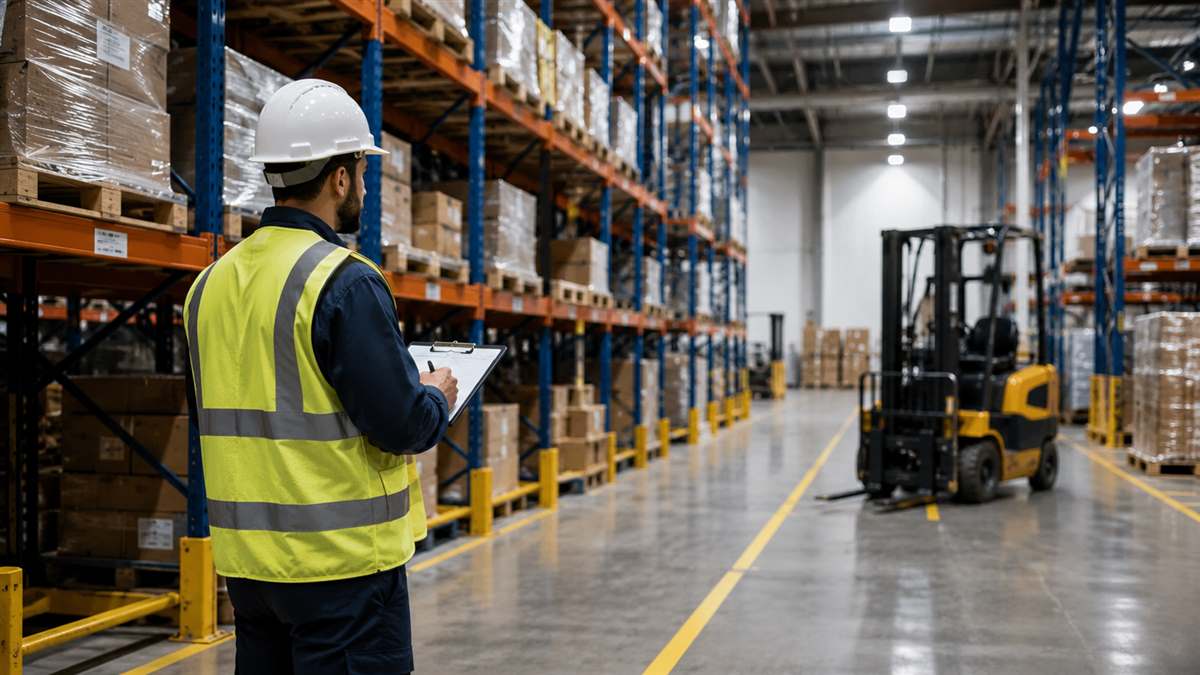
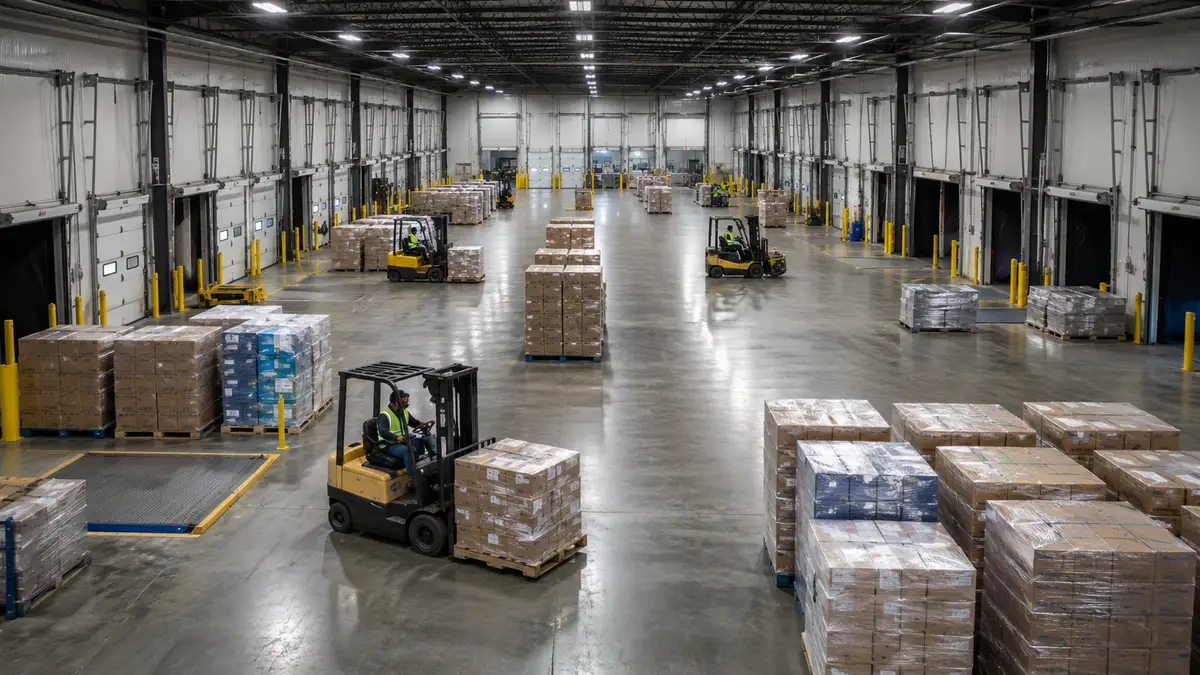

Cross-docking services move inbound freight directly from receiving dock to outbound dock — with little to no warehouse storage in between. For the right freight type, cross dock services cut storage costs to zero, eliminate pick-and-pack labor on pre-sorted loads, and shave 1–3 days off transit time compared to standard warehouse-in, warehouse-out fulfillment. This guide explains exactly how cross-docking works, when it makes operational sense, how it differs from standard warehousing, and what to look for in a 3PL cross docking services partner.
What Is Cross-Docking?
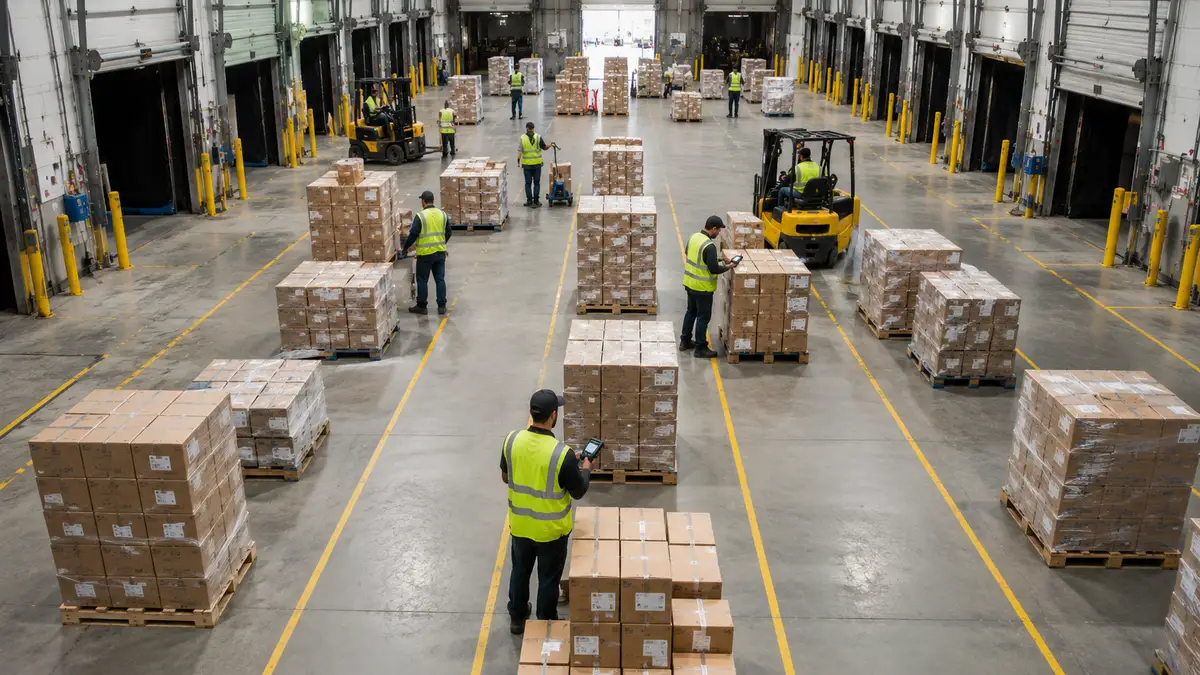
Cross-docking is a logistics process in which inbound shipments from suppliers or manufacturers are unloaded at a receiving dock, sorted or consolidated, and immediately loaded onto outbound trucks or carriers — typically within 24 hours and often within the same shift. The defining characteristic is that inventory bypasses storage entirely, or spends only a few hours in a staging area rather than days or weeks in racked storage. A cross docking service provider operates the facility and coordinates dock scheduling, ASN intake, sorting labor, and outbound carrier loading — all the functions a standard warehouse performs, compressed into a single shift cycle. The term comes from the physical layout: freight literally crosses from one dock door (inbound) to another (outbound) on the same facility floor. A fulfillment center configured for cross-docking has staging lanes on the floor between inbound and outbound docks, with forklifts and conveyor systems moving freight across the facility rapidly. Cross-docking is used across a wide range of industries and freight types:
- Retail distribution: pre-sorted store shipments arriving from suppliers, immediately consolidated by store and loaded onto delivery routes
- Grocery and perishables: temperature-sensitive freight that cannot wait in storage for normal warehouse cycles
- Ecommerce fulfillment: inbound supplier containers broken down and immediately sent to regional distribution hubs
- B2B distribution: full pallets arriving from manufacturers, re-sorted by customer and loaded for direct delivery
- Manufacturing supply chains: components arriving from multiple suppliers, cross-docked to a just-in-time production line
How Does Cross-Docking Work, Step by Step?
Cross-docking moves freight straight from inbound to outbound in a few defined steps, without ever putting it into storage.
Step 1: Inbound Freight Arrives at the Cross-Dock Facility
Supplier trucks or containers arrive at the receiving dock. The shipment is checked against an advance shipping notice (ASN) — a pre-notification from the supplier that tells the facility exactly what’s arriving, in what quantities, and how it should be sorted. The accuracy of the ASN determines how fast the cross-dock process can move; without it, staff must manually inventory and sort freight before routing decisions can be made.
Step 2: Freight Is Unloaded and Staged
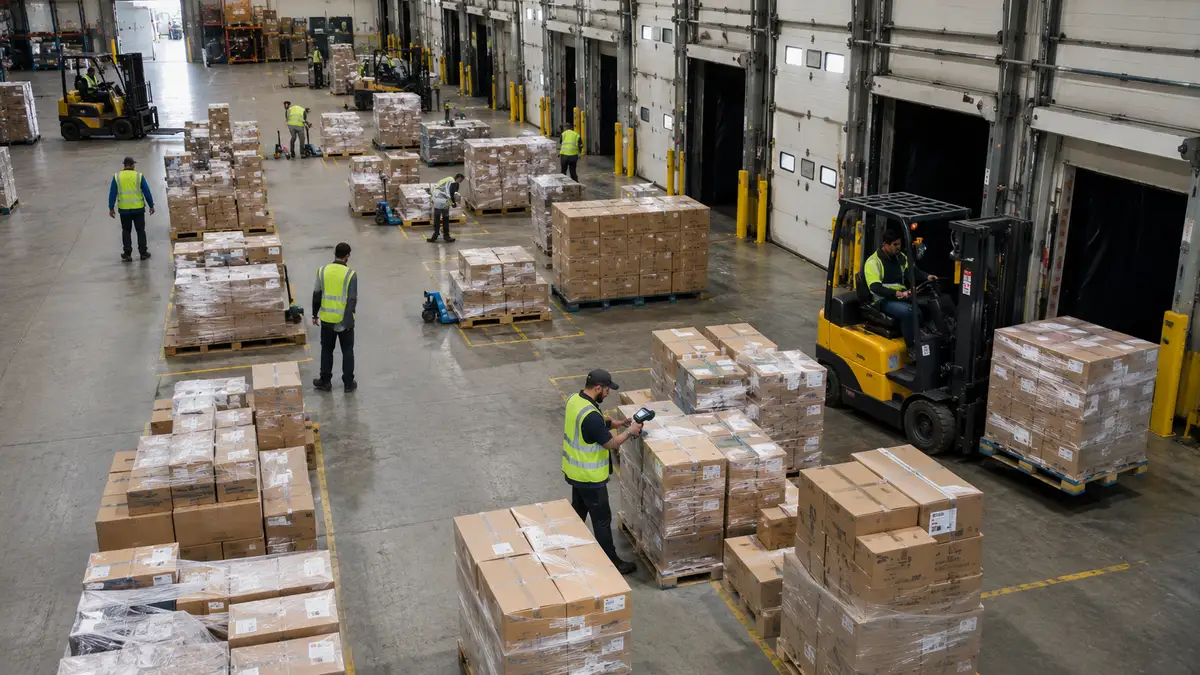
Pallets, cases, or units are unloaded from the inbound carrier and moved to a staging area on the cross-dock floor. Unlike a standard warehouse receiving process, freight is not put away into racked storage. Instead, it is organized into outbound lanes by destination, customer, or route — directly on the dock floor or on low staging racks designed for rapid throughput rather than long-term storage.
Step 3: Sorting, Consolidation, or Break-Bulk
Depending on the cross-docking model, freight is processed in one of three ways:
- Pre-sorted cross-docking: Supplier ships pre-labeled, pre-sorted units by destination. No sorting required at the cross-dock — freight moves directly from inbound to outbound staging.
- Consolidation cross-docking: Multiple smaller inbound shipments from different suppliers are combined into a single outbound load for one destination or customer.
- Break-bulk cross-docking: A large inbound shipment (e.g., a full container) is broken into smaller outbound loads for multiple destinations — typically used in retail distribution or regional hub-and-spoke networks.
Step 4: Load Outbound Carriers
Sorted freight is loaded directly onto outbound trucks, LTL carriers, or parcel carriers for final delivery. The goal is to complete the entire inbound-to-outbound cycle within one operational shift — commonly under 24 hours. For pre-sorted shipments with accurate ASNs, some cross-docking operations complete the cycle in 2–4 hours.
Step 5: Shipment Confirmation and Tracking
Outbound loads are documented, manifested, and tracked through the WMS. Clients receive confirmation that their freight has been cross-docked and is in transit — with full visibility into what went where and when.
What Are the Types of Cross-Dock Services?
There are four types: continuous, consolidation, de-consolidation, and opportunistic cross-docking.
| Type | How It Works | Best For |
|---|---|---|
| Continuous cross-docking | Freight moves directly from inbound to outbound with no sorting — same carrier or same route | Hub-to-hub transfers, relay freight |
| Consolidation cross-docking | Multiple inbound shipments combined into one outbound load for a single destination | Suppliers shipping small batches to one retailer or DC |
| De-consolidation / break-bulk | One large inbound load broken into smaller outbound deliveries for multiple destinations | Retail distribution, regional hub networks |
| Opportunistic cross-docking | Items identified in receiving as matching open orders are immediately routed to outbound — bypassing storage for that SKU only | Ecommerce warehouses with pending backorders |
| Transloading | Freight transferred between transport modes (e.g., ocean container to domestic truck) at a cross-dock facility | Import containers destined for inland distribution |
Cross-Docking vs. Traditional Warehousing: Key Differences
Cross-docking and standard warehousing solve different problems. Understanding the distinction helps you decide which model — or which combination — fits your supply chain.
| Factor | Cross-Docking | Traditional Warehousing |
|---|---|---|
| Storage duration | Hours or less — freight bypasses storage | Days to months — inventory stored until needed |
| Storage cost | None or minimal staging fees | Monthly storage fees per bin, pallet, or sq ft |
| Handling labor | Dock-to-dock movement only | Receive → putaway → pick → pack → ship |
| Inventory carrying cost | Eliminated for cross-docked freight | Capital tied up in stored inventory |
| Best freight type | High-velocity, perishable, or pre-sorted | Variable-velocity SKUs requiring safety stock |
| Lead time | Faster — no putaway/pick cycle | Adds 1–3 days minimum vs. cross-dock |
| WMS complexity | Requires accurate ASNs and dock scheduling | Requires storage slot management and cycle counting |
| Risk | Execution-dependent — errors are harder to catch | More checkpoints; storage buffers against mistakes |
Most sophisticated supply chains use both: cross-docking for high-velocity or time-sensitive freight, and standard warehousing for safety stock and slower-moving SKUs. A 3PL offering combined cross docking & warehouse services gives you the flexibility to route each SKU through the right model under one roof — one WMS, one fulfillment center, one relationship.
When Does Cross-Docking Make Sense?
Cross-docking is not the right model for every freight type or supply chain. It works best when these conditions are true:
- Your freight is high-velocity and predictable. Cross-docking assumes that what arrives will ship quickly. If demand is unpredictable or seasonal, you need storage buffer — not a bypass.
- Your suppliers can send accurate ASNs. Without an advance shipping notice that matches physical freight, the cross-dock process breaks down at receiving. Supplier compliance is a prerequisite.
- Products are perishable or time-sensitive. Grocery, fresh produce, pharmaceuticals, and time-sensitive promotions cannot afford warehouse dwell time. Cross-docking is the standard model for these categories.
- Freight arrives pre-sorted by destination. When a supplier ships product already organized by store or customer, cross-docking eliminates all sorting labor — freight flows straight through.
- You’re operating a hub-and-spoke distribution network. Central hub facilities that receive consolidated inbound and fan out to regional spokes are built around cross-docking principles.
- You want to eliminate short-term storage costs. For freight that you know will ship within 24–48 hours of arrival, paying for putaway, storage, and pick labor adds cost without adding value.
When Cross-Docking Is NOT the Right Choice
Cross-docking works against you when:
- Demand is variable or unpredictable — you need safety stock, not a bypass
- Products require quality inspection or repacking before they’re customer-ready
- Your suppliers can’t provide reliable ASNs or pre-sorted shipments
- Order lead times are flexible enough that fast throughput isn’t a competitive advantage
- Your volume is too low to justify the dock scheduling and coordination overhead
What Are the Benefits of Cross-Docking?
For the right freight profile, professional cross-dock services deliver measurable improvements across multiple cost and speed dimensions. Here’s what brands and distributors consistently gain when they shift eligible freight from standard warehousing to a cross docking logistics service:
- Eliminates storage costs on cross-docked freight. No putaway, no racked storage, no cycle count labor — for inventory that was going to ship in 24–48 hours anyway, this is pure cost removal.
- Reduces handling touches. Every time freight is moved — picked up, set down, scanned, re-staged — there’s a labor cost and a damage risk. Cross-docking removes 2–4 handling steps versus standard warehouse processing.
- Cuts transit time. Freight that bypasses 1–3 days of warehouse dwell time delivers 1–3 days faster. For perishables or time-sensitive promotions, this is operationally critical. For ecommerce, it supports faster delivery promises.
- Reduces inventory carrying costs. Capital tied up in sitting inventory costs 20–35% of product value annually (carrying cost formula). Freight that moves through in hours instead of weeks dramatically reduces this.
- Supports just-in-time supply chains. Manufacturing operations that pull components on demand need freight that arrives and delivers on a tight window — cross-docking is the logistics mechanism that makes JIT possible at scale.
How Much Does Cross-Docking Cost?
Pricing for cross-dock services varies by freight type, volume, and the level of sorting or consolidation required. When evaluating a cross docking logistics service, request a full rate card covering all the components below — some providers quote only the base handling fee and add line items later:
- Inbound handling fee: Varies by zone and weight per pallet for unloading, staging, and outbound loading — the core cross-dock labor fee
- Sorting/consolidation fee: $0.10–$0.35 per case or unit when freight requires active sorting by destination or customer
- Dock scheduling fee: Some facilities charge $25–$75 per inbound appointment for dock time reservation
- Transloading fee: $50–$150 per container for full container unload and reload onto domestic truck
- Short-term staging storage: $5–$20 per pallet per day if freight cannot move outbound same-day
For a full container (500–800 cases) being cross-docked with sorting to 5 destinations, a realistic all-in cost runs $200–$500 — compared to $800–$2,000+ if that same freight went through standard warehouse receive, storage, and ship cycles.
How Cura Resource Group’s Cross-Docking Services Work
At Cura Resource Group, we provide cross docking fulfillment services for ecommerce brands, B2B distributors, and importers that need fast, cost-effective freight movement without the overhead of full warehouse storage. Our cross docking & warehouse services operate under one roof — so you can cross-dock high-velocity freight while warehousing safety stock in the same fulfillment center, tracked through a single WMS, managed by a single account team. No juggling separate providers for your cross dock warehouse services and your storage inventory. We handle consolidation cross-docking (combining multiple supplier shipments into a single outbound load), break-bulk distribution (splitting containers for multi-destination delivery), and transloading from ocean containers to domestic carriers. Our dock scheduling system supports pre-planned inbound windows, and we work with your suppliers to ensure ASN compliance before freight arrives — not after. Our pick and pack services sit alongside the cross-dock operation, so brands that have both standard ecommerce orders and high-velocity freight to move can consolidate both fulfillment functions with one logistics partner rather than managing separate relationships. Need a quote for cross-docking or transloading? Contact our team and we’ll assess your freight profile and provide a cost comparison within 24 hours.
Frequently Asked Questions: Cross-Docking Services
What is cross-docking in simple terms?
Cross-docking means freight arrives at a warehouse dock, gets sorted or consolidated on the floor, and loads straight onto outbound trucks without going onto shelves. It is a transfer station, not a storage facility. Eliminating put-away, storage and picking is where the time and cost come out.
What types of products are best suited for cross-docking?
Cross-docking works best for high-velocity products that ship quickly after arrival (fast-moving consumer goods, promotional items), perishables that can’t wait in storage (grocery, fresh produce, pharmaceuticals), and freight that arrives pre-sorted by destination (retail distribution with store-ready pallets). It works poorly for slow-moving SKUs, products requiring quality inspection, and freight with unpredictable demand.
What is the difference between cross-docking and transloading?
Cross-docking moves freight from inbound to outbound at the same facility with sorting or consolidation. Transloading specifically refers to transferring freight between different modes of transport — typically from an ocean shipping container to a domestic truck or rail car. Transloading is a type of cross-docking that also involves a mode change, often at a port-adjacent distribution facility.
How fast does cross-docking work?
Best-in-class cross-docking operations complete the inbound-to-outbound cycle within 2–24 hours. For pre-sorted freight with accurate ASNs, same-shift cross-docking (under 4 hours) is achievable. For freight requiring active sorting, consolidation, or appointment scheduling, next-day outbound is the typical target. Anything beyond 48 hours in a staging area is generally no longer functioning as true cross-docking.
Do I need a WMS to use cross-docking services?
You do not need your own WMS — your 3PL’s system handles dock scheduling, ASN matching, staging and outbound manifesting. What you do need is accurate advance shipping notices from your suppliers. The ASN is the input that makes cross-docking fast; without it, sorting turns manual and error rates climb.
How is cross-docking priced compared to standard 3PL fulfillment?
Cross-dock services are usually priced per pallet handled or per case sorted, rather than per order shipped. For high-volume freight that does not need individual order fulfillment, that is materially cheaper than pick-and-pack, because you pay a handling fee instead of storage plus pick plus pack. Savings grow with volume.
Can cross-docking be combined with traditional warehousing?
Yes — and for most businesses, a hybrid approach is optimal. High-velocity, predictable-demand SKUs move through the cross-dock operation. Slower-moving inventory or safety stock goes into standard racked storage. A 3PL with a combined operation manages both under one roof, routing each inbound shipment to the most cost-effective model based on your SKU velocity and demand patterns.
What are the risks of cross-docking?
Three main ones. Execution dependency, because errors are harder to catch once freight is moving. Supplier ASN accuracy, because inaccurate advance notices cause expensive delays at the dock. And demand variability — if expected outbound orders fall through, cross-docked freight has nowhere to go without emergency storage.
Sources & References
- Statista — Average Industrial Rent per Square Foot, U.S. (warehouse storage cost context for cross-docking vs. full-cycle warehousing comparisons).
- Prologis — How Much Does It Cost to Rent a Warehouse?