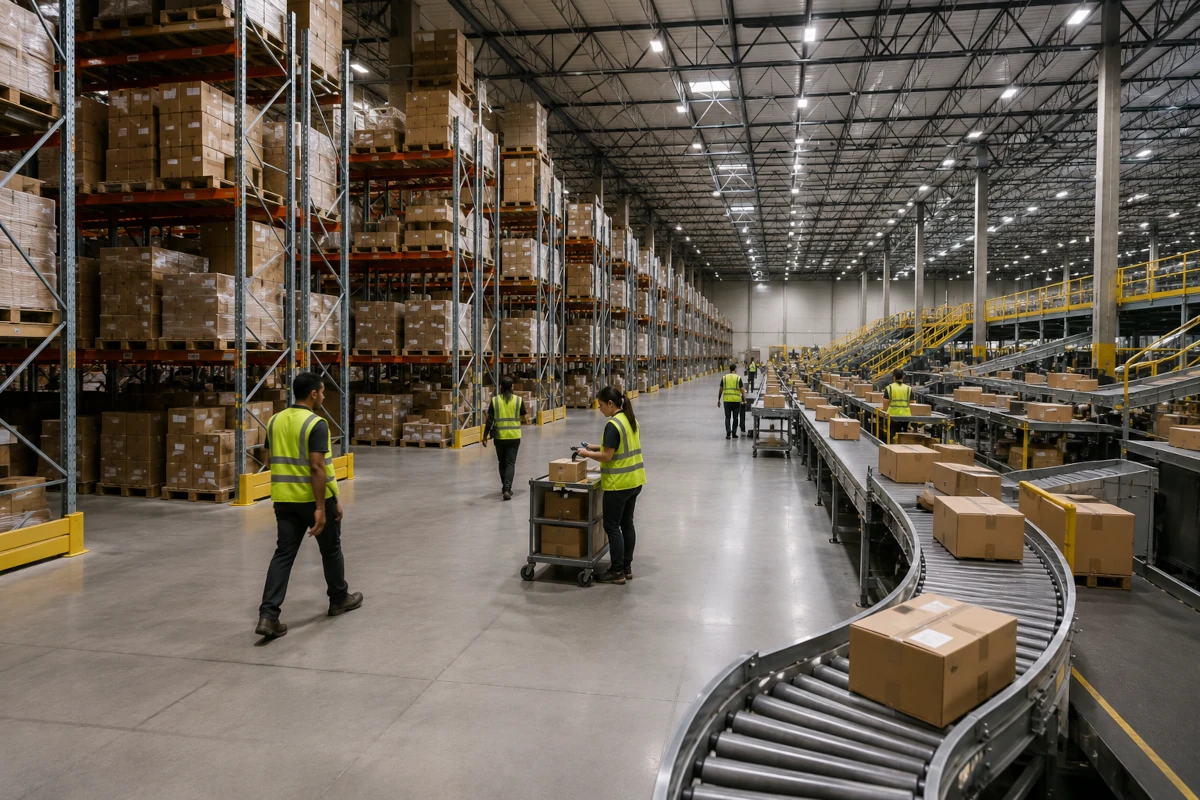
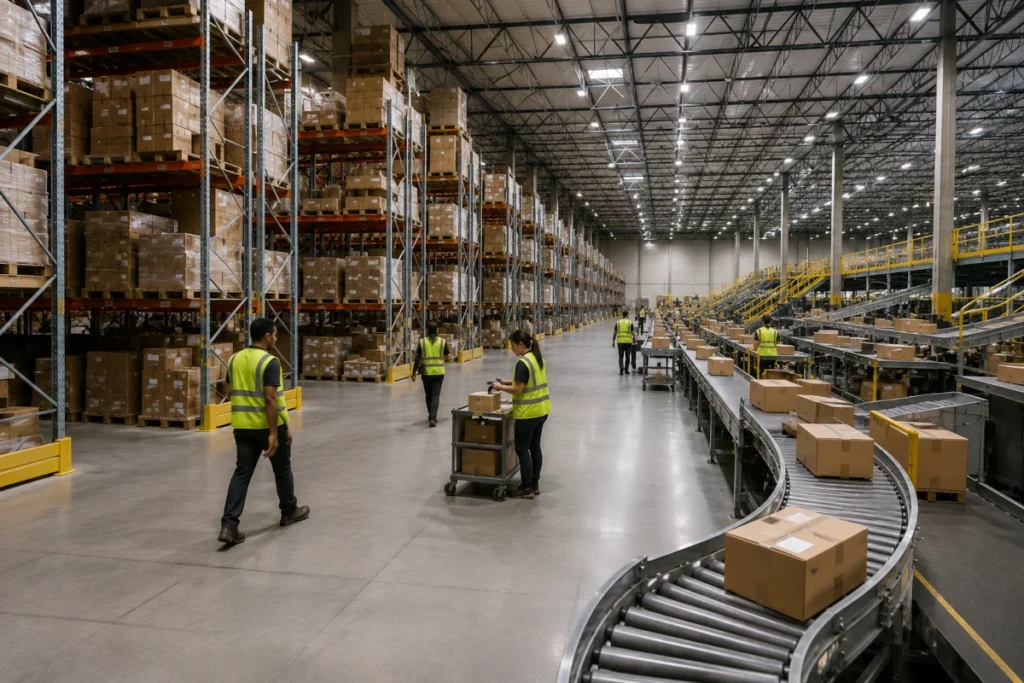

A fulfillment center is a facility built to pick, pack and ship individual customer orders as they arrive, while a warehouse is built to hold inventory in bulk until it is needed. One is measured on how fast product leaves; the other on how cheaply it sits.
Fulfillment Center vs. Warehouse isn’t just semantics. It’s the difference between paying to store dead stock and paying to move product. Pick wrong, and your margins bleed out before Q2.
This guide breaks down the real operational differences, the hybrid models reshaping logistics in 2026, and a framework for choosing the right setup for your business.
I’ve spent 25 years inside 3PL operations — from running pick lines to consulting on multi-node fulfillment networks. What follows is what actually matters, not the recycled definitions you’ll find on the first page of Google.
What Is a Warehouse?
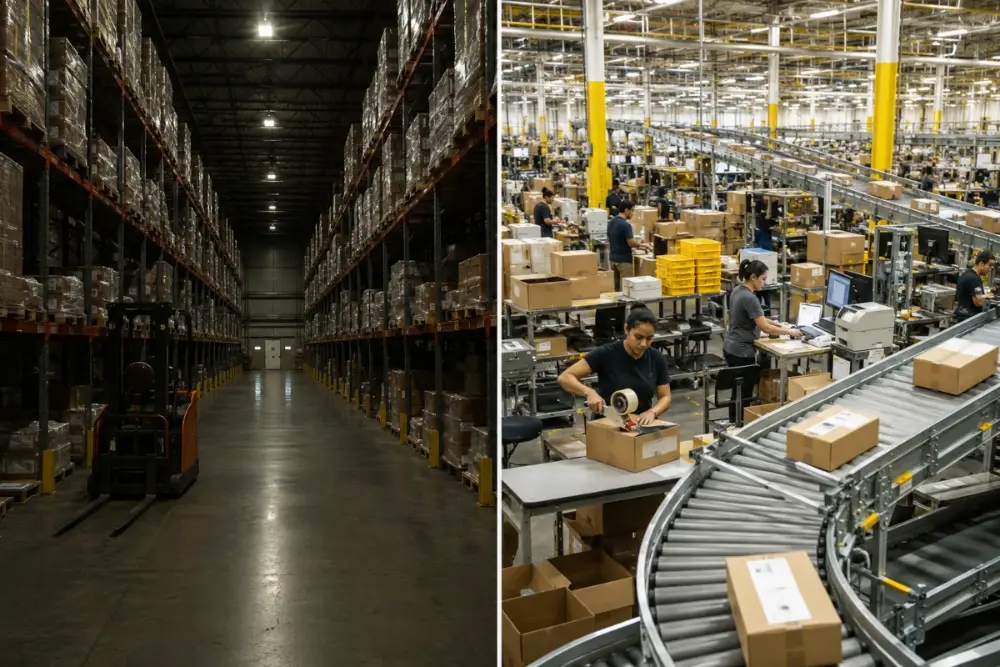
A warehouse is a building designed for storage. That’s the core function. Goods come in, sit on racks or pallets, and leave when someone needs them, following the five stages of warehousing and distribution.
Warehouses handle bulk inventory. Think pallets of canned goods, raw materials, or seasonal product waiting for retail distribution. The rhythm is slow and predictable.
Storage duration runs long — weeks, months, sometimes years. Labor is minimal because nothing much happens between receiving and shipping. A typical warehouse staff handles forklift operations, pallet management, and occasional inventory counts.
The economics favor volume. You pay per pallet position or per square foot. Long-term storage gets cheaper per unit the longer you stay.
Who Uses Traditional Warehousing?
Manufacturers use warehouses to buffer raw materials. Wholesalers use them to consolidate before retail distribution. Importers use them to clear customs and stage goods for regional moves.
B2B operations dominate this space. Shipments leave by the truckload, not the package. One outbound move might represent 500 individual products bound for a single retailer.
What Is a Fulfillment Center?
A fulfillment center is built to ship orders directly to end customers. Storage is incidental. The real work is processing volume — fast.
Walk into one and you’ll see something completely different from a warehouse. Conveyor systems snake between pick zones.
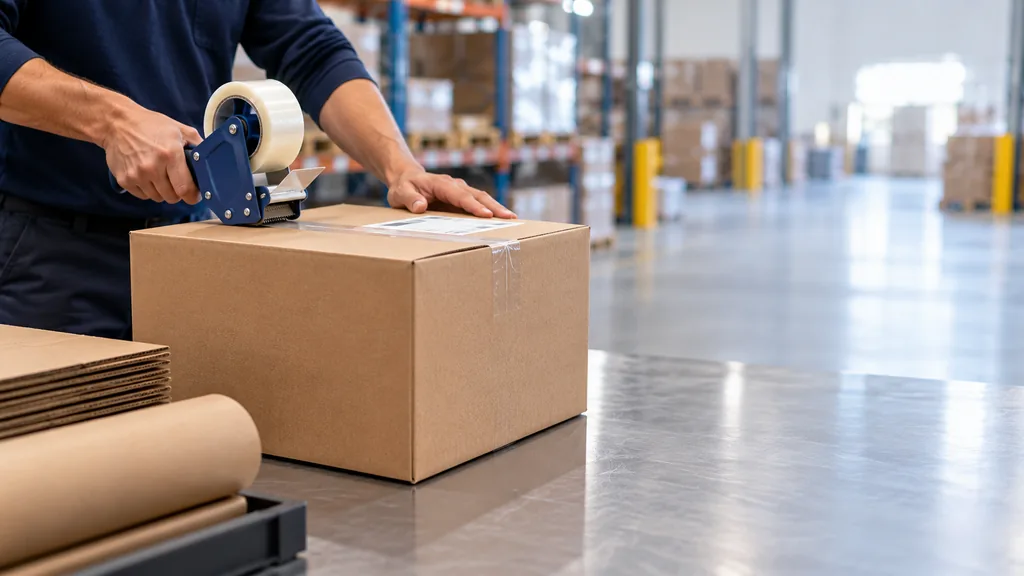
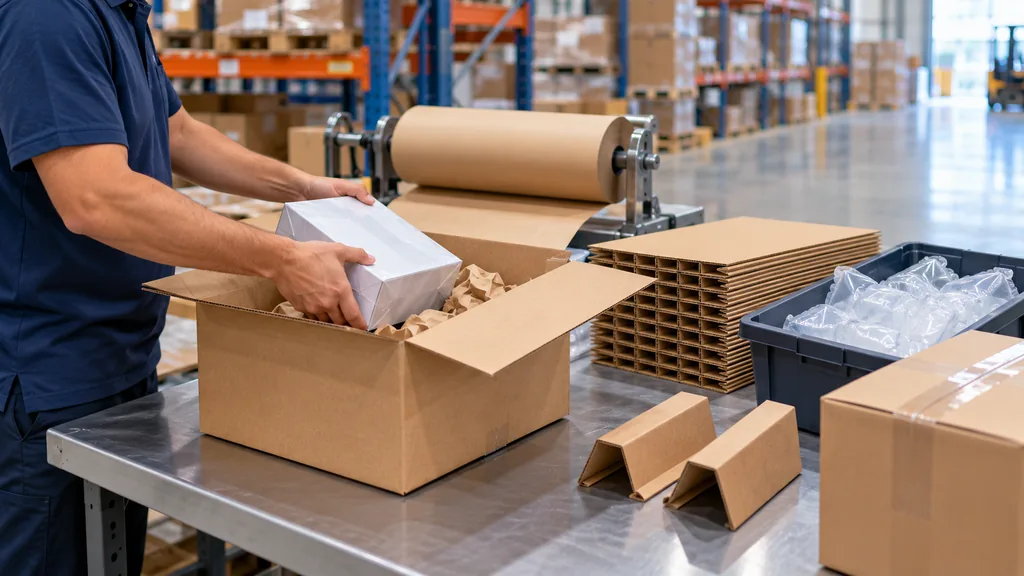
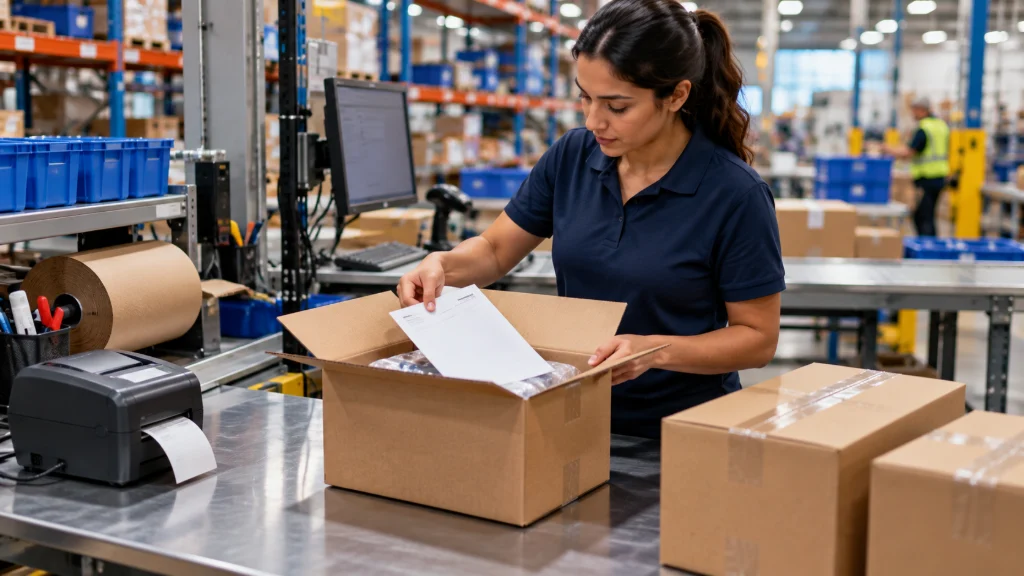
Workers — or robots — move constantly. Packing stations hum with tape guns and label printers.
The product turnover is brutal by warehouse standards. Inventory might sit for 30 days, sometimes less. The whole operation is engineered around speed-to-ship.
The Operational DNA of a Modern Fulfillment Center
Every fulfillment center runs on a warehouse management system (WMS) integrated with the client’s ecommerce platform. Orders hit the system within seconds of checkout. Pickers receive routes optimized for batch efficiency.
Picking and packing happens in waves. A picker might grab 30 SKUs in a single pass, sorting them at packing stations. This batch logic is what separates a fulfillment center from a glorified storage unit with shipping labels.
SKU management gets surgical. Fast-movers sit near pack stations. Slow-movers go deep in the racks.
The whole layout is a heat map of customer demand.
Fulfillment Center vs. Warehouse: The Core Differences
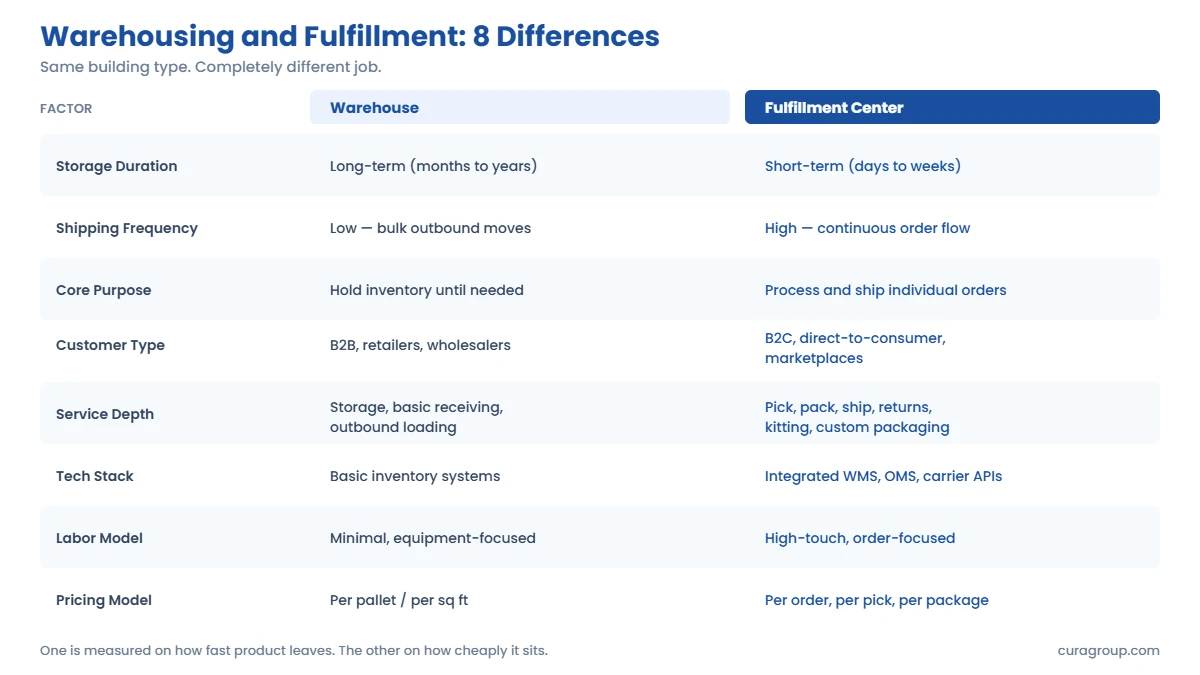
Warehousing and fulfillment differ on eight factors: storage duration, shipping frequency, core purpose, customer type, service depth, tech stack, labor model and pricing model.
| Factor | Warehouse | Fulfillment Center |
|---|---|---|
| Storage Duration | Long-term (months to years) | Short-term (days to weeks) |
| Shipping Frequency | Low — bulk outbound moves | High — continuous order flow |
| Core Purpose | Hold inventory until needed | Process and ship individual orders |
| Customer Type | B2B, retailers, wholesalers | B2C, direct-to-consumer, marketplaces |
| Service Depth | Storage, basic receiving, outbound loading | Pick, pack, ship, returns, kitting, custom packaging |
| Tech Stack | Basic inventory systems | Integrated WMS, OMS, carrier APIs |
| Labor Model | Minimal, equipment-focused | High-touch, order-focused |
| Pricing Model | Per pallet / per sq ft | Per order, per pick, per package |
The differences cascade. A warehouse optimizes for cost-per-square-foot. A fulfillment center optimizes for cost-per-order.
Fulfillment Center vs. Distribution Center: What’s the Difference?
A distribution center moves bulk inventory to retailers and other businesses; a fulfillment center picks and ships single orders to end customers. The two terms are often used interchangeably, but they serve fundamentally different functions in a supply chain.
A distribution center is designed for bulk movement. Inventory arrives in large quantities from manufacturers, gets sorted, and ships out in bulk to retailers, wholesalers, or regional hubs.
The focus is on moving volume efficiently, not on processing individual customer orders. Distribution centers primarily handle B2B transactions and operate on scheduled delivery cycles.
A fulfillment center is built for speed at the individual order level. When a customer places an order online, the fulfillment center picks, packs, and ships that single order — often within hours.
The entire order fulfillment process is optimized around order accuracy, shipping speed, and returns processing. Fulfillment centers are the engine behind ecommerce — the ecommerce fulfillment warehouse behind every online order.
| Distribution Center | Fulfillment Center | |
|---|---|---|
| Primary function | Bulk B2B shipping | Individual B2C order processing |
| Inventory movement | Pallet/case quantities | Single units per order |
| Speed priority | Scheduled cycles | Same-day / next-day |
| Who uses it | Retailers, wholesalers | Ecommerce brands, DTC |
| Returns handling | Rarely | Core function |
The practical takeaway: if you’re shipping pallets to retail stores, you need a distribution center. If you’re shipping individual orders to end customers, you need a fulfillment center.
Many modern 3PL providers — including Cura Resource Group — operate hybrid facilities that handle both, giving brands the flexibility to serve B2B and B2C channels from a single location — the operating model behind omnichannel retail.
The 3PL Fulfillment Services Landscape in 2026
Warehousing and fulfillment now splits into two markets: bulk storage providers on one side, order-shipping specialists on the other.
According to the U.S. Census Bureau, US ecommerce reached $340.2 billion in the second quarter of 2026 — 17.1% of all retail sales, up 12.2% year on year. Every one of those orders needs picking, packing and shipping by someone.
Third-party logistics has consolidated and specialized at the same time. Big networks offer broad geographic coverage. Niche players focus on specific verticals — apparel, supplements, cold chain, oversized goods.
What changed in 2026? Three things matter most.
First, warehouse automation reached the mid-market. Goods-to-person robotics, once exclusive to Amazon and major 3PLs, now show up in 50,000-square-foot regional facilities.
AutoStore, Locus Robotics and similar platforms are marketed on pick-labour reductions in the region of 40–60%, though vendor-reported figures assume a well-suited SKU profile and rarely survive contact with a mixed catalogue.
Predictive Slotting and AI-Driven Layouts
AI-driven layouts cut picking time by deciding where each SKU sits, not by making people walk faster. In 2026, predictive slotting uses your sales data to move inventory before the order is even placed.
If the AI detects a spike in a specific SKU in the Northeast, it prompts the warehouse team to move that stock to the front of the pick line. This cuts the distance pickers walk per order, which is the single biggest driver of cost-per-pick in a manual operation.
The Rise of Green Logistics in 2026
Green logistics in a 2026 fulfillment center means three concrete things: biodegradable packaging, electric fleets on last-mile routes, and solar-powered facilities. Carbon footprint has moved from a nice-to-have to a line item brands ask about in the RFP.
Brands that prioritize green fulfillment are seeing higher conversion rates among Gen Z and Alpha consumers who audit the supply chain of their favorite brands.
Second, hybrid models are now standard. The clean line between warehouse and fulfillment center has blurred. Most modern 3PLs run dual-purpose facilities — long-term storage zones for slow SKUs, high-velocity zones for hot products.
Third, the carrier landscape splintered further. Last-mile delivery is no longer a UPS or FedEx question.
Regional carriers, gig networks, and same-day specialists all play roles. Good 3PLs route orders across multiple carriers based on zone, weight, and SLA.
How Does Cross-Docking Speed Up Fulfillment?
Cross-docking speeds up fulfillment by moving inbound freight directly to outbound shipping with minimal storage time — sometimes hours instead of days.
For ecommerce brands with tight cash flow, cross-docking is gold. You skip storage fees entirely. Product arrives from your manufacturer, gets sorted, and ships to customers or downstream nodes the same day.
Not every product fits this model. You need predictable demand and reliable inbound timing. But for the right SKUs, it’s the leanest fulfillment model available.
B2B vs. B2C Logistics: Why It Changes Everything
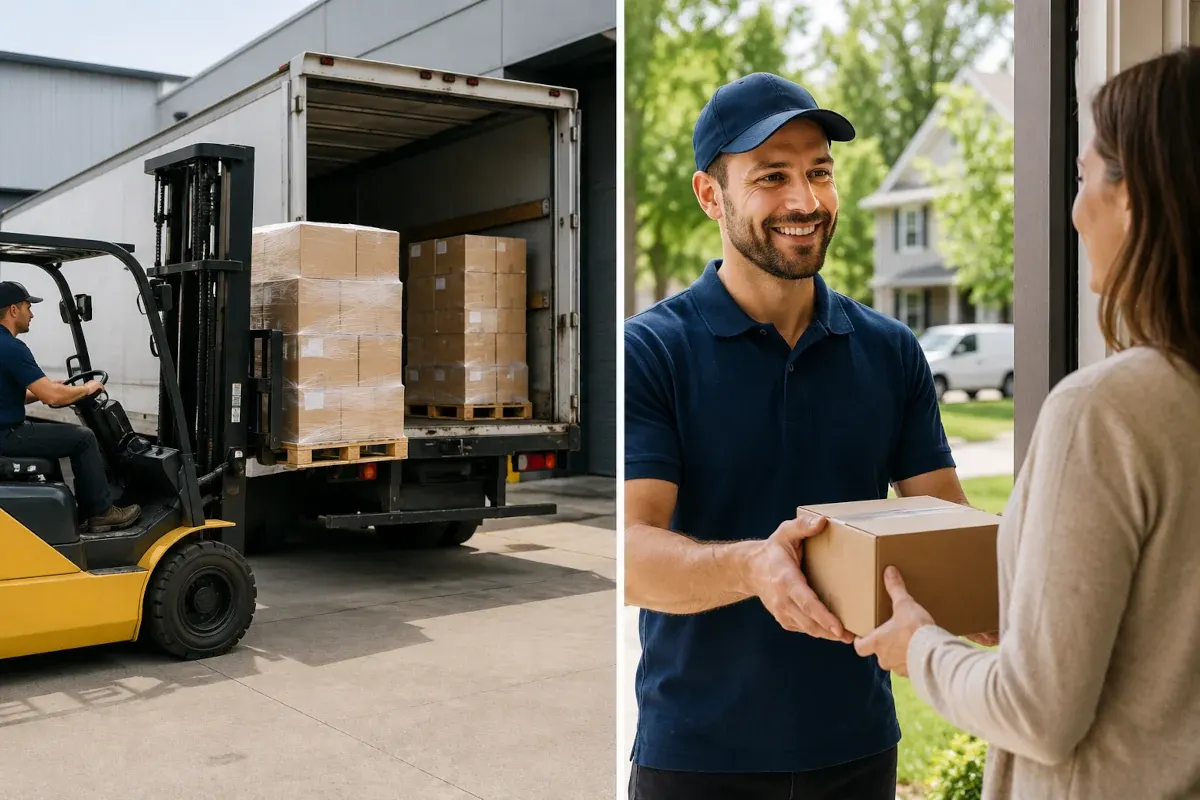
B2B ships pallets to a few large accounts on strict delivery windows. B2C ships single units to many addresses. That difference changes everything downstream.
| Factor | B2B Fulfillment | B2C Fulfillment |
|---|---|---|
| Order profile | Fewer orders, many units each | Many orders, few units each |
| Packaging | Cases, pallets, retailer compliance labels | Branded parcels, unboxing experience |
| Routing | LTL and FTL freight | Parcel carriers |
| Penalties for error | Retailer chargebacks | Refunds, reviews, churn |
| Demand pattern | Planned, contract-driven | Spiky, promotion-driven |
The split between business and consumer logistics drives almost every operational decision. B2B orders are large, scheduled, and forgiving.
A retailer expecting a pallet next Tuesday doesn’t care if it ships Monday morning or Tuesday at 6 AM. The order is in their system. Their receiving dock has a slot.
B2C orders are small, unpredictable, and unforgiving. A customer who ordered Tuesday at 11 PM expects shipping confirmation Wednesday morning. Late by 24 hours and you get a support ticket, a chargeback risk, or a public review.
This explains why fulfillment centers exist as a separate category. You can’t run B2C economics through B2B operations.
The labor model breaks. The tech stack breaks. The customer experience breaks.
When B2B and B2C Collide
Plenty of brands need both. A DTC apparel brand selling on its Shopify store and to wholesale boutiques. A supplements company shipping subscriptions while supplying retail chains.
This is where modern 3PLs earn their keep. A good partner runs both flows from the same facility, with separate workflows, separate SLAs, and unified inventory visibility. You see one stock count across both channels.
If your 3PL forces you to split inventory between B2B and B2C buckets, you’ll bleed cash on duplicate safety stock and stockouts on whichever side is running hot.
Why Is the Inventory Management System the Real Differentiator?
The software running underneath any logistics operation matters more than the building itself. A great inventory management system in a mediocre facility beats a great facility with bad software, every time.
What you need from an IMS in 2026:
- Real-time inventory sync across all sales channels. If you sell on Shopify, Amazon, eBay, and TikTok Shop, your stock counts need to update everywhere within seconds.
- SKU-level analytics with velocity tiers. You should see which products are A-movers, B-movers, and dead stock.
- Forecasting integrated with reorder triggers. Modern systems pull sales velocity, lead times, and seasonality to suggest reorder points.
- Returns processing with disposition logic. Returns aren’t waste — they’re inventory.
Supply Chain Logistics: Where the Models Connect
Neither warehouses nor fulfillment centers exist in isolation. They’re nodes in a broader supply chain that also includes manufacturing, freight forwarding, customs, and last-mile delivery.
Smart brands map their full supply chain logistics before choosing storage and fulfillment partners. Optimizing fulfillment without fixing inbound is a common mistake.
Your 3PL ships orders in 24 hours, but your container takes six weeks from Shenzhen and clears customs slowly. The customer experience is still slow.
The Multi-Node Reality
Single-facility fulfillment is increasingly rare for brands doing serious volume. Two-day delivery to most of the US requires at least two nodes — typically one east, one west. Same-day delivery requires urban micro-fulfillment in major metros.
This is where hybrid warehouse-fulfillment models earn their keep. A West Coast warehouse holds bulk inventory and feeds an East Coast fulfillment center weekly.
The fulfillment center keeps 30 days of stock in pick locations. Cash isn’t tied up in duplicate inventory — customers still get fast shipping.
US Fulfillment Centers: Why Location Is a Strategic Decision
Location decides how fast you reach customers and what you pay to get there, so geography ranks alongside service scope when you choose a fulfillment center. Where your inventory sits determines how fast it reaches your customers and how much you pay in shipping costs.
For a smaller brand that calculation is the whole decision, which is what small business shipping works through. For US businesses, the decision typically comes down to three strategic positions.
East Coast Fulfillment Centers
An east coast fulfillment center gives you direct access to the highest-density consumer markets in the US — the Northeast corridor from Boston to Washington DC, plus the broader Mid-Atlantic and Southeast regions.
If a significant portion of your customer base is east of the Mississippi, positioning inventory here cuts last-mile delivery time and reduces zone charges on the majority of your shipments.
East coast fulfillment also positions you closer to major import ports like New York/New Jersey, Baltimore, and Savannah — meaning faster inbound lead times on internationally sourced inventory.
West Coast Fulfillment Centers
A west coast fulfillment center is the natural choice for brands with heavy import volumes through the Ports of Los Angeles and Long Beach — the two busiest container ports in North America. Positioning inventory here reduces drayage costs and speeds up inventory availability after customs clearance.
For brands with strong customer concentrations in California, the Pacific Northwest, or the Southwest, a west coast facility also shortens last-mile delivery windows significantly.
The Case for a National US Fulfillment Network
For growing brands shipping at national scale, a single fulfillment center — regardless of location — creates a bottleneck. A national fulfillment strategy using two or more US fulfillment centers splits inventory across regions, putting products closer to customers on both coasts. The result:
- Shipping zones drop, because stock sits closer to the customer
- Transit times compress, often from several days to one or two
- Shipping costs fall, because you are paying for fewer zones
Cura Resource Group operates a national fulfillment network across the US, giving ecommerce brands and enterprise shippers the coverage to compete on delivery speed without building their own infrastructure.
How Do You Choose the Right Model?
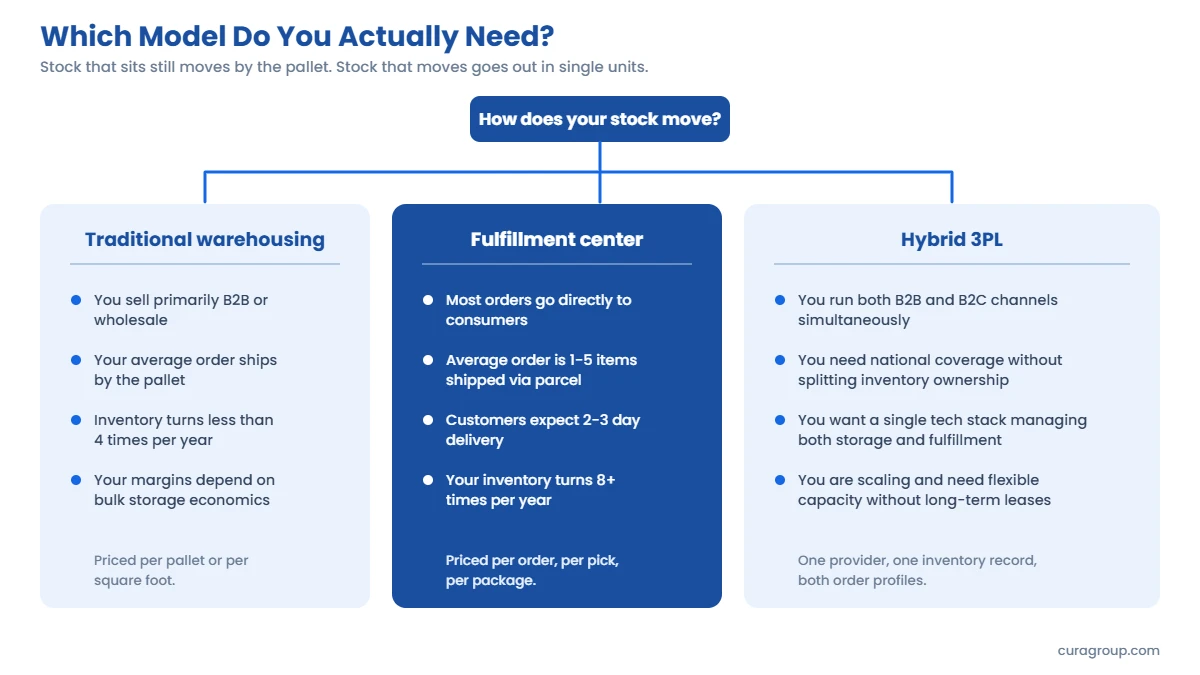
Choose traditional warehousing when stock sits still and moves by the pallet, and a fulfillment center when it moves in single units. You probably need traditional warehousing if:
- You sell primarily B2B or wholesale
- Your average order ships by the pallet
- Inventory turns less than 4 times per year
- Your margins depend on bulk storage economics
You probably need a fulfillment center if:
- Most orders go directly to consumers
- Average order is 1-5 items shipped via parcel
- Customers expect 2-3 day delivery
- Your inventory turns 8+ times per year
You need a hybrid 3PL if:
- You run both B2B and B2C channels simultaneously
- You need national coverage without splitting inventory ownership
- You want a single tech stack managing both storage and fulfillment
- You’re scaling and need flexible capacity without long-term leases
What Are the Common Pitfalls When Switching Models?
The five that cost the most are choosing on price alone, underestimating onboarding time, skipping the SLA conversation, ignoring tech integration, and not planning for peak.
- Choosing on price alone. Always ask for a fully loaded cost-per-order figure — storage, pick, pack, ship, and returns combined.
- Underestimating onboarding time. Budget 60-90 days minimum to integrate systems, migrate inventory, and stabilize operations.
- Skipping the SLA conversation. Get order accuracy rates, ship-same-day cut-off times, and claims resolution timelines in writing.
- Ignoring the tech integration. If your 3PL can’t connect to your ecommerce platform natively, you’ll spend months on workarounds.
- Not planning for peak. Ask how your 3PL handles volume spikes — do they have flex capacity, or will your orders sit in a queue during Q4?
Your Complete Warehouse Services Resource Hub
This guide is part of Cura Resource Group’s complete Warehouse Services resource library — built for operations managers, ecommerce brands, and logistics teams who need practical answers. Use the links below to go deeper on any topic as they go live.
Warehousing & Fulfillment Operations
- How to Find and Evaluate Warehouse Space for Rent
- Pick and Pack Services: How They Work and Why They Matter
- Cross-Docking Services: How They Work and When to Use Them
- Kitting and Assembly Services: How to Add Value in Your Warehouse
- 3PL vs. In-House Fulfillment: True Cost Comparison and When to Make the Switch
- Omnichannel Fulfillment: How to Ship Efficiently Across Every Sales Channel
- White Glove Delivery: The 6 Levels, What Is Included, and Costs
- What Is Discreet Packaging? How It Works and What It Costs
Inventory & Stock Management
- Best Warehouse Inventory Management Systems of 2026
- ABC Analysis: How to Prioritize and Optimize Your Stock
- Inventory Carrying Costs: How to Calculate and Reduce Them
- Inventory Shrinkage: Proven Strategies to Protect Your Stock
Industry-Specific Warehousing
- Cold Storage Warehousing: Products, Standards and Facilities
- Pharmaceutical Warehousing: FDA Compliance and Best Practices
- eCommerce Fulfillment Warehousing: How to Scale Without Building Your Own Facility
- Chemical Warehousing: Safety, Compliance and Storage Requirements
Costs & Compliance
- Warehouse KPIs Every Operations Manager Must Track
- OSHA Compliance Checklist: Warehouse Safety Standards 2026
- Pallet Storage: Rates, Fees and How to Budget
- Packing Slips: The 7 Fields One Needs, With a Free Template
Final Word
The choice isn’t really warehouse versus fulfillment center anymore. It’s about matching your operational model to where your business actually lives — DTC, B2B, hybrid, or some combination.
The brands that get this right don’t just save money on logistics. They turn fulfillment into a competitive advantage — faster delivery, fewer errors, and the operational headroom to focus on growth instead of shipping problems.
Pick the partner who understands your business model, not just your box dimensions. The building is just the building. The right 3PL is the difference between scaling with confidence and firefighting every peak season.
Ready to find the right fulfillment model for your business?
Frequently Asked Questions
What does a fulfillment center do?
A fulfillment center receives inbound stock, stores it, then picks, packs and ships each order to the end customer. Most also handle kitting, custom packaging, returns processing and inventory reporting. The core job is converting an order placed online into a package moving toward a customer, accurately and fast.
What is the difference between a warehouse and a fulfillment center?
A warehouse stores inventory long-term with minimal handling, measured on cost per pallet position. A fulfillment center processes individual customer orders with high-touch picking, packing, shipping and returns, measured on speed and accuracy. Warehouses hold stock; fulfillment centers move it, and the two are optimised for completely different metrics.
What is the difference between a fulfillment center and a distribution center?
A distribution center moves bulk inventory to retailers or regional hubs on scheduled cycles, shipping pallets and cases. A fulfillment center processes individual consumer orders at piece level with same-day or next-day speed. Distribution centers primarily serve B2B; fulfillment centers serve B2C.
What is an example of a fulfillment center?
Amazon’s FBA network is the best-known example, but most fulfillment centers are run by third-party logistics providers serving many brands from one building. A fulfillment center holds racked inventory, pick zones, packing stations and a shipping dock, processing thousands of individual orders daily.
What is a package from a fulfillment center?
It is an order picked, packed and shipped on a brand’s behalf by a third-party facility rather than the brand itself. The return address often shows the fulfillment provider’s location, not the seller’s, which is why a package can arrive from a city you did not order from.
Can one facility be both a warehouse and a fulfillment center?
Yes. Modern 3PLs increasingly run hybrid facilities with separate zones for long-term bulk storage and high-velocity order fulfillment. That lets a brand hold reserve stock and ship direct-to-consumer orders from the same building, serving B2B and B2C channels without splitting inventory across two sites.
When should I switch from self-fulfillment to a 3PL?
A sensible trigger to start evaluating a 3PL is 500 to 1,000 orders per month, or earlier when fulfillment starts consuming founder time and error rates climb. If packing orders is pulling your team away from marketing, product and growth, outsourcing usually costs less than the hours it replaces.
How do I choose a fulfillment center?
Weigh geographic coverage against where your customers actually are, then check technology integration with your store platform, pricing transparency including receiving and storage fees, flexibility during peak season, and a track record with brands at your volume and in your category.
What is warehousing and fulfillment?
Warehousing is storing goods; fulfillment is picking, packing and shipping them to the customer. Most third-party providers sell both, and the distinction matters because a building optimized to hold stock cheaply is not optimized to get single orders out the door fast.
What are the four main types of warehousing?
Lists vary by source, but the four most commonly named are public, private, contract and distribution warehousing. Public is rented by the pallet with no commitment, private is owned by the business using it, contract reserves space on a fixed term, and a distribution center moves stock out rather than holding it.