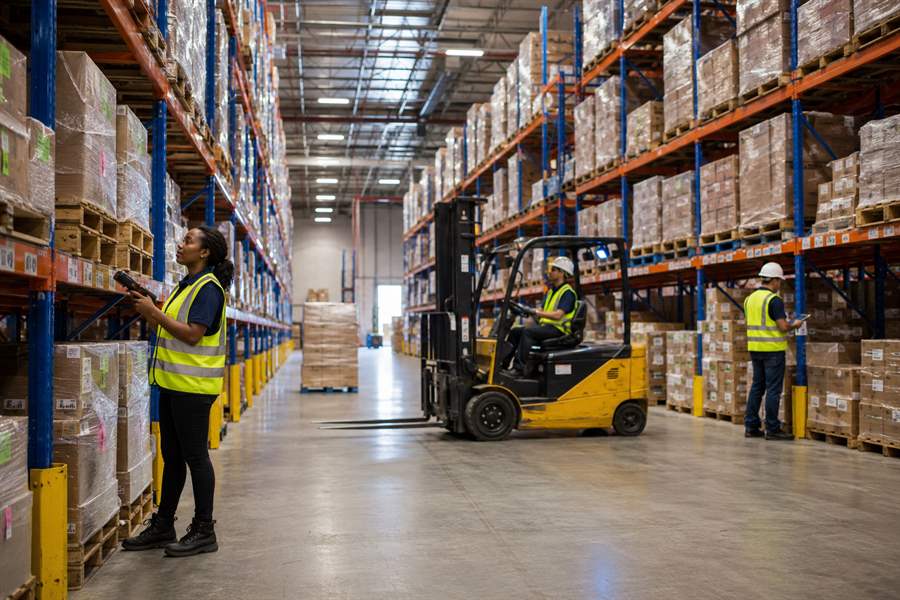

The order fulfillment process is the complete sequence of steps a business follows from the moment a customer places an order to the moment the product is delivered — and, increasingly, returned. It covers receiving inventory, storing it, processing the order, picking and packing the items, shipping the parcel, and handling returns. Get the order fulfillment process right and you earn repeat customers; get it wrong and you lose them after a single bad delivery. According to the National Retail Federation, the vast majority of US shoppers now treat fast, accurate, low-cost shipping as a baseline expectation — not a perk — which means fulfillment is no longer a back-office function. It is a core part of the customer experience.
This guide breaks the order fulfillment process into its seven core steps, explains how order processing and fulfillment fit into supply chain management, and shows where most growing brands lose time and money. Whether you run fulfillment in-house or work with a fulfillment center, the workflow is the same — the difference is who executes it and how well.
What Is the Order Fulfillment Process?
The order fulfillment process is the end-to-end set of operations a company uses to receive, process, and deliver customer orders. It begins when inventory arrives at a warehouse and ends when the customer receives the product — or returns it. In ecommerce, the order fulfillment process is the bridge between a completed checkout and a satisfied customer, and it directly determines delivery speed, order accuracy, and shipping cost.
It’s worth separating two terms people often blur. Order processing is the front-end stage — validating the order, confirming payment, and generating a pick list. Order fulfillment is the full cycle that includes processing plus picking, packing, shipping, and delivery. Together, order processing and fulfillment form one continuous workflow inside the broader supply chain.
Fulfillment can be handled three ways: in-house (you store and ship your own orders), dropshipping (a supplier ships on your behalf), or outsourced to a third-party logistics provider (3PL) that runs the entire workflow from a dedicated warehouse. When that arrangement runs on a long-term contract, it is called contract logistics. Most brands start in-house and move to a 3PL once order volume outgrows their space, labor, and shipping rates.
The 7 Steps of the Order Fulfillment Process
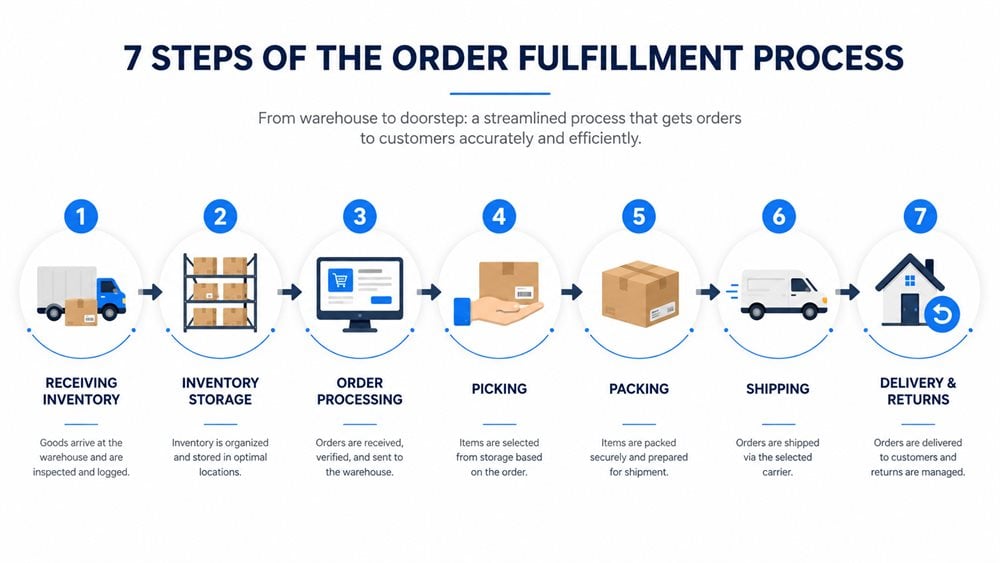
Every order fulfillment workflow — whether it ships 50 orders a day or 50,000 — runs through the same core steps. Think of the list below as the order fulfillment process flow chart in plain English, from order received to delivery.
Step 1: Receiving Inventory
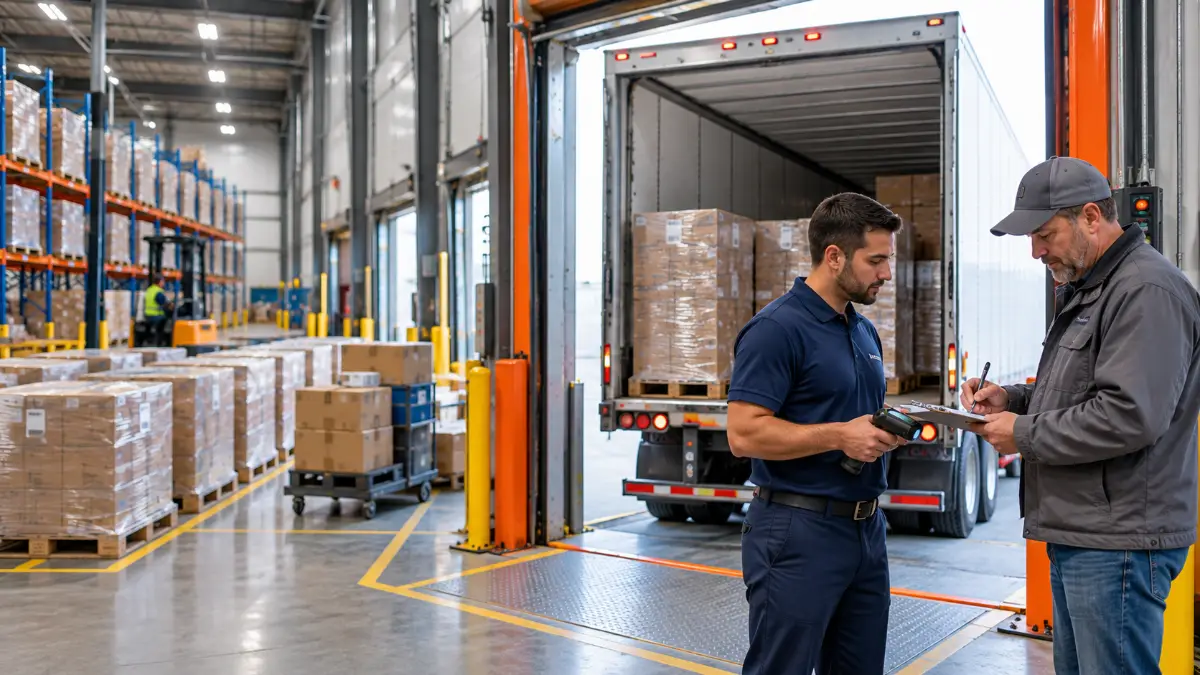
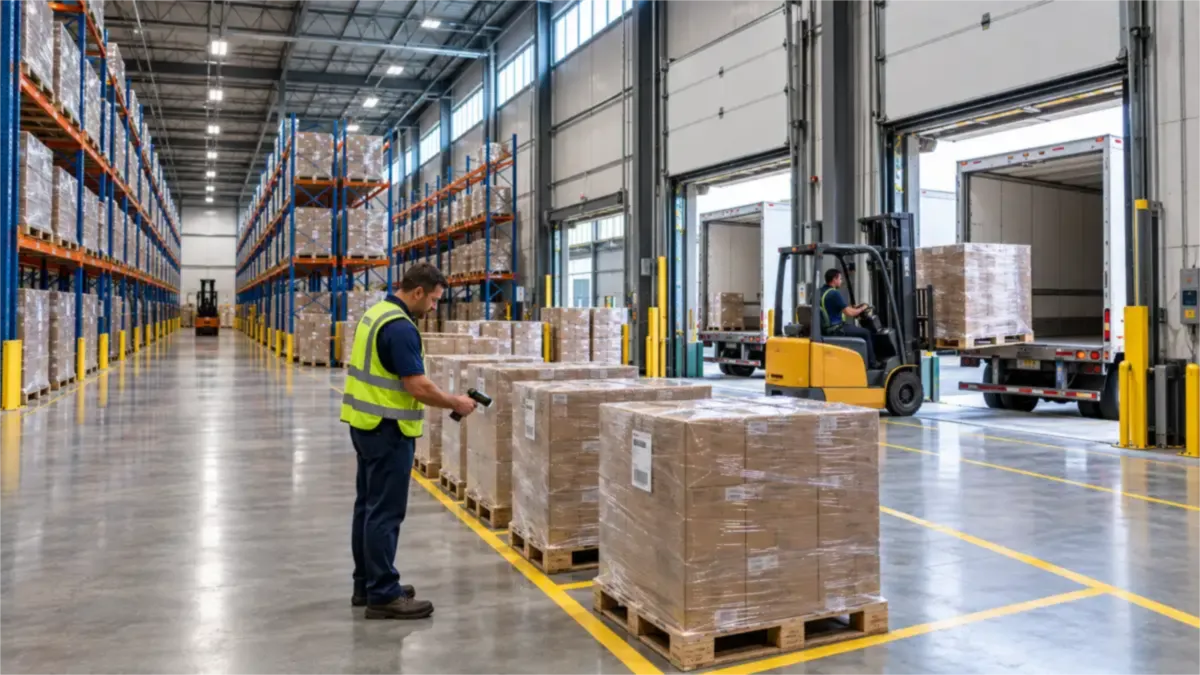
Fulfillment starts before a single order comes in. Inventory arrives from your manufacturer or supplier, and the receiving team verifies quantities against the purchase order, inspects for damage, and logs each SKU into the warehouse management system (WMS). Accurate receiving is the foundation of the entire process — if inventory counts are wrong here, every downstream step inherits the error.
Step 2: Inventory Storage
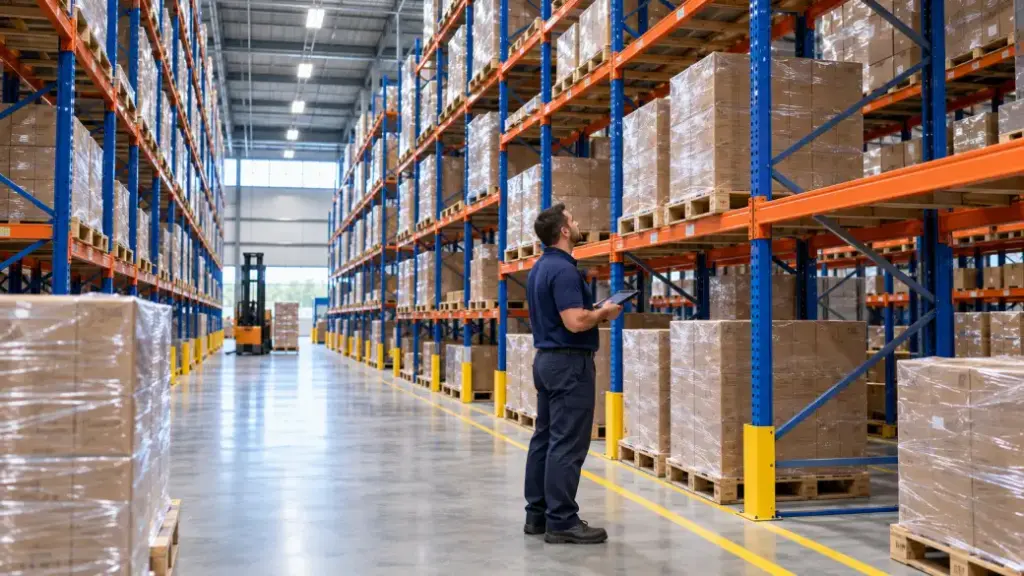
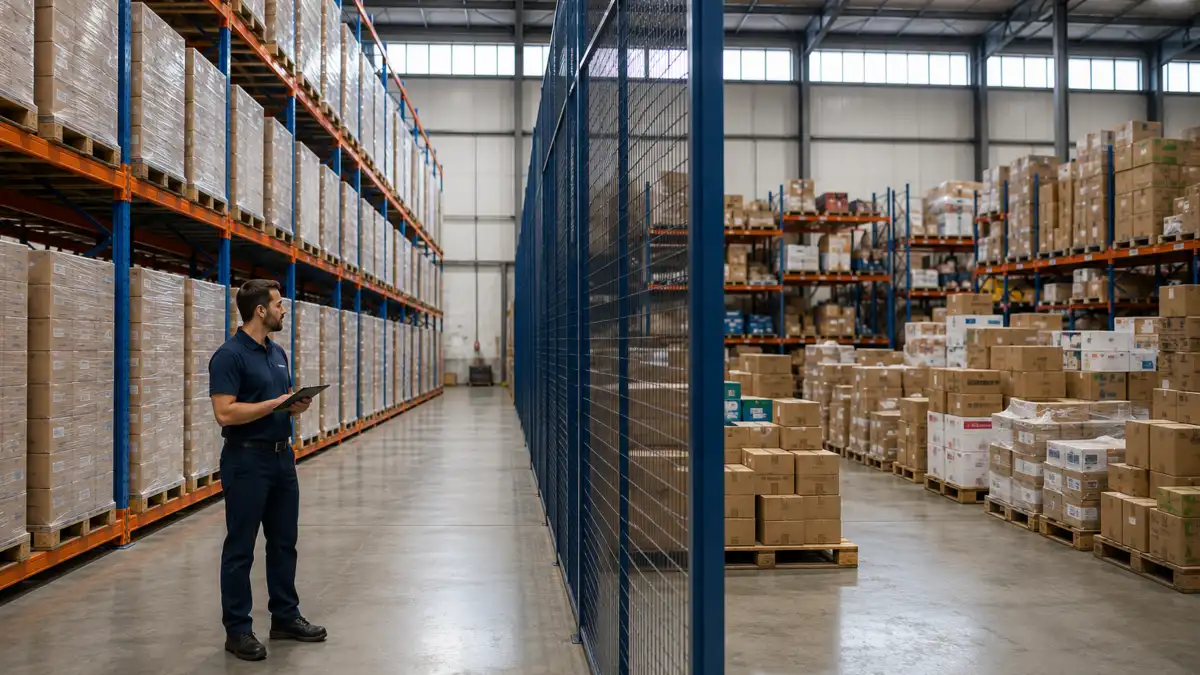
Received goods are slotted into storage locations — shelving, bins, pallet racks, or specialized areas for fragile, oversized, or temperature-sensitive items. Smart slotting places fast-moving SKUs in easy-to-reach “forward pick” zones to shorten travel time during picking. Every location is mapped in the WMS so the system always knows exactly where each unit lives.
Step 3: Order Processing
When a customer checks out, the order flows into the system through an integration with your ecommerce platform (Shopify, WooCommerce, Amazon, or a marketplace). Order management software validates the order, confirms payment, checks stock availability, and generates a pick list. Strong fulfillment order processing at this stage catches problems — out-of-stock items, address errors, fraud flags — before they ever reach the warehouse floor.
Step 4: Picking
A picker (or an automated system) retrieves the ordered items from their storage locations using the pick list. Picking methods scale with volume: single-order picking for low volume, batch picking and zone picking for higher throughput, and wave picking in large operations. Picking is typically the most labor-intensive step in the warehouse order fulfillment process and the biggest single driver of fulfillment cost.
Step 5: Packing
Picked items are packed for shipment. This is the “pack” half of pick, pack, and ship — selecting right-sized packaging, adding protective materials, including inserts or branded touches, and weighing the parcel. Good packing protects the product, minimizes dimensional-weight charges, and creates the unboxing experience customers remember. Many brands add kitting or custom packaging at this stage.
Step 6: Shipping
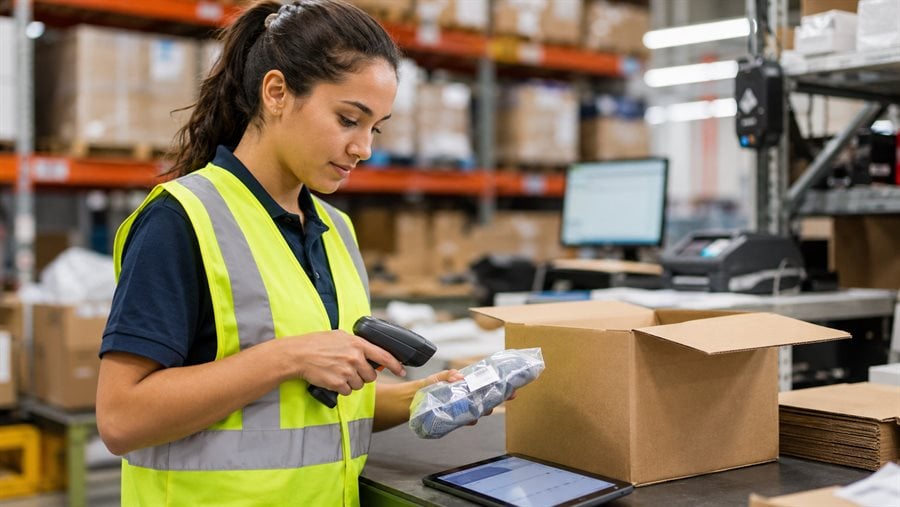
The packed order is assigned to a carrier based on cost, speed, and destination. Shipping software compares carrier rates, prints labels, and generates tracking numbers that flow back to the customer automatically. The carrier picks up the parcel and begins transit. At this point the order leaves your control — which is why carrier selection and clear tracking communication matter so much to the customer experience.
Step 7: Delivery and Returns
The carrier delivers the order, and a tracking update or delivery confirmation closes the forward cycle. But the order fulfillment process isn’t complete until you’ve accounted for returns. A smooth returns process — clear policy, easy label generation, fast refunds, and efficient restocking — is now part of the fulfillment workflow, not an afterthought. (For the full reverse-logistics playbook, see our guide to ecommerce returns management.)
The Order Fulfillment Process in Supply Chain Management
The order fulfillment process is the customer-facing end of supply chain management. Upstream, procurement and inbound logistics bring inventory in; downstream, fulfillment pushes the right products out to customers on time. When fulfillment is tightly integrated with demand forecasting, inventory planning, and transportation, the whole supply chain runs leaner — less safety stock, fewer stockouts, lower carrying costs, and faster cash conversion. When it’s disconnected, you get the classic symptoms: oversells, split shipments, missed delivery promises, and rising cost per order.
What Are the Main Order Fulfillment Models?
Before comparing in-house and outsourced fulfillment, it helps to know the models a business can choose from. Most brands use one, or a mix, depending on their products and order volume.
- In-house fulfillment: you store inventory and pick, pack, and ship orders yourself. Full control, but it demands space, staff, and technology.
- Third-party logistics (3PL): you send inventory to a fulfillment partner that stores it and ships your orders on discounted carrier rates. The common choice once volume outgrows in-house.
- Dropshipping: you never hold inventory; your supplier ships orders directly to customers. Low risk and low overhead, but the least control over speed, quality, and branding.
- Hybrid: a mix, such as fulfilling bestsellers through a 3PL while dropshipping slow movers, or using a 3PL for direct-to-consumer and keeping wholesale in-house.
Many growing brands also fulfill across several sales channels at once, which is where a 3PL with multichannel and omnichannel fulfillment support earns its place. The rest of this guide focuses on the choice most brands actually weigh: running fulfillment in-house versus outsourcing it.
In-House vs. Outsourced Fulfillment
The single biggest decision in any order fulfillment process is whether to run it yourself or outsource to a 3PL. Here’s how the two models compare:
| Factor | In-House Fulfillment | Outsourced (3PL) |
|---|---|---|
| Upfront cost | High — warehouse, equipment, staff | Low — pay per order/storage |
| Control | Full control over every step | Shared via SLAs and reporting |
| Scalability | Limited by your space and labor | Scales with demand and seasonality |
| Shipping rates | Retail or low-volume rates | Discounted volume rates |
| Best for | Early-stage, low volume, custom needs | Growing brands, 500+ orders/month |
Most brands cross the line to outsourcing when the ecommerce order fulfillment process starts stealing time from product, marketing, and growth — or when shipping costs and errors begin eating into margin. A 3PL absorbs the warehouse, labor, technology, and carrier negotiations so you can focus on the business.
Cura Resource Group runs this process on behalf of brands that have outgrown doing it themselves, and the tell is usually not order volume but error rate. When mispicks and late dispatches start arriving faster than the team can correct them, the process has outgrown the people running it.
Key Metrics to Measure Order Fulfillment Performance
You can’t optimize what you don’t measure. These are the metrics that define a healthy customer order fulfillment process:
- Order accuracy rate: the percentage of orders shipped with the correct items, quantities, and no damage. Best-in-class operations run above 99%.
- Order cycle time: how long from order placed to order shipped. Same-day or next-day processing is now the competitive standard.
- On-time delivery rate: the percentage of orders delivered by the promised date.
- Cost per order: total fulfillment cost (labor, packaging, shipping, overhead) divided by orders shipped.
- Perfect order rate: the percentage of orders delivered on time, complete, undamaged, and with correct documentation — the single best measure of overall fulfillment health.
How to Improve Your Order Fulfillment Process
Improving the order fulfillment process is rarely about one big fix — it’s about removing friction at each step. The highest-impact optimization strategies:
- Integrate your systems. Connect your store, order management, WMS, and shipping software so data flows automatically and orders never wait for manual entry.
- Optimize warehouse slotting. Place your fastest-moving SKUs closest to packing stations to cut picker travel time.
- Position inventory closer to customers. Distributing stock across multiple fulfillment locations shortens transit time and lowers shipping zones.
- Automate where volume justifies it. Barcode scanning, pick-to-light, and automated packaging reduce errors and labor cost at scale.
- Build returns into the workflow. Treat reverse logistics as a planned step, not an exception, so returned inventory is inspected and restocked fast.
Final Word
The order fulfillment process is where your brand promise either holds or breaks. Every step — from receiving to delivery to returns — compounds into the customer’s actual experience, and small inefficiencies multiply as you scale. Brands that treat fulfillment as a strategic capability rather than a cost center win on speed, accuracy, and retention. Whether you optimize in-house or partner with a 3PL, the goal is the same: get the right product to the right customer, on time, at a sustainable cost, every single time.
Ready to build an order fulfillment process that scales with your business?
Frequently Asked Questions
What is the order fulfillment process?
The order fulfillment process is the complete set of steps a business takes to receive, process, pick, pack, ship, and deliver a customer’s order — plus handle any returns. It spans the moment inventory arrives at the warehouse through final delivery to the customer’s door.
What are the steps in the order fulfillment process?
There are seven core steps: (1) receiving inventory, (2) inventory storage, (3) order processing, (4) picking, (5) packing, (6) shipping, and (7) delivery and returns. Some models combine or split these, but every fulfillment operation moves through this same sequence.
What is the difference between order processing and order fulfillment?
Order processing is the front-end stage — validating the order, confirming payment, checking stock, and generating a pick list. Order fulfillment is the entire cycle that includes processing plus picking, packing, shipping, and delivering the order. Order processing is one step inside the larger fulfillment process.
What is the first step in the order fulfillment process?
The first step is receiving inventory — accepting goods from your supplier, verifying quantities against the purchase order, inspecting for damage, and logging each SKU into the warehouse management system. Accurate receiving is the foundation for every step that follows.
How can I improve my order fulfillment process?
Integrate your store, order management, WMS, and shipping systems; optimize warehouse slotting so fast-moving SKUs are easy to reach; distribute inventory closer to customers; automate picking and packing where volume justifies it; and build returns handling into the workflow rather than treating it as an exception.
How does the ecommerce order fulfillment process work?
In ecommerce, an order placed at online checkout flows automatically into the fulfillment system via a platform integration (Shopify, WooCommerce, Amazon, etc.). The system validates and processes the order, then the warehouse picks, packs, and ships it, with tracking pushed back to the customer. A 3PL can run this entire ecommerce order fulfillment process on the brand’s behalf.