


A 3PL helps a business scale by turning fixed fulfillment costs into variable ones: instead of leasing more space and hiring more staff as orders grow, you pay per order to a provider that already has the space, the people and the carrier rates.
You hit $50K/month and suddenly your garage isn’t a fulfillment center — it’s a fire. Orders pile up. SKUs go missing. Your CAC is climbing because returning customers got the wrong size twice. This is the moment most founders discover that a 3PL service isn’t a vendor — it’s the difference between scaling and stalling. Third party logistics 3pl services exist because logistics complexity grows exponentially while revenue grows linearly. In 2026, with same-day delivery as table stakes and Amazon setting the customer expectation curve, working with a 3pl service provider isn’t optional for brands serious about growth. This guide breaks down what 3pl services actually do, where they create use, and how to choose one without getting buried in hidden fees.
What Is the Growth Paradox in Modern Commerce?
Scaling a brand is the goal. But every founder eventually meets Growth Debt — the operational drag that compounds with each new order. You celebrate hitting 500 orders a month. Then 5,000. Then the warehouse manager quits, your WMS crashes during a Black Friday flash sale, and your hero SKU sits in a container at the port for nine days. DIY logistics is the #1 bottleneck for scaling brands. Not ad spend. Not product-market fit. Logistics. Because logistics doesn’t scale linearly — it scales in step-functions that require capital, real estate, and labor every time you cross a threshold.
What is a 3PL service?
A 3PL service (third-party logistics) is an outsourced provider that handles warehousing, inventory management, order fulfillment, shipping, and returns on behalf of a brand. Instead of leasing your own distribution center and hiring pickers, you ship your inventory to a 3PL warehouse, and they handle everything downstream — from the moment a customer clicks “buy” to the moment the package lands on a doorstep. Modern 3pl logistics services go further: software integrations, kitting, reverse logistics, freight management, and multi-node distribution across the country.
What Do 3PL Services Actually Include?
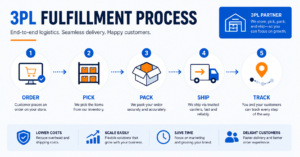 People hear “3PL” and picture a warehouse. That’s like calling Stripe “a credit card.” The actual surface area is much bigger. A full-service 3pl coordinates inventory management, warehouse management, and outbound fulfillment from a network of distribution centers — usually with proprietary software layered across the entire stack. The warehouse is just the physical layer. The intelligence sits in routing, demand forecasting, and integration with your sales channels.
Core 3PL Fulfillment Services
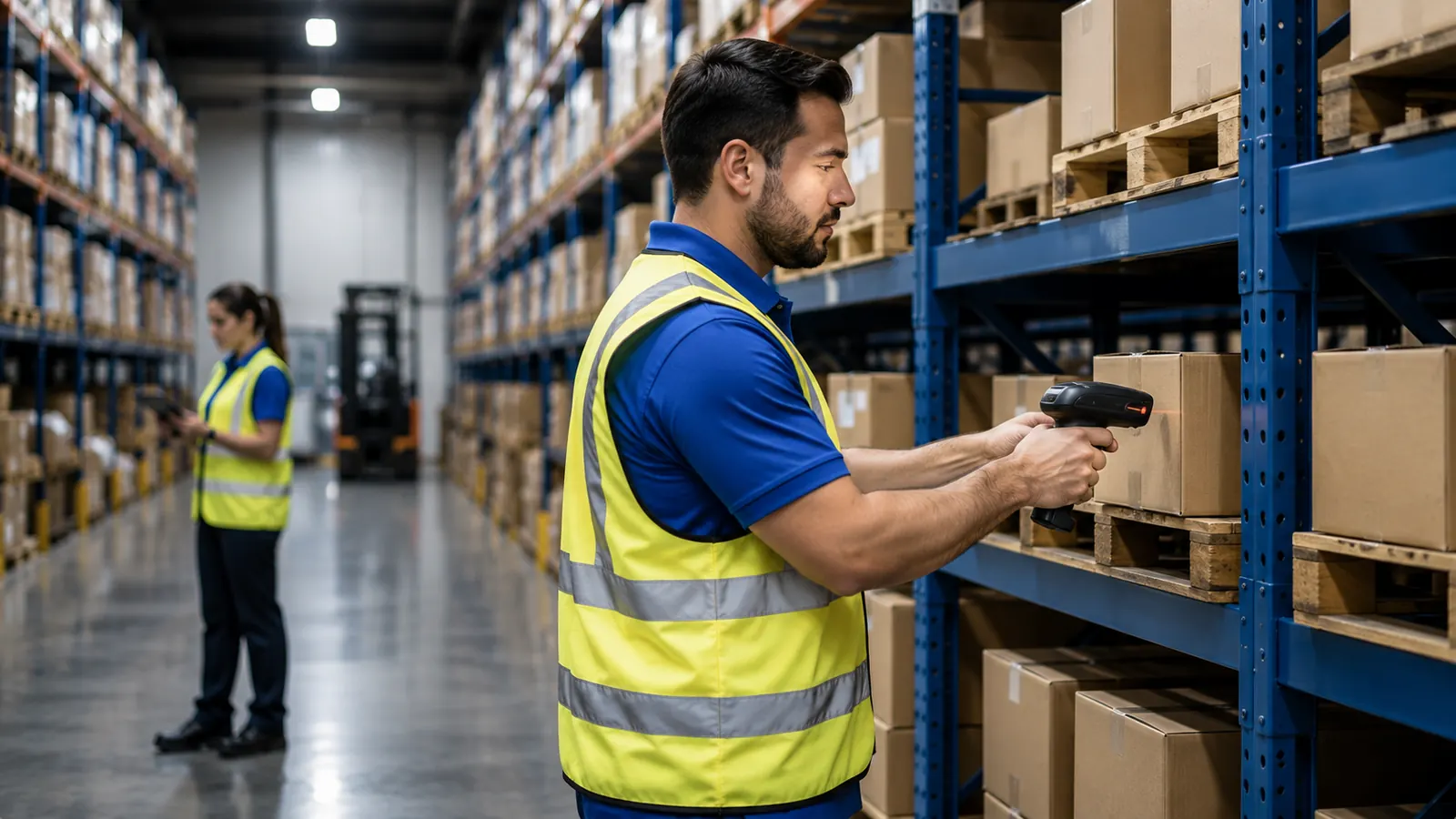
The bread and butter of any 3pl fulfillment service is order processing. Here’s what happens when a customer places an order:
| Stage | What Happens | Why It Matters |
|---|---|---|
| Order ingestion | Order syncs from your store to the 3PL’s WMS | Eliminates manual entry errors |
| Pick | Warehouse staff retrieve SKUs from designated bins | Accuracy depends on slotting logic |
| Pack | Items packed with branded materials, dunnage, inserts | Drives unboxing experience and reviews |
| Ship | Label generated using rate-shopped carrier | Determines delivery speed and cost |
| Track | Tracking pushed back to customer and store | Reduces “where is my order” tickets |
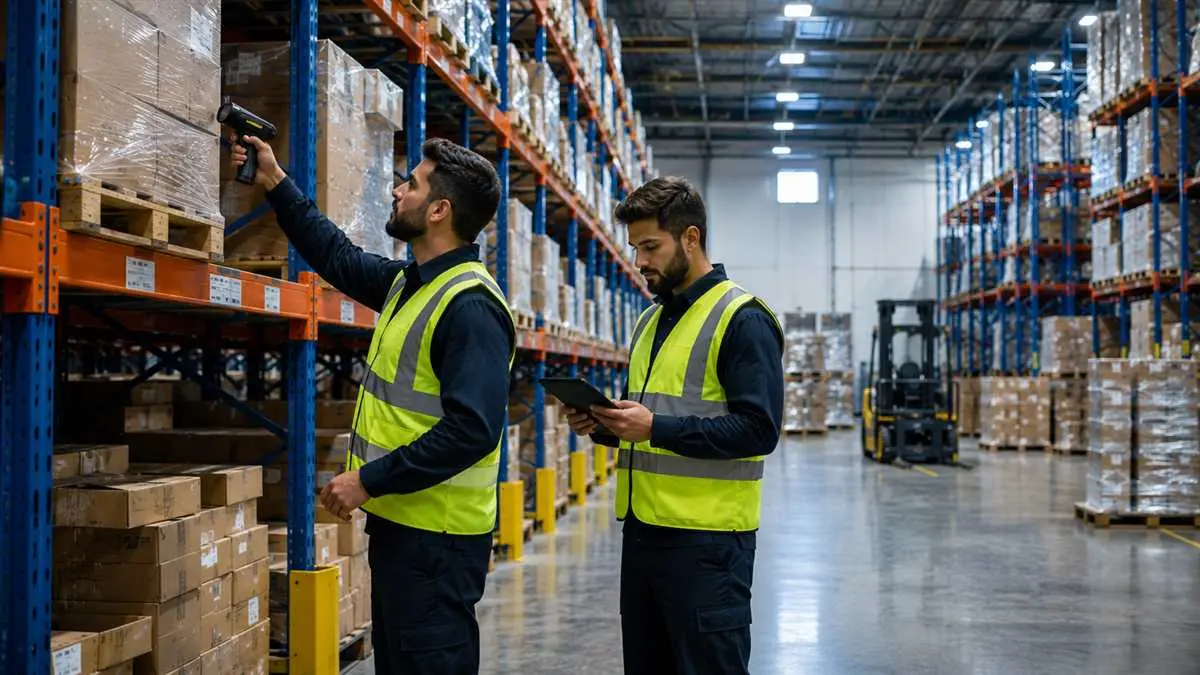
3pl ecommerce fulfillment services live or die by pick-and-pack accuracy. The industry benchmark is 99.5%+ accuracy. Anything lower, and your refund rate eats your margin.
Specialized 3PL Value-Added Services
This is where the real use lives. The basic warehouse-and-ship offering is commoditized. The differentiation in 2026 sits in the specialized services. 3PL Kitting Services. Bundling separate SKUs into single units — gift sets, subscription boxes, promotional combos. If you’ve ever launched a holiday bundle and watched margin disappear into labor costs, kitting is the fix. The 3PL handles assembly at scale. 3PL Reverse Logistics. Returns are the silent killer of ecommerce P&Ls. A good 3PL inspects, grades, restocks, or disposes of returned inventory and pushes the data back into your system. Done right, reverse logistics recovers 60-80% of returned product value. 3PL Distribution & Freight Services. Moving goods from port to warehouse. 3pl freight services and 3pl distribution services handle the inbound side — container drayage, LTL transfers between nodes, cross-docking. This is the unsexy work that determines whether your next launch ships on time.
Why Are 3PL Services the Engine of Efficient Scaling?
 The strategic case for the best 3pl services comes down to two words: capital efficiency.
Transitioning from CapEx to OpEx
A 10,000 sq ft warehouse lease in a tier-2 logistics market runs $80K-$150K annually before you’ve hired a single person. Add a WMS license, forklifts, racking, insurance, and a warehouse manager pulling $75K, and you’re looking at $400K+ in fixed overhead before you ship a single box. A 3PL flips that equation. You pay per pallet stored and per order shipped. Volume goes up, costs go up proportionally. Volume drops in Q1? Costs drop too. 3pl services pricing models convert fixed CapEx into variable OpEx — which is what investors and CFOs want to see. Top 3pl services structure pricing as receiving + storage + pick fee + packaging + shipping, with volume discounts kicking in at defined tiers.
Nationwide Reach: Faster Last-Mile Delivery
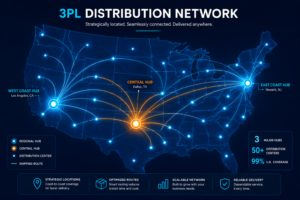
Customer expectations in 2026 are brutal. 2-day shipping is the floor. 1-day is the new differentiator. The only way to deliver that economically is to position inventory close to your customers — which means multi-node distribution. Nationwide 3pl services let you split inventory across 3-5 warehouses, dropping shipping zones from Zone 7-8 (5+ days, $12+) to Zone 2-3 (2 days, $6-8). The math is brutal in your favor.
The Importance of East Coast 3PL Services for Atlantic Trade
East coast 3pl services anchor your reach to ~65% of the US population east of the Mississippi. Hubs in Pennsylvania, New Jersey, Georgia, and the Carolinas dominate here. Atlantic port access (Savannah, Charleston, NY/NJ) shortens inbound transit from European and Asian suppliers routing through Suez.
Maximizing Speed with West Coast 3PL Services
West coast 3pl services — primarily California, Nevada, and Washington — are non-negotiable if you import from Asia. LA/Long Beach handles ~40% of US container imports. Positioning inventory close to port slashes drayage costs and accelerates time-to-shelf.
Benefits of a National 3PL Services Network
National 3pl services that operate connected nodes share inventory visibility across the network. You can reroute orders to alternate warehouses during stockouts, weather disruptions, or carrier delays. That redundancy is invisible until it saves your peak season.
What Technology Should a 3PL Provide?
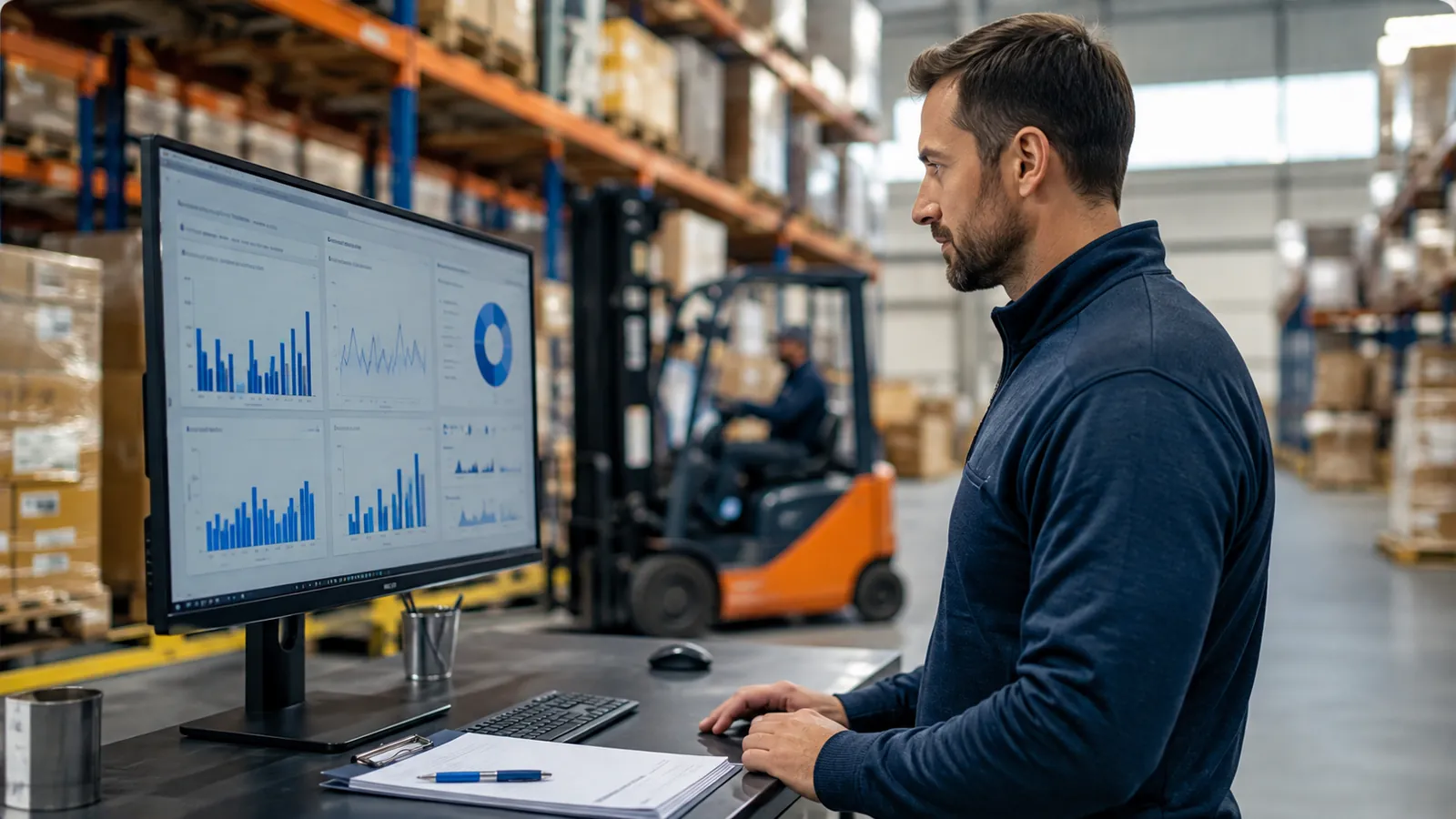
The differentiator between modern 3pl service providers and legacy warehouses is software. Period. A 2026-ready 3PL runs proprietary or best-in-class 3pl fulfillment software with API-first architecture. They offer 3pl software integration services that plug directly into your sales channels — no middleware, no CSV uploads, no Slack messages to a warehouse manager asking why inventory is off.
Omnichannel 3PL Services
Omnichannel 3pl services sync orders from every sales channel into a single inventory pool. A unit on the shelf can be allocated to a Shopify order, an Amazon FBM order, or a wholesale B2B PO — whichever comes first. Critical integrations to verify before signing with any provider:
- Shopify and Shopify Plus
- Amazon Seller Central (FBM/SFP)
- WooCommerce 3pl service connectors
- Magento 3pl service plugins
- BigCommerce, NetSuite, SPS Commerce for EDI
Amazon 3pl services have become especially important for brands running Seller Fulfilled Prime (SFP). SFP requires nationwide 2-day delivery at FBA-level reliability — and only 3PLs with the right software and network footprint can hit those SLAs.
How Do You Choose Between a 3PL and a 4PL?
What does 3pl services mean in contrast to 4PL? A 3PL executes logistics. A 4PL manages the entire supply chain — including multiple 3PLs, freight forwarders, and software vendors — as an outsourced logistics department. Most brands under $50M in revenue don’t need a 4PL. A strong 3pl logistics service provider with good software covers 95% of the use case.
How to Evaluate 3PL Services Cost & Pricing
The cheapest 3pl services near me are almost always the most expensive in 18 months. Here’s why:
| Pricing Element | Transparent 3PL | Hidden-Fee 3PL |
|---|---|---|
| Receiving | Per pallet, published rate | “Custom” — billed after the fact |
| Storage | Per bin/pallet/month | Charged on peak volume, not average |
| Pick & pack | Tiered by order volume | Per-item with surcharges |
| Packaging | Pass-through cost | Marked up 30-50% |
| Returns | Flat fee per RMA | Per-touch with inspection fees |
| Tech/integration | Included | $500-2000/month |
| Account management | Dedicated rep | Shared inbox |
Demand a sample invoice using your actual historical volume before signing. If they won’t provide one, walk.
Industry-Specific Scaling: From Magento to WooCommerce
Different ecommerce platforms have different fulfillment realities. A magento 3pl service partner needs deep B2B and B2C handling because Magento powers larger, often hybrid catalogs. A woocommerce 3pl service partner needs to handle higher SKU velocity from smaller-AOV stores. Shopify-focused 3PLs prioritize speed of integration and pre-built apps. Amazon-focused 3pl ecommerce fulfillment services need SFP certification and FBA prep capabilities. Match the 3PL to your channel mix, not the other way around.
Is Your Business Ready for a 3PL?
If you’re shipping more than 500 orders a month, holding more than $50K in inventory, or losing sleep over fulfillment errors, you’re past ready. 3pl transportation services, 3pl brokerage services, and full-stack fulfillment combine to remove operational drag from your P&L and give you back the only thing that actually drives growth: focus on product and demand. The brands that win in 2026 aren’t the ones running their own warehouses. They’re the ones partnering with a full service 3pl across the entire supply chain management stack while they pour energy into the work only they can do — building product customers want and acquiring them efficiently. Stop running logistics. Start running a brand. Audit your current fulfillment costs against 3pl services usa benchmarks this quarter — the gap will surprise you.
Cura Resource Group is built around exactly this problem: capacity that flexes with demand rather than being sized for the busiest week of the year. The real test of whether a provider scales is what happens in November, not what the contract promises in March.
Frequently Asked Questions
How does a 3PL help a business scale?
A 3PL absorbs the parts of growth that break first: warehouse space, staffing for peaks, and carrier capacity. Because you pay per order rather than for fixed overhead, a spike in demand becomes a bigger invoice instead of an emergency lease, a hiring round, and a scramble for pallet positions.
How does a 3PL reduce shipping costs?
By pooling many shippers’ volume into one carrier negotiation. A small brand shipping a few hundred parcels a month has no leverage on its own account; a provider moving hundreds of thousands does. Your orders ride on that negotiated rate card rather than published retail pricing.
When should a business outsource to a 3PL?
When fulfillment starts consuming the hours that should go into product, marketing and demand. Volume matters less than where your time goes: if packing orders is the reason you are not doing the work that grows the business, the operation has outgrown the people running it.
What is the difference between a 3PL and a 4PL?
A 3PL executes the work — warehousing, picking, packing and shipping — usually from its own facilities. A 4PL manages the network instead, coordinating several 3PLs and carriers on your behalf without owning warehouses. Most growing brands need execution, which is a 3PL.
How long does onboarding with a 3PL take?
Typically several weeks rather than days. The sequence is integration with your store platform, sending inventory in to be received and counted, running test orders to confirm the flow, then going live. The receiving and counting step usually sets the timeline, not the software.
What does a 3PL cost?
Pricing is usually a combination of receiving, monthly storage per pallet or bin, a pick-and-pack fee per order and per additional item, plus shipping at the provider’s negotiated rates. Ask which of those are quoted separately, because the headline per-order figure rarely includes all of them.