
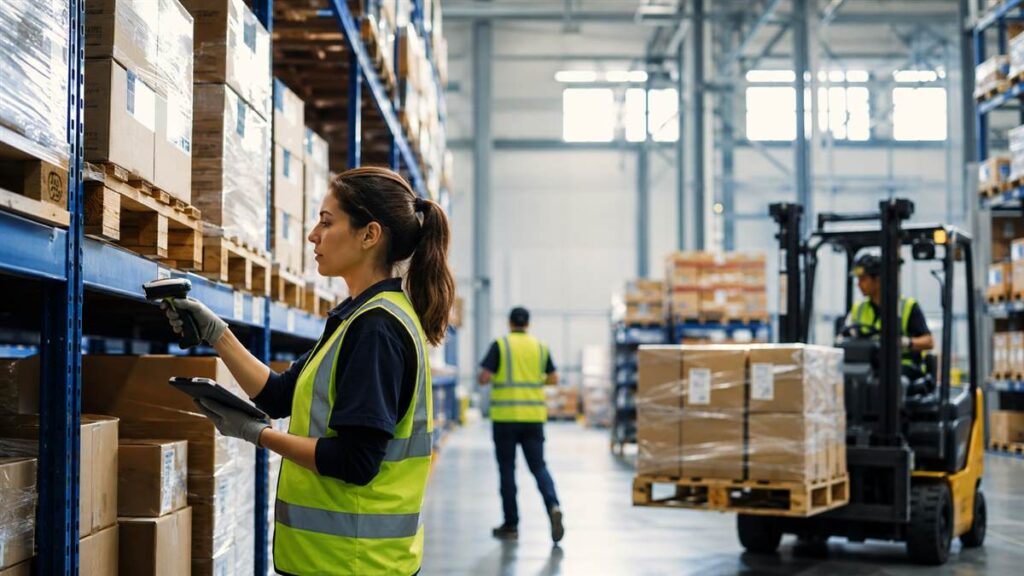

A 3PL provider (third-party logistics provider) is a company that handles a business’s logistics operations — warehousing, inventory, order fulfillment, and shipping — so the business doesn’t have to run them in-house. Instead of leasing a warehouse, hiring staff, buying software, and negotiating carrier rates yourself, you send your inventory to the 3PL, and it stores your products, picks and packs orders, and ships them to your customers. According to Armstrong & Associates, 94% of domestic Fortune 500 companies now work with at least one third-party logistics provider, and the model has become the default way growing brands handle fulfillment. This guide explains what a 3PL provider and a 3PL warehouse are, what they do, how third-party logistics works, the types, technology, and costs, and how to decide whether using a 3PL is right for your business.
What Is a 3PL Provider?
A 3PL provider is an outsourced partner that manages part or all of a company’s supply chain and logistics. “3PL” stands for third-party logistics — the business is the first party, its customers are the second, and the logistics company is the third party that connects them. A 3PL provider takes over the physical and operational side of getting products from your suppliers to your customers, while you keep ownership of the inventory and the customer relationship.
The model exists because logistics is hard to do well at small scale. Warehousing, labor, technology, and carrier contracts all carry high fixed costs and demand expertise. A 3PL spreads those costs across many clients, so a growing brand gets warehouse space, trained staff, software, and discounted shipping it could never justify on its own. What began decades ago as simple contract warehousing and freight has grown into full-service fulfillment: today a 3PL fulfillment provider often runs the entire path from inbound receiving to the doorstep, with real-time data at every step.
What Is a 3PL Warehouse?
A 3PL warehouse is the building a third-party logistics provider runs on your behalf. The provider is the company, and the warehouse is where your stock actually sits.
In everyday use the two terms are interchangeable. Brands use both to describe the same arrangement, and so does most of the industry.
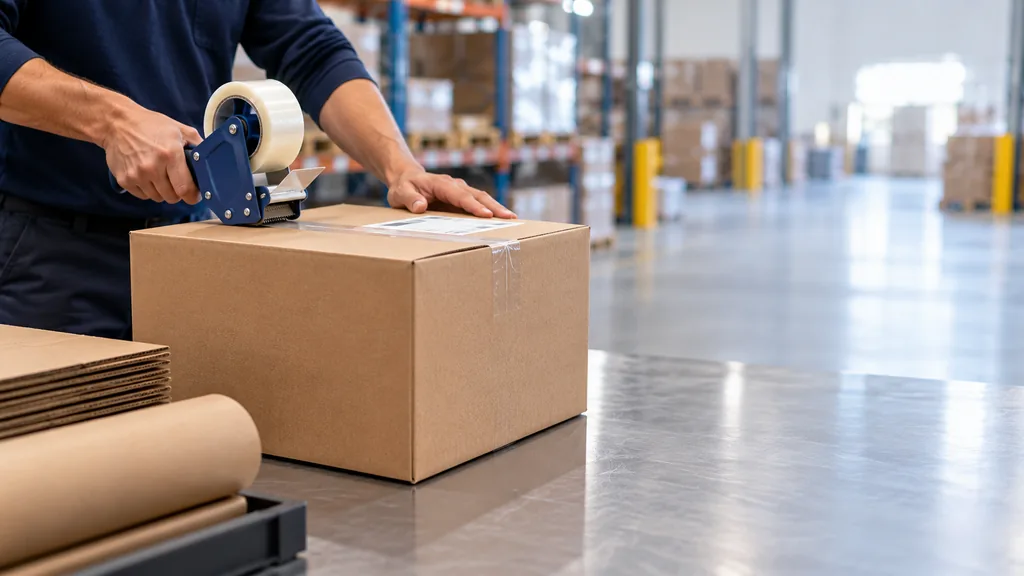
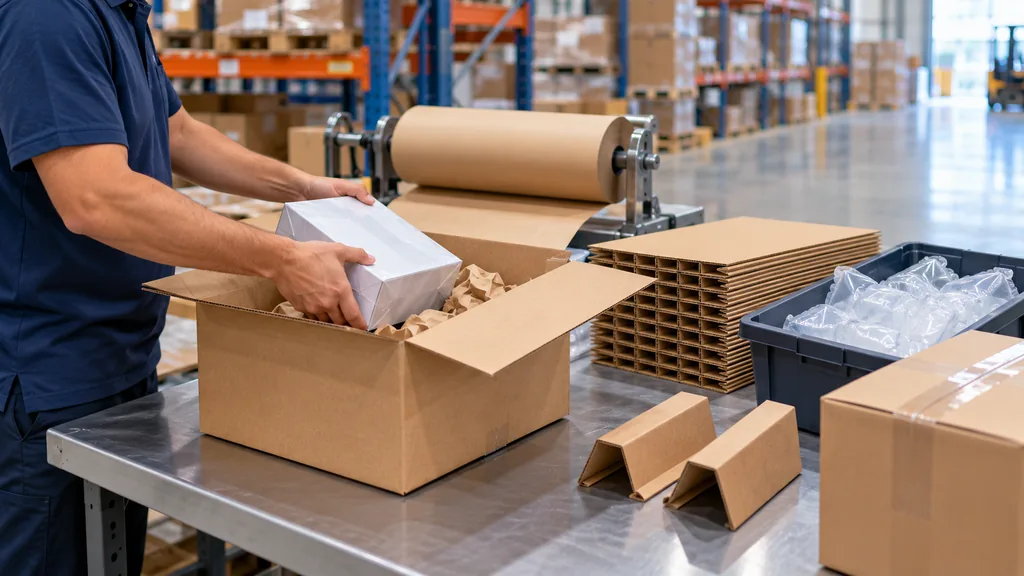
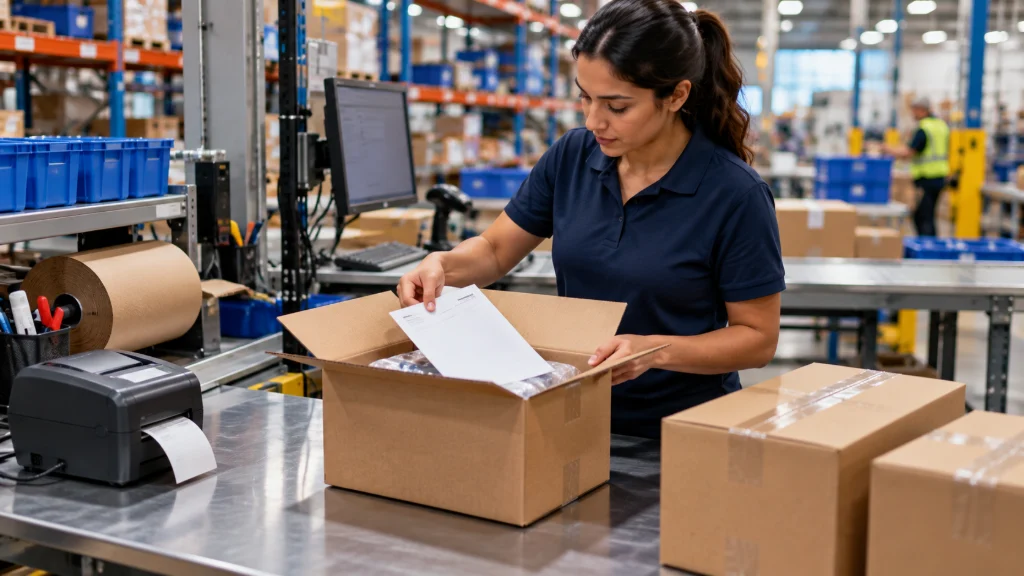
Inside, a 3PL warehouse does four things with your inventory. It receives and puts away incoming stock, stores it, picks and packs orders against it, and ships them out.
What separates it from a warehouse you lease yourself is that you buy the outcome, not the space. The staff, the racking, the equipment and the software belong to the provider.
One provider may run several. A national 3PL splits your inventory across two or three warehouses to cut transit time and shipping cost to your customers.
1PL, 2PL, 3PL, 4PL, 5PL: Where a Third-Party Logistics Provider Fits
Logistics providers are grouped into parties based on how much of the supply chain they own and manage. Knowing the spectrum makes the “third-party” label clear.
- 1PL (first-party logistics): the business handles its own logistics — a manufacturer delivering its own goods with its own trucks.
- 2PL (second-party logistics): an asset owner that provides one piece of the chain, like a carrier or a shipping line that moves freight.
- 3PL (third-party logistics): an outsourced partner that runs multiple logistics functions together — warehousing, fulfillment, and shipping — and integrates with your systems.
- 4PL (fourth-party logistics): a manager that oversees the whole supply chain at a strategic level, often coordinating several 3PLs and other vendors on your behalf.
- 5PL (fifth-party logistics): a provider that designs and runs entire supply-chain networks, usually driven by technology and data across many clients.
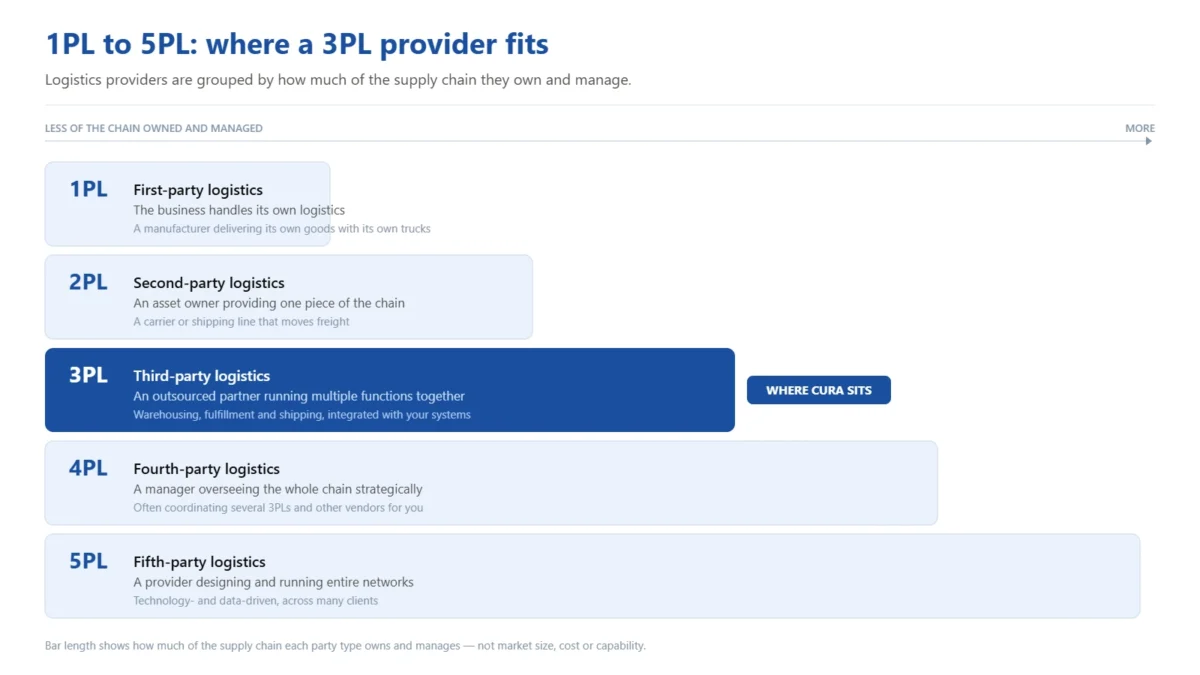
Most growing and mid-market brands are served by a strong 3PL provider. The higher tiers become relevant only for large enterprises with complex, multi-vendor networks.
What Does a 3PL Provider Do?
A 3PL provider handles the operational steps between your supplier and your customer. A full-service 3PL service provider typically covers:
- Warehousing and receiving: accepting inventory from your suppliers, inspecting it, and storing it in the 3PL’s fulfillment warehouse.
- Inventory management: tracking stock levels in real time across every sales channel to prevent overselling and stockouts.
- Order fulfillment: picking, packing, and preparing orders for shipment — the core order fulfillment process.
- Shipping and carrier management: rate-shopping and shipping orders using the 3PL’s discounted carrier contracts.
- Returns processing: receiving, inspecting, and restocking returned items so stock goes back to sellable quickly. The scale is why it matters: the National Retail Federation and Happy Returns put total US retail returns at $890 billion for 2024.
- Value-added services: kitting, bundling, custom packaging, labeling, and light assembly.
- Freight and distribution: moving larger shipments and, for some providers, managing distribution across multiple warehouses.
Some 3PLs also handle freight forwarding, customs clearance, and B2B or retail-compliance shipping. But the heart of the service is storing your inventory and fulfilling your orders accurately and fast.
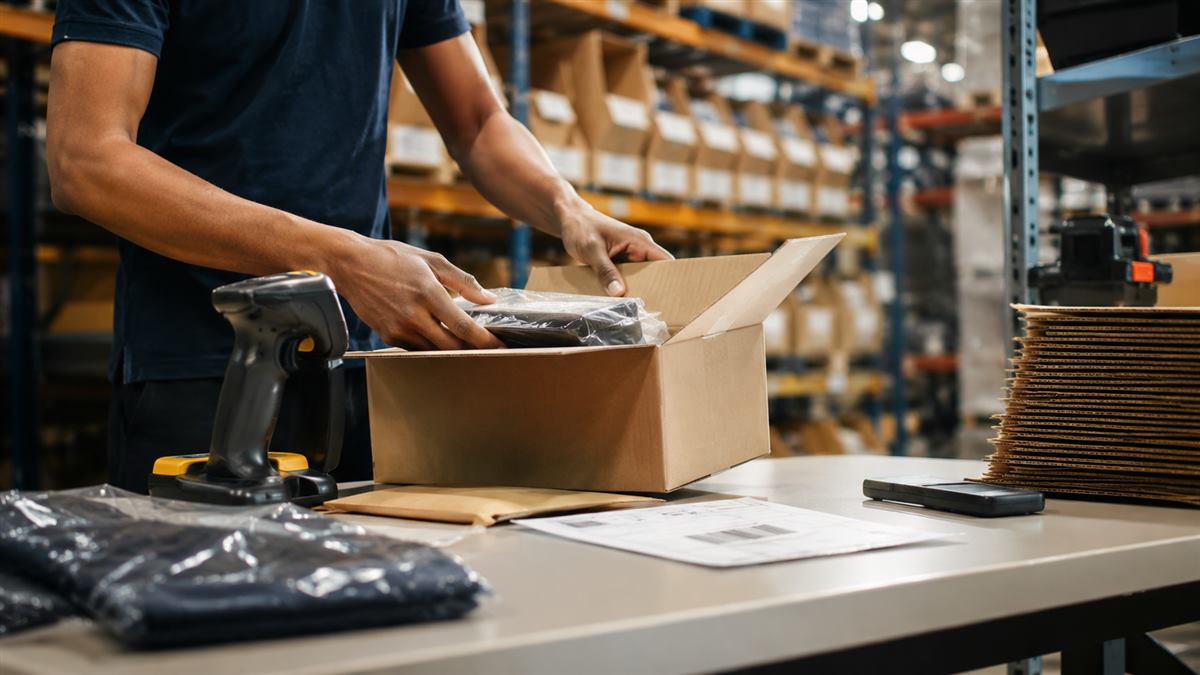
How Third-Party Logistics Works
Third-party logistics works as a handoff: you own the products and the customer relationship, and the 3PL runs the physical operation. The flow is straightforward:
- 1. You send inventory to the 3PL. Your products ship from your supplier or facility to the 3PL’s warehouse, where they are received, inspected, and logged.
- 2. Inventory is stored and tracked. The 3PL stores your stock and syncs quantities to your store through its warehouse management system (WMS).
- 3. Orders flow in automatically. When a customer buys, the order passes from your ecommerce platform to the 3PL’s system with no manual step.
- 4. The 3PL picks, packs, and ships. Staff fulfill the order and ship it using discounted carrier rates, with tracking sent back to the customer.
- 5. Returns are handled. The 3PL receives and processes any returns, restocking sellable items and updating inventory.
Throughout, you keep visibility and control through the 3PL’s software, while the day-to-day labor and shipping sit with the provider.
What Are the Types of 3PL Providers?
3PL providers split seven ways: asset-based, non-asset-based, ecommerce fulfillment, freight and transportation, warehousing and distribution, financial and information, and niche or specialized. Not all of them do the same thing. They differ first by whether they own their assets, and then by what they specialize in. A third split matters just as much: whether the space and staff are shared with other clients or dedicated to you under a long-term contract.
By ownership model:
- Asset-based 3PLs: own their warehouses, trucks, and equipment, giving them direct control over operations and capacity.
- Non-asset-based 3PLs: coordinate logistics through partner networks rather than owning the physical assets, trading control for flexibility.
By specialization:
Cura Resource Group sits in the warehousing-and-fulfillment category rather than the freight-brokerage one: inventory is received, stored and shipped from facilities we operate, which is the distinction that matters when you are comparing a 3PL that touches your stock against one that only books your freight.
- Ecommerce fulfillment 3PLs: focus on direct-to-consumer order fulfillment for online brands.
- Freight and transportation 3PLs: move larger shipments and manage carrier networks and freight brokerage.
- Warehousing and distribution 3PLs: center on storage and moving stock between facilities and retail.
- Financial and information 3PLs: handle freight audit, payment, and logistics data rather than physical goods.
- Niche or specialized 3PLs: handle cold storage, hazardous materials, oversized freight, or regulated goods like health and beauty.
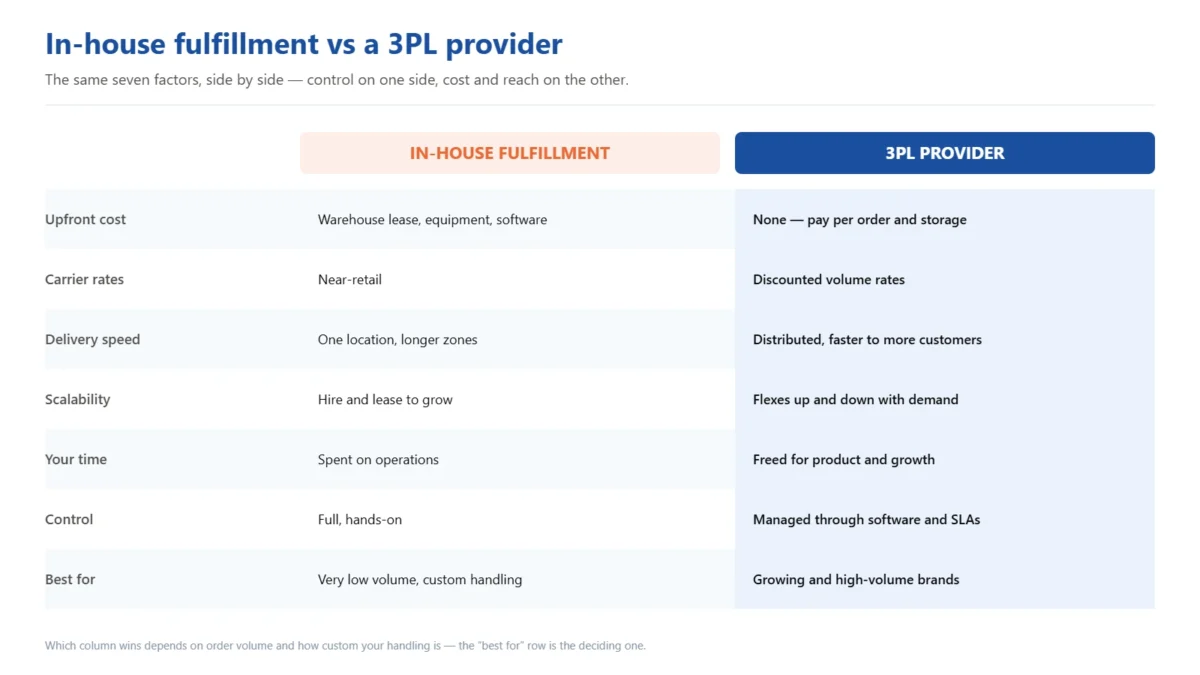
In-House Fulfillment vs. a 3PL Provider
The clearest way to see the value of a 3PL is to compare it with running fulfillment yourself, and labor is the line that usually decides it. Average hourly earnings in warehousing and storage reached $26.84 in June 2026 according to the U.S. Bureau of Labor Statistics, whose same series shows labor productivity flat or falling every year from 2021 through 2024.
| Factor | In-House Fulfillment | 3PL Provider |
|---|---|---|
| Upfront cost | Warehouse lease, equipment, software | None — pay per order and storage |
| Carrier rates | Near-retail | Discounted volume rates |
| Delivery speed | One location, longer zones | Distributed, faster to more customers |
| Scalability | Hire and lease to grow | Flexes up and down with demand |
| Your time | Spent on operations | Freed for product and growth |
| Control | Full, hands-on | Managed through software and SLAs |
| Best for | Very low volume, custom handling | Growing and high-volume brands |
In-house makes sense at very low volume or when handling is highly specialized. Once order volume climbs, the 3PL’s rates, speed, and flexibility win on both cost and service — where that crossover sits depends on your order profile, so model it rather than assume it.
3PL vs. 4PL: What’s the Difference?
A 3PL executes logistics using its own warehouses and carriers. A 4PL manages providers on your behalf without owning the assets.
| Factor | 3PL | 4PL |
|---|---|---|
| Core role | Executes logistics work | Manages the logistics network |
| Owns assets | Usually warehouses, staff, equipment | Typically none |
| Scope | Warehousing, fulfillment, transport | Whole supply chain, end to end |
| Manages other providers | No | Yes, often several 3PLs |
| You deal with | The operator doing the work | A single strategic layer above it |
| Best fit | Brands needing execution | Enterprises needing orchestration |
A 3PL provider executes logistics — warehousing, fulfillment, and shipping. A 4PL (fourth-party logistics) provider manages the entire supply chain at a strategic level, often coordinating multiple 3PLs and other vendors on the client’s behalf. In short: a 3PL does the logistics work, while a 4PL manages the logistics partners. Most growing and mid-market brands are served well by a strong 3PL; 4PL becomes relevant for large enterprises with complex, multi-vendor supply chains that need a single point of coordination.
3PL vs. Amazon FBA vs. Dropshipping
A 3PL is one of three common ways to outsource fulfillment, and they suit different businesses.
| Model | Who holds inventory | Best for |
|---|---|---|
| 3PL provider | You own it; the 3PL stores and ships it | Multichannel brands wanting control and branded fulfillment |
| Amazon FBA | You own it; Amazon stores and ships it | Sellers focused mainly on the Amazon marketplace |
| Dropshipping | Supplier holds it and ships direct | Testing products with no inventory investment |
A 3PL gives you branded packaging and control across every sales channel, where FBA ties fulfillment to Amazon and can add long-term storage fees. Dropshipping carries no inventory risk but the thinnest margins and least control over quality and speed. Many growing brands run a 3PL for their own store and wholesale while using FBA only for Amazon orders — the two are not mutually exclusive.
What Are the Benefits of Using a 3PL Provider?
Businesses use a 3PL provider because it lowers cost and complexity while improving service. The main benefits:
- Lower shipping costs: 3PLs ship at high-volume carrier rates a single business can’t match.
- Faster delivery: distributed warehouses position inventory closer to customers, shortening transit times and enabling same-day delivery in some markets.
- No fixed overhead: you pay per order and per unit of storage instead of carrying a warehouse and staff.
- Expertise and technology: an integrated WMS, trained labor, and logistics know-how without building any of it.
- More time to grow: outsourcing fulfillment frees you to focus on product, marketing, and customers.
- Scalability: capacity flexes up for peak season and back down after, without hiring or layoffs.
- Fewer errors: purpose-built processes and scanning push order accuracy above what most in-house teams reach.
What Are the Drawbacks of Using a 3PL?
A 3PL is not the right fit for every business, and an honest look at the trade-offs helps you choose well:
- Less hands-on control: you rely on the provider’s processes and reporting rather than watching every order yourself.
- Onboarding effort: integrating systems and moving inventory takes time and planning up front.
- Hidden or layered fees: receiving, storage, and surcharge line items can add up if a contract isn’t clear.
- Packaging and unboxing limits: highly custom or hand-finished orders can be harder to replicate — though many 3PLs support branded packaging fulfillment.
- Dependence on one partner: service quality now sits with the 3PL, which makes choosing the right one critical.
Most of these are managed with a clear contract, defined service levels, and a provider whose size and specialty match your business.
What Does a 3PL Provider Cost?
3PL pricing is usually built from a few per-activity fees rather than a single flat rate. Typical components:
- Receiving: a fee to accept and log inbound inventory, often per hour, per unit, or per pallet.
- Storage: charged per pallet, shelf, or bin per month.
- Pick and pack: a per-order fee plus a charge per additional item.
- Shipping: carrier postage, often discounted through the 3PL’s volume.
- Value-added and returns: kitting, custom packaging, and returns handling billed separately.
As a simple example, an order with two items might carry a $3 pick-and-pack fee, a share of monthly storage, and a discounted shipping rate — the 3PL’s carrier discount often offsets much of its own fees. The right way to judge cost is total landed cost per order — including the shipping discounts and the overhead you no longer carry — not any single line item. When comparing quotes, watch for setup fees, minimum monthly charges, and long-term storage surcharges so the real cost is clear before you sign.
3PL Technology: The WMS, OMS, and Integrations
Modern third-party logistics runs on software as much as shelves. The technology is what lets you outsource fulfillment without losing visibility.
- Warehouse management system (WMS): directs receiving, put-away, picking, and packing, and tracks every unit in real time.
- Order management system (OMS): pulls in orders from every sales channel and routes them for fulfillment.
- Ecommerce and marketplace integrations: native connections to platforms like Shopify, plus Amazon and other marketplaces, so orders and inventory sync automatically.
- API and EDI connections: link the 3PL to your ERP and retail partners for larger or B2B operations.
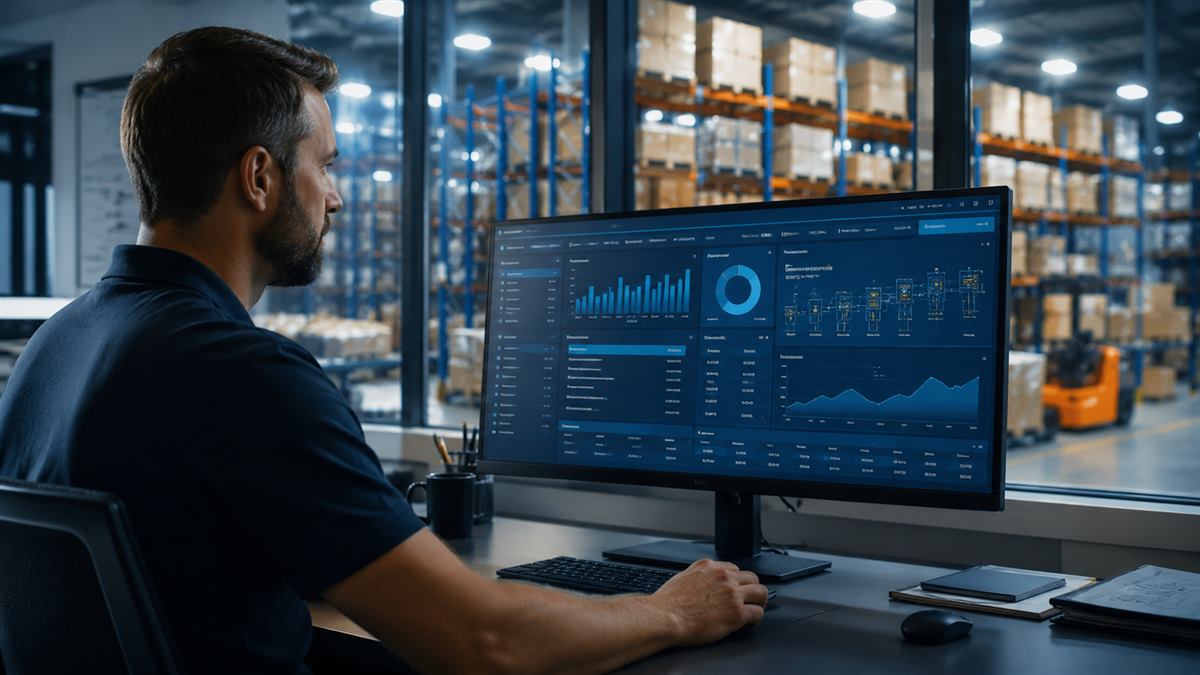
- Client dashboard: gives you live visibility into inventory, orders, and shipping performance.
When you evaluate a 3PL fulfillment provider, its integrations matter as much as its warehouses — a provider that plugs into your existing stack keeps orders flowing without manual work.
How to Measure 3PL Performance: KPIs That Matter
Track five: order accuracy rate, on-time shipping rate, inventory accuracy, average fulfillment time, and cost per order. A good 3PL relationship is measured, not assumed. Track these metrics to know whether the provider is delivering:
- Order accuracy rate: the share of orders shipped correct and undamaged — aim above 99%.
- On-time shipping rate: how often orders ship within the agreed window.
- Inventory accuracy: how closely system counts match physical stock.
- Average fulfillment time: from order received to shipped.
- Cost per order: total fulfillment cost divided by orders shipped.
Agree on these as service levels (SLAs) before you sign, and review them regularly once you’re live.
Which Industries Rely on 3PL Providers?
Third-party logistics providers serve almost every product business, but a few lean on them especially hard: ecommerce and direct-to-consumer brands, health and beauty, consumer electronics, food and beverage (including cold chain), apparel, subscription boxes, and B2B and wholesale suppliers. The common thread is order volume and complexity — once shipping products becomes a full-time operation, outsourcing to specialists usually beats building it in-house.
How Do You Choose a 3PL Provider?
Choosing the right 3PL provider comes down to matching its location, technology, services, pricing, and ability to scale to your needs — then checking real performance metrics before you commit. Location relative to your customers drives shipping speed and cost; native integrations with your ecommerce platform keep orders flowing automatically; and published accuracy and on-time-shipping numbers show whether the provider delivers. Ask for references, model the full cost, and confirm the provider handles your product type and volume. Send every shortlisted provider the same written question list, so their answers can be compared side by side. Modeling the full landed cost and actually calling the references is where most brands cut corners, and it is the part of choosing the right 3PL partner that most often decides whether the switch works.
Onboarding: What Switching to a 3PL Looks Like
Onboarding runs in four steps and takes weeks rather than days, with the timeline set by your data quality and integrations rather than by the provider. It is a project, not a switch you flip: connect your store and systems to the 3PL’s platform, send in your inventory to be received and counted, run test orders to confirm the flow works, then go live and monitor the first weeks closely. Good providers assign an account manager and a documented plan. If you’re switching from an existing 3PL, coordinate the inventory transfer to avoid a gap in shipping, and time the move outside your peak season if you can.
Onboarding with Cura Resource Group follows the same sequence, with one difference worth asking any provider about: who owns the test-order phase. We run it with your team rather than handing over a login and a manual, because the errors that surface in those first fifty orders are the ones that would otherwise reach your customers.
How a 3PL Provider Helps You Scale
A 3PL provider is one of the clearest ways for a growing business to add capacity without adding fixed cost. The demand keeps arriving: U.S. Census Bureau figures put US ecommerce at $340.2 billion in the second quarter of 2026 — 17.1% of all retail sales, up 12.2% year on year. Because the provider already has the warehouses, labor, technology, and carrier contracts, you can grow order volume — and expand into new regions or peak seasons — without building infrastructure each time. A brand that adds a second warehouse through its 3PL can suddenly reach the opposite coast in one or two days instead of five, without signing a lease or hiring a team. The same flexibility works in reverse: when demand dips after the holidays, your costs fall with your order count instead of sitting fixed. This is why so many brands outsource once they outgrow in-house fulfillment; our guide explains exactly how 3PL services help businesses scale efficiently.
How Does a 3PL Turn Fixed Costs Into Variable Ones?
A 3PL converts the fixed cost of owning fulfillment into a variable cost per order. Instead of signing a multi-year warehouse lease, buying racking and a WMS licence, and hiring a warehouse manager before the first order ships, you pay a provider that already carries all of it.
That matters most in the months when volume moves. A private warehouse costs the same in a slow February as it does in a peak November; a per-order model tracks demand in both directions.
Why Does Warehouse Location Decide Your Delivery Speed?
Where inventory sits sets both how fast it reaches the customer and what the freight costs. A single warehouse means long shipping zones for half the country, and zone is what drives parcel pricing.
An east coast node anchors reach to the dense population corridor between Boston and Atlanta. A west coast node serves California and the Pacific Northwest and sits next to the container ports handling most inbound Asian freight.
Running connected nodes lets a provider split inventory across them, hold the fast-moving SKUs in both, and ship each order from whichever site is closest to the delivery address. That is the difference between a two-day promise and a five-day one, without paying for air freight.
The Future of 3PL
Third-party logistics is moving toward more automation, real-time data, and distributed fulfillment networks that put inventory closer to customers. Robotics and warehouse management systems are speeding up fulfillment, while data and forecasting improve accuracy and cost control. Customer expectations for two-day and same-day delivery keep pushing providers to add locations and smarter routing, and sustainability — from right-sized packaging to greener last-mile delivery — is shaping where providers invest next. For a growing brand, the practical takeaway is that a good 3PL keeps investing in capability you would otherwise have to buy yourself. For where the industry is heading, read our take on the future of 3PL and warehousing.
When Should You Use a 3PL Provider?
You should consider a 3PL provider when fulfillment starts limiting your growth. The common signals: order volume is consuming time you should spend on the business, shipping costs are eating margin, you are running out of space, peak seasons overwhelm your team, or you want to reach customers faster than a single location allows. As a rough benchmark, many brands make the move around a few hundred orders a month. If two or more of these are true, a 3PL is usually the move that opens the next stage — often through a full-service fulfillment center.
If you are at that threshold and want to see the numbers against your own order profile, Cura Resource Group will model the cost per order for your volume and product type before you commit to anything.
What Are the Most Common 3PL Mistakes?
The five that cause most bad 3PL experiences are choosing on price alone, skipping the integration check, agreeing no SLAs, outgrowing the provider, and going hands-off entirely:
- Choosing on price alone: the cheapest quote often hides fees or weak service; judge total cost and performance together.
- Skipping the integration check: a provider that doesn’t connect to your platform creates manual work and errors.
- No agreed SLAs: without accuracy and on-time targets in writing, you have no way to hold the provider accountable.
- Outgrowing the provider: a 3PL that fits today but can’t scale forces another move later.
- Going hands-off entirely: the best relationships still review metrics and communicate regularly.
Final Word
A 3PL provider takes the hardest, most capital-intensive part of running a product business — warehousing, fulfillment, and shipping — and turns it into a flexible, pay-per-order service. The right partner lowers your shipping costs, speeds up delivery, and gives you room to grow without building infrastructure. Whether you are outgrowing your garage or your current warehouse, understanding what a 3PL does, what it costs, and how to choose one is the first step toward fulfillment that scales with you.
Looking for a 3PL provider that scales with your business?
Frequently Asked Questions
What does 3PL stand for?
A 3PL (third-party logistics) provider is a company that handles a business’s warehousing, inventory, order fulfillment, and shipping, so the business does not run those operations in-house. You send inventory to the 3PL, and it stores your products and ships orders to your customers.
Which tasks does a 3PL handle for you?
A 3PL receives your inventory, stores it, then picks, packs and ships each customer order. Most also handle returns, kitting and custom packaging, negotiate carrier rates on your behalf, and give you software to track stock and orders across every sales channel you sell on.
What is the difference between a 3PL and a 4PL?
A 3PL executes logistics — warehousing, picking, packing and shipping — using its own facilities and staff. A 4PL manages the whole supply chain on your behalf, often coordinating several 3PLs without owning warehouses itself. Put simply, a 3PL moves your goods; a 4PL manages whoever moves them.
How do 3PL providers differ from each other?
3PLs split first by ownership — asset-based providers own their warehouses and trucks, while non-asset-based ones coordinate partner networks. They also specialize: ecommerce fulfillment, freight and transportation, warehousing and distribution, information and financial, and niche providers for cold storage or hazardous goods.
How much does a 3PL provider cost?
3PL pricing is usually built from per-activity fees: receiving, storage (per pallet or bin), pick and pack (per order plus per item), shipping, and value-added services. The best measure is total landed cost per order, including the shipping discounts and overhead you avoid — not any single fee.
When should a business use a 3PL provider?
Consider a 3PL when order volume takes time away from the business, shipping costs climb, you run out of space, peak seasons overwhelm your team, or you want faster delivery than one location allows. Many brands make the move around a few hundred orders a month.
What is the difference between a 3PL and a fulfillment center?
A fulfillment center is the warehouse where orders are stored, picked, packed, and shipped. A 3PL provider is the company that runs fulfillment for you — often through its own fulfillment centers — along with services like returns, freight, and carrier management.
Is Amazon a 3PL or 4PL?
Amazon FBA functions as a 3PL: it stores your inventory and picks, packs and ships orders from its own fulfillment centers. It is not a 4PL because it does not manage your wider supply chain or coordinate other providers, and it only serves orders placed through channels Amazon supports.
What are the disadvantages of using a 3PL?
You give up direct control of the packing bench, so brand presentation and error handling depend on someone else’s process. Costs can climb with storage fees and surcharges, switching providers is disruptive, and poor system integration leaves you guessing at stock levels. Vetting matters more than price.
Can you give me an example of a 3PL provider?
Large asset-based operators such as DHL Supply Chain, XPO and GEODIS run warehousing and transport at scale. Ecommerce-focused providers like ShipBob serve smaller brands. Cura Resource Group sits in the middle, handling warehousing and fulfillment for brands that want closer service than a national account typically gives.