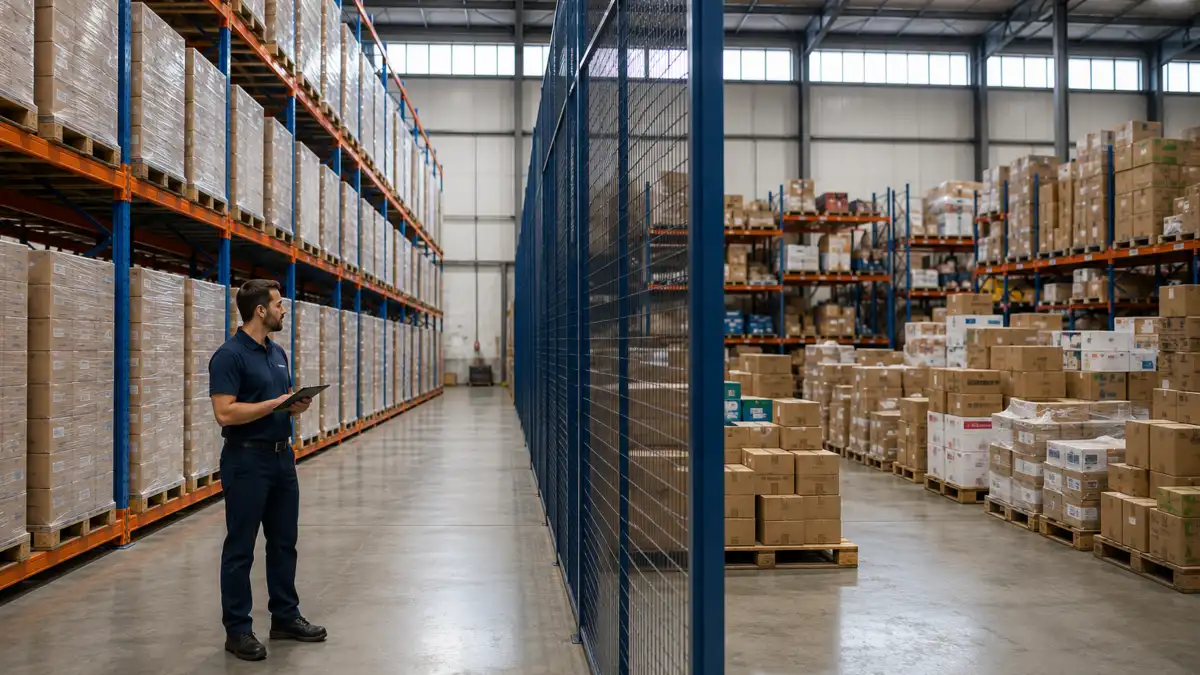

Ecommerce returns management is the system a business uses to handle products customers send back. It covers the return authorization, inbound shipping, inspection and grading, and the refund or exchange. It also covers the decision to restock, refurbish, liquidate or dispose of each item.
Returns are where ecommerce margins go to die. An estimated 19.3% of online sales will be returned in 2025, against 15.8% of retail sales overall. That is according to the National Retail Federation’s 2025 Retail Returns Landscape with Happy Returns, which puts total returns at $849.9 billion.
Every return triggers a reverse logistics chain that costs more than the outbound shipment did. It pulls warehouse labor away from outbound orders and burns cash on inspection, restocking, and sometimes disposal. Get returns management wrong and your unit economics collapse before you hit scale.
I’ve worked inside 3PL operations long enough to watch brands treat returns as an afterthought. Then the chargeback rate spikes, fraud hits, or a restocking backlog buries the warehouse team. This guide gives you a real-world framework for ecommerce returns management.
It cuts reverse logistics costs, stops fraud, and turns returns into a retention tool. Ecommerce returns management is the operational and strategic system that governs how an online retailer handles product returns — from return request through disposition.
It encompasses reverse logistics, return authorization, inspection, restocking or liquidation, refund or exchange processing, and return data analysis. For DTC brands processing more than 500 orders per month, returns management is a primary driver of net margin, customer lifetime value, and inventory health.
What Is Ecommerce Returns Management?
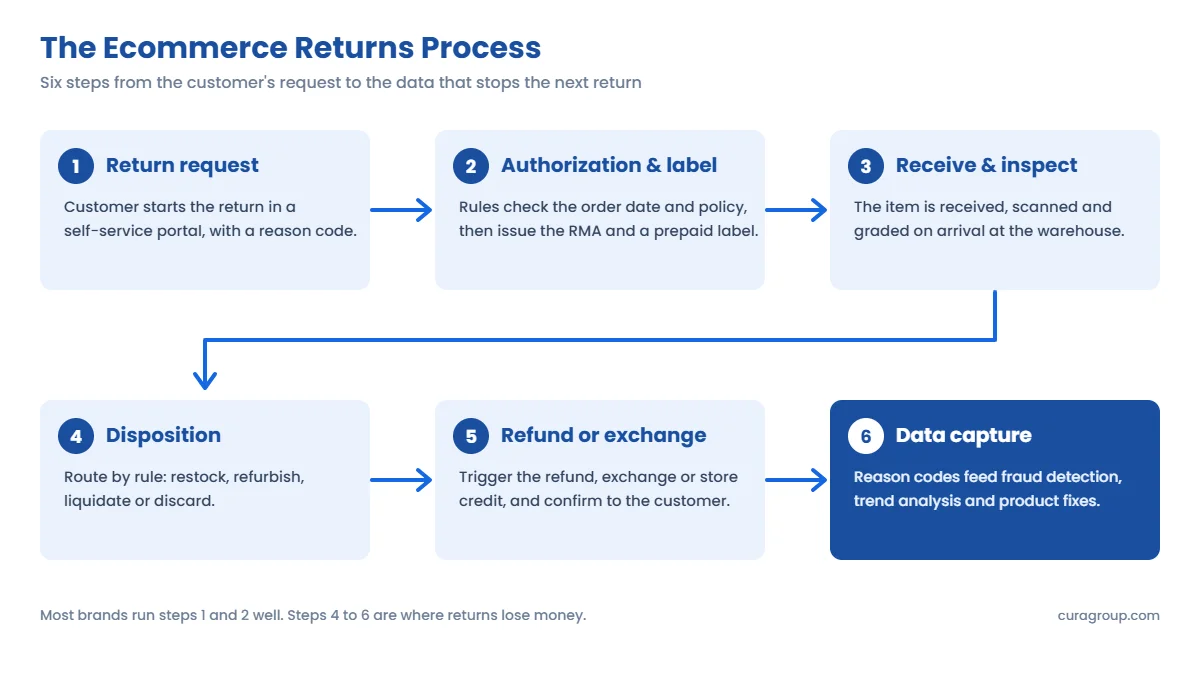
Ecommerce returns management is the end-to-end process of handling products that customers send back. It runs from the moment a return starts to the moment the item is resold, refurbished, liquidated, or disposed of. In a fulfillment center context, that process includes:
- Return authorization and prepaid label generation
- Inbound receipt, scanning, and inspection
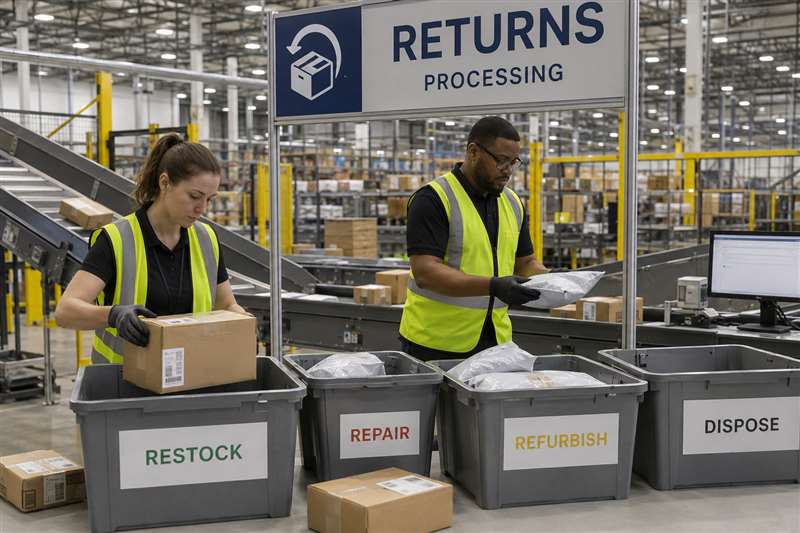
- Disposition decisions: restock, refurbish, liquidate, or discard
- Refund or exchange processing and confirmation
- Data capture for fraud detection, trend analysis, and product feedback
Most brands handle the first two steps reasonably well. The last three — disposition, data capture, and fraud detection — are where most lose money.
Why Is Returns Management Critical for Ecommerce Growth?
Returns management is critical because it decides whether a customer buys again. A clear, fast return keeps the relationship. A slow or disputed one ends it.
Narvar’s 2018 study, The State of Returns: What Today’s Shoppers Expect, found that 96% of shoppers would buy from a retailer again after a positive return experience. For high-growth ecommerce companies, returns management determines whether you can scale. At 500 orders per day, manual returns handling is a grind.
At 2,000 orders per day, it’s a full operational crisis if you haven’t automated and systematized the process. Brands that treat returns as a cost to manage, not an experience to improve, are still running them in spreadsheets at $10M in revenue. Then they wonder why margins never improve.
What Is the True Cost of Ecommerce Returns?
The true cost of an ecommerce return is the label plus receiving, inspection, restocking and refund handling. Add the value lost on anything that cannot be resold at full price. Most of that cost is labor and lost margin, not postage.
Reverse logistics is the supply chain that runs backward, from customer to warehouse. It is harder than forward logistics because every return is different: a different condition, reason and disposition path. The ranges below are planning figures to agree with your provider, not survey data. Actual costs depend on category, carrier and volume:
| Cost Component | Planning range (illustrative) | Notes |
|---|---|---|
| Return shipping label | Varies by zone and weight | Depends on zone, weight, carrier |
| Receiving and scanning | $1–$3 | Per unit at 3PL |
| Inspection and grading | $2–$6 | Higher for apparel, electronics |
| Restock or repackaging | $1–$5 | If item is resellable |
| Refund processing | $0.50–$2 | Payment processor fees |
| Lost product value | 10–50% of item cost | If not resellable at full price |
On a $50 item, you can easily absorb $15–$25 in direct return costs before accounting for the refund itself. On a $25 item, the economics break completely. Understanding your true cost-per-return by SKU is the first step to building a rational returns policy.
The Hidden Cost: Inventory Limbo
The cost most brands miss is inventory limbo — the period between a return being initiated and the item being back in sellable stock. During that window, you can’t sell the unit. If it’s a fast-moving SKU, that lag creates stockouts and lost sales on the forward side.
At scale, inventory limbo directly impacts revenue. A good returns management system minimizes this window. Target: returns processed within 24–48 hours of receipt, graded immediately, restocked same day.
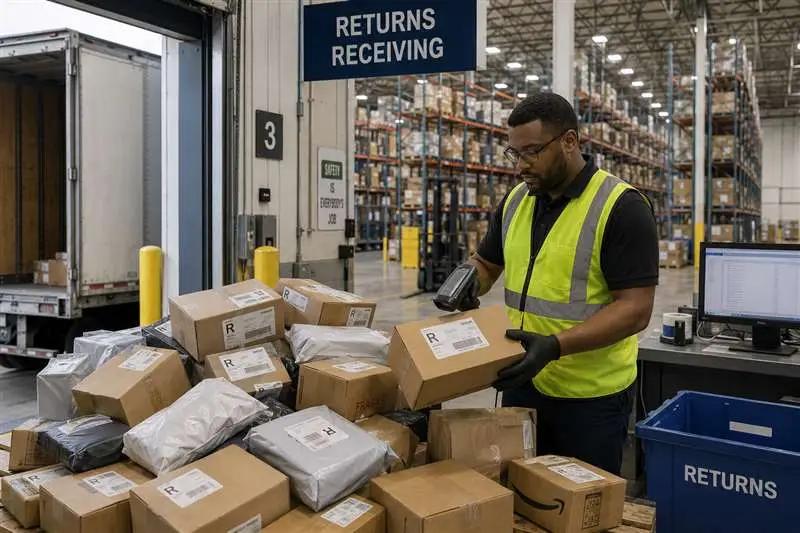
Why Do Customers Return Ecommerce Orders?
Customers return ecommerce orders for six recurring reasons. The item was the wrong size or fit, arrived damaged or defective, or did not match the listing. Or they ordered several variants to keep one (bracketing), changed their mind, or received it too late to be useful.
The first three are yours to fix upstream; the last three are behaviours your policy has to price in.
Controllable vs. Uncontrollable Returns
Controllable returns are caused by something the brand can change: inaccurate size charts, weak product photos, packaging that fails in transit, picking errors. Every one of them should fall as reason-code data feeds back into merchandising and the warehouse.
Uncontrollable returns come from the customer’s own decision: bracketing, change of mind, a gift that missed. You do not eliminate those; you set the policy, window and fee structure so they stay profitable.
Which Returns KPIs Should You Track?
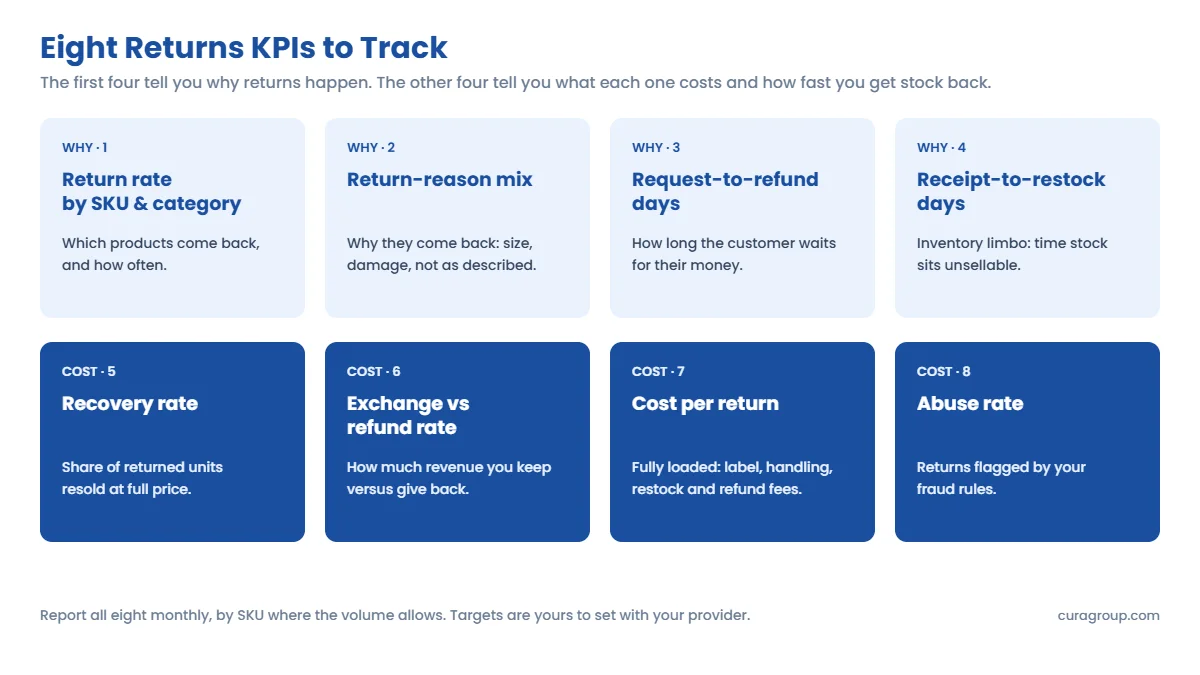
Track eight numbers. The first four: return rate by SKU and category, the return-reason mix, days from request to refund, and days from receipt to restock (inventory limbo). The other four: recovery rate (returned units resold at full price) and exchange versus refund rate.
Then cost per return, and the abuse rate your fraud rules flag. The first two tell you why returns happen; the rest tell you what each one costs and how fast you get the stock back.
What Are the Best Practices for Managing Returns?
Good returns management comes down to a clear policy, a self-service portal, fast processing, and using return reasons to fix the cause.
1. Write a Clear, Simple Return Policy
A clear return policy states five things in plain language. The return window (30, 60 or 90 days), the condition required, who pays return shipping, the refund timeline, and how exchanges work. Ambiguous policies generate support tickets, disputes and chargebacks; a clear one sets expectations, cuts contacts per return and protects you legally.
2. Automate the RMA Process
Return Merchandise Authorization (RMA) should be self-service. If customers have to email or call to start a return, your support cost per return is already too high. Automate label generation, return tracking, and status updates. Standard returns should require zero human intervention.
3. Build a Tiered Disposition System
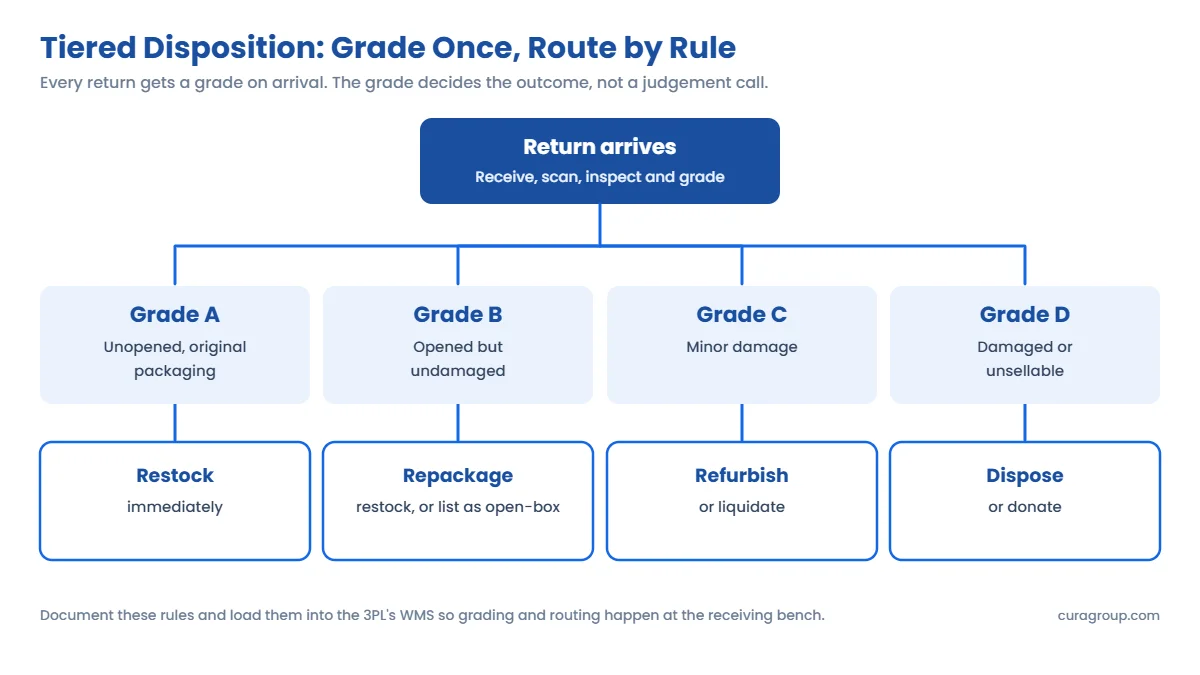
A tiered disposition system grades every return on arrival. It then routes the item by rule to one of a fixed set of outcomes: restock, repackage, refurbish, liquidate or dispose:
- Grade A: Unopened, original packaging — restock immediately
- Grade B: Opened but undamaged — repackage and restock or list as open-box
- Grade C: Minor damage — route to refurbishment or liquidation
- Grade D: Damaged or unsellable — dispose or donate
When your 3PL partner handles returns, these disposition rules should be documented and integrated into their WMS. Kitting and assembly services can add significant value to Grade B and C inventory through repackaging and refurbishment workflows.
4. Capture Return Reason Codes
Capture a reason code on every return: wrong size, damaged, not as described, changed mind. The pattern is product feedback. A spike in not-as-described returns on one SKU signals a listing problem.
A run of wrong-size returns signals the sizing guide. Return reason data should flow to your product and merchandising team — not just your ops team.
5. Set SLAs for Return Processing
If you’re working with a 3PL instead of running in-house fulfillment, get return processing SLAs in writing: receipt-to-inspection time, inspection-to-restock time, and refund trigger timing. Unmanaged return processing backlogs are one of the top reasons brands experience cash flow problems at scale.
How Do You Manage Returns for International Sales?
Manage international returns by keeping them in-region. Use a regional return hub, a virtual return address, or a refund-without-return rule for low-value items. Cross-border ecommerce returns logistics is slow, and a return often costs more than the item is worth.
A return from Germany to a US warehouse can cost more than the original item value for low-AOV products. International customers have shorter patience for long return windows.
Strategies for International Returns
Cross-border returns are handled with regional return hubs, virtual return addresses, refund-without-return rules, and clear landed-cost disclosure.
- Regional return hubs: Partner with 3PLs that have facilities in your key international markets. Returns stay in-region, get processed locally, and inventory is either held for regional resale or bulk-shipped back periodically.
- Virtual return addresses: Services that give customers a local return address, aggregate returns, and ship consolidated batches — cutting per-unit return shipping cost significantly.
- Refund without return: For low-value items where return shipping costs more than the product, auto-approve the refund. Tell the customer to keep or donate the item. Increasingly standard for products under $20–$30.
- Landed cost transparency: Duties and taxes on returned goods need to be accounted for at the policy level. If your customer paid import duties, your return policy needs to address who absorbs that cost.
Automating Ecommerce Returns Management for Scale
Automate returns processing when manual inspection, grading and disposition decisions start delaying refunds or forward fulfillment. The trigger is a missed return SLA, not a fixed daily volume. It arrives earlier than most brands expect.
Process Automation
RMA generation, label creation, returns tracking updates, and refund triggers should all be automated. Modern returns management platforms integrate directly with your ecommerce stack — Shopify, WooCommerce, BigCommerce — and your 3PL’s WMS, so data flows without manual entry.
Physical Automation
At higher volumes, physical sorting systems, conveyor returns lanes, and scan-to-disposition workflows significantly cut labor cost per return. The same automation investments reshaping pick and pack operations are being applied to returns processing at leading 3PLs.
AI-Powered Returns Management and Fraud Detection
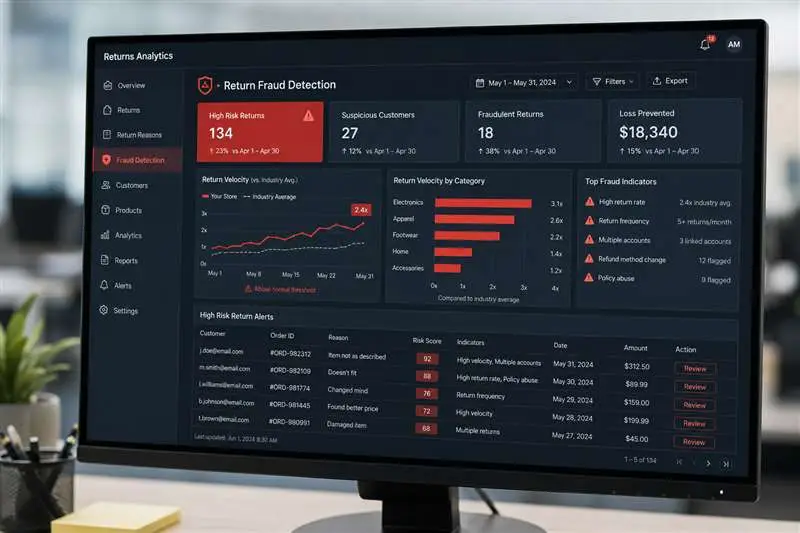
Return fraud cost US retailers an estimated $101 billion in 2023, according to the National Retail Federation and Appriss Retail’s 2023 consumer returns report. Wardrobing (buying, using, and returning), returning stolen goods, and fake return claims are the most common abuse vectors.
AI-powered returns management tools for ecommerce fraud detection analyze behavioral patterns that humans can’t spot at scale:
- Return velocity per customer — flagging accounts that return above a set threshold
- Return timing patterns — serial returners who always return just before the policy window closes
- Address clustering — multiple accounts returning from the same address
- SKU-specific abuse patterns — items frequently returned after use
- Cross-channel identity matching — fraud rings operating across multiple accounts
The challenge is calibration. An aggressive fraud filter blocks legitimate customers. The right approach: flag for review, not automatic denial.
Apply friction — photo evidence requirements, extended inspection windows — only to flagged returns, not the full customer base.
Managing Return Abuse Without Alienating Customers
Manage return abuse in tiers: warn first, restrict second, ban only with clear evidence. That way a genuine high-value customer is never blocked on a false positive. Customers who feel wrongly accused will escalate publicly.
What Should You Look For in Returns Management Software?
Returns management software for ecommerce ranges from standalone portals to WMS-integrated modules built into your 3PL’s platform. The right choice depends on your volume, tech stack, and whether you handle fulfillment in-house or through a partner.
Essential Features for DTC Brands
A DTC returns setup needs three things at minimum: a self-service portal, multi-carrier label generation, and WMS integration.
| Feature | Why It Matters |
|---|---|
| Self-service return portal | Reduces support contacts per return to near zero |
| Multi-carrier label generation | Rate shopping and carrier flexibility |
| WMS integration | Eliminates manual data entry between portal and warehouse |
| Disposition workflow rules | Automates routing decisions at scale |
| Return reason analytics | Turns returns data into product intelligence |
| Fraud detection scoring | Flags high-risk returns without blocking good customers |
| Exchange flow | Converts refunds to exchanges, recovering revenue |
| International support | Multi-currency, multi-carrier, regional hub capability |
3PL-Integrated vs. Standalone Returns Platforms
If you’re using a 3PL for fulfillment, the most efficient setup is a returns platform that integrates natively with your 3PL’s WMS. Return data, disposition instructions, and inventory updates move in real time — no manual syncing, no lag between refund trigger and restock.
Standalone platforms work if your 3PL lacks a native returns module, but you’ll need a reliable API integration to avoid data gaps.
How High-Growth Ecommerce Companies Build Returns as a Competitive Advantage
Fast-growing brands treat returns as a retention tool, steering customers to exchanges over refunds and feeding return reasons back into the product.
Exchanges Over Refunds
Steering a customer to an exchange instead of a refund keeps the sale. An instant-exchange workflow, where the replacement ships before the return arrives, is the most effective way to do it.
Returns Data Feeding Product Development
High-return-rate SKUs are product development signals. Consistent “too small” returns on a specific SKU indicate a sizing spec issue. Consistent “quality not as expected” returns point to a supplier problem.
Brands that close the loop between returns data and product teams systematically reduce return rates over time.
The Customer Retention Angle
A smooth return experience is a loyalty signal. Customers who have easy returns with your brand are more likely to repurchase — because they know the risk of trying a new product is low. That risk reduction is worth real money in LTV terms.
The brands that understand this invest in return experience as a marketing function, not just an operations cost.
Cura Resource Group processes returns against the same WMS record that holds the outbound stock. That is what lets a returned item be graded, restocked and made sellable again in days rather than weeks.
Returns that sit unprocessed lose most of their recoverable value to time, not to damage.
Ecommerce Returns Management Outsourcing: Should You Use a 3PL?
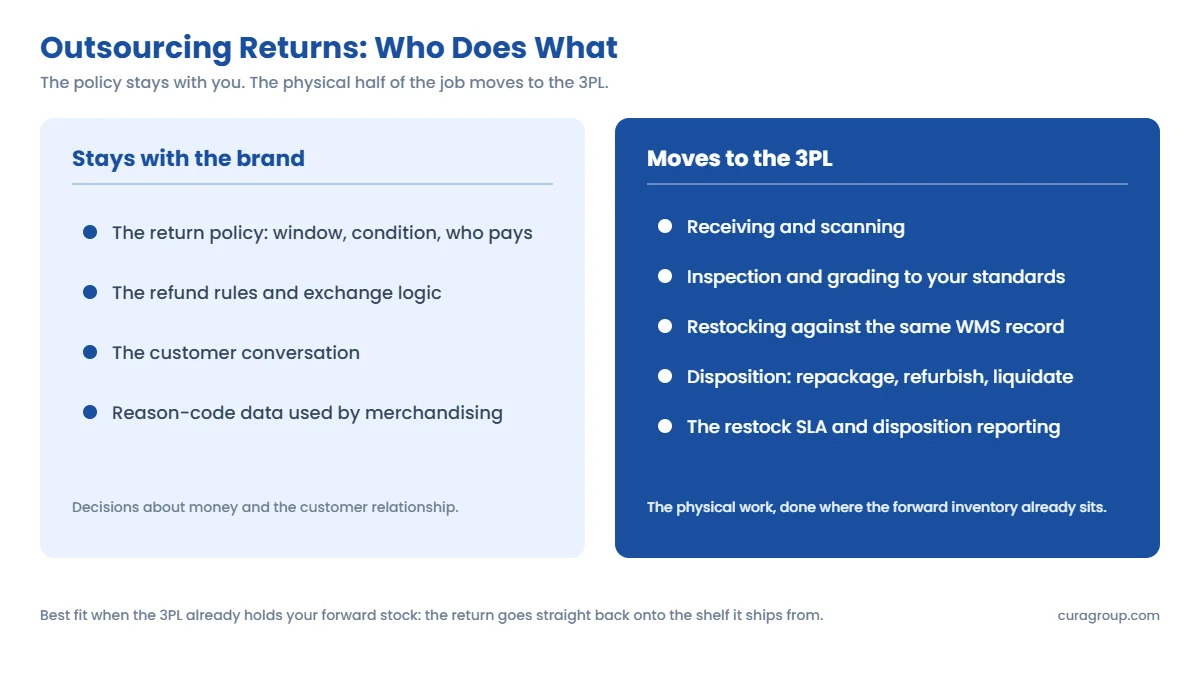
Ecommerce returns management outsourcing makes sense when the physical half of the job is holding up refunds or pulling staff off outbound orders. That half is receiving, inspection, grading, restocking and disposition.
It makes most sense when the 3PL already holds your forward inventory, because the return goes straight back onto the shelf it ships from. The policy, the refund rules and the customer conversation stay with the brand.
In a 3PL returns management arrangement, the handling, the grading standards, the restock SLA and the disposition reporting move to the provider. If that is the split you need, see Cura’s ecommerce returns management services. Or read how 3PL and in-house fulfillment compare on cost before you decide.
Final Word
Returns management is the part of ecommerce operations that most brands underbuild until it becomes a crisis. By that point, the cost is already in the P&L. It shows up as reverse logistics spend, fraud losses, customer churn from bad return experiences, and cash tied up in unprocessed return inventory.
Build the system before you need it. Automate the authorization and label flow. Partner with a 3PL that takes return SLAs seriously.
Use the data your returns generate to reduce future return rates. And invest in the customer experience around returns — it’s one of the highest-ROI retention moves available to a growing ecommerce brand. Ready to build a returns management system that works at scale?
Frequently Asked Questions
What does returns management involve?
Ecommerce returns management is the system that handles a product after a customer sends it back. It covers the return authorization, inbound shipping, inspection and grading, refund or exchange, and the decision to restock, refurbish, liquidate or dispose.
It covers policy and process, not just the physical movement, and it matters most for retailers selling across several channels.
What is the average return rate for ecommerce?
Return rates vary widely by category, but the spread by category matters more than the average. Apparel and footwear run highest, while electronics and furniture sit well below them. January is the peak, when holiday returns push any category above its normal baseline.
How much do ecommerce returns cost?
Far more than the return shipping label. The full cost includes inbound freight, inspection labor and repackaging. Add the markdown if the item cannot be resold as new, and the working capital tied up while it moves. The National Retail Federation put US merchandise returns near $850 billion in 2025.
How do I reduce ecommerce return rates?
Attack the cause by category rather than tightening policy across the board. Apparel returns fall with accurate size guides and fit video; electronics returns fall with better pre-purchase specs and setup guidance. Photography that matches what actually arrives does more than any policy change.
What is reverse logistics?
Reverse logistics is the physical movement of goods backwards through the supply chain. Goods go from the customer to a returns facility, and onward to restock, refurbishment, liquidation or disposal. It is the transport-and-handling half of returns; the policy and decision layer sits above it.
Returns management vs reverse logistics: what is the difference?
Reverse logistics is the movement of goods from customer back to origin. Returns management is the wider operating system around it. That means the return policy, authorization rules, inspection and grading standards, refund logic, disposition decisions, and the reporting that tells you why items came back.
Should I offer free returns?
It depends on margin and category. Free returns lift conversion and repeat purchase, which is why they became standard in apparel — but they also raise return rates. Higher-margin products absorb the cost; thin-margin or bulky items usually cannot. Many brands now offer free exchanges but charge for refunds.
What is return fraud and how do I prevent it?
Return fraud covers wardrobing, which is wearing an item then returning it as new. It also covers returning counterfeit or stolen goods and filing false claims about condition. Serial-number tracking, photographic inspection records and flagging accounts with abnormal return frequency catch most of it without penalizing genuine customers.
Should a business outsource returns to a 3PL?
Outsource when returns volume makes inspection and restocking a daily job rather than an occasional one. Also outsource when returned stock sits unprocessed long enough to miss its resale window. A 3PL already has the grading, restocking and disposition workflow; building that in-house rarely pays below meaningful volume.