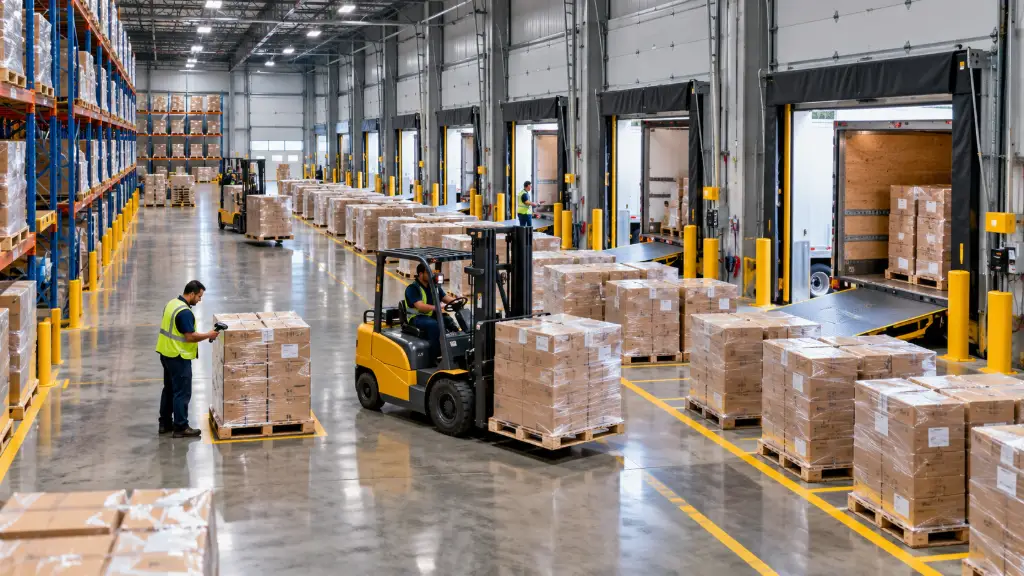

Same-day delivery is a fulfillment service in which an order placed today is picked, packed and delivered to the customer before the day ends, usually within a set local radius and behind a daily cut-off time.
Same-day delivery has moved from a premium add-on to a competitive expectation. A growing share of online shoppers now check delivery speed before they check price, and a same-day delivery service can be the difference between a completed checkout and an abandoned cart. But for most businesses, the hard part isn’t the promise — it’s the operations behind it. Same-day delivery only works when inventory, fulfillment, and last-mile carriers are tightly coordinated against a tight clock. The same-day delivery market has expanded rapidly as carriers and 3PLs build out local fulfillment networks, and customer expectations have followed: once a shopper experiences same-day, slower options start to feel like a downgrade. This guide explains how same-day delivery works, what it costs, and when it’s actually worth offering for a B2B or ecommerce brand working with a fulfillment center.
What Is Same-Day Delivery?
Same-day delivery is a fulfillment and shipping service that gets a customer’s order to their door on the same calendar day the order is placed, provided it’s submitted before a set cutoff time. It compresses the entire order fulfillment process — receiving, picking, packing, and last-mile delivery — into a window of a few hours instead of a few days.
It’s easy to confuse a few related terms:
- Same-day delivery: order placed and delivered the same day (before a cutoff).
- Same-day fulfillment: the warehouse picks, packs, and ships the order the same day — but the carrier may still take 1–2 days to deliver. This is the operational backbone of same-day delivery.
- Next-day delivery: delivered the following business day.
- Expedited shipping: a faster-than-standard service (often 1–2 business days), but not same-day.
How Does Same-Day Delivery Work?
A same-day delivery service runs on four things working in sync: local inventory, a hard order cutoff, fast in-warehouse fulfillment, and a same-day-capable last-mile carrier. Here’s the flow:
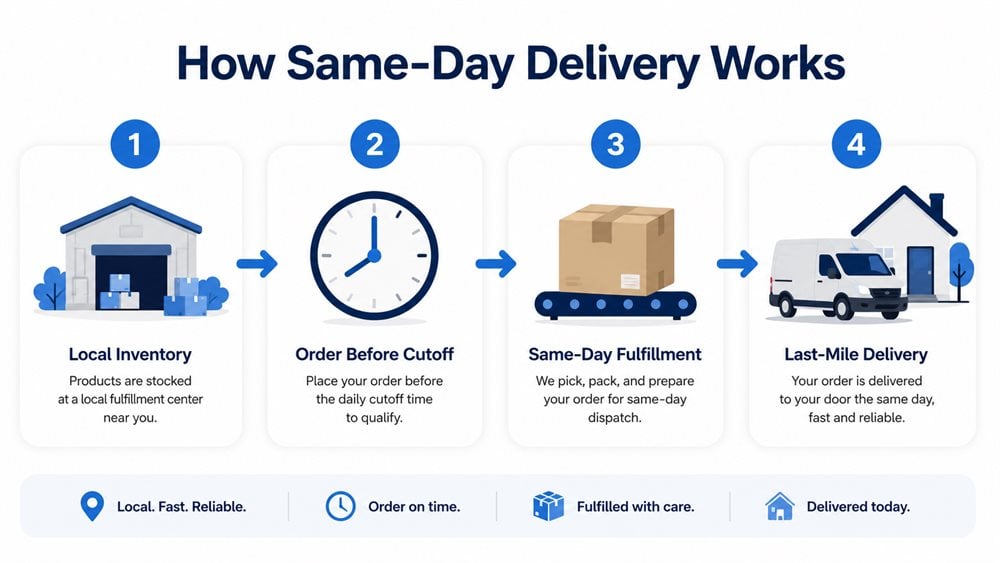
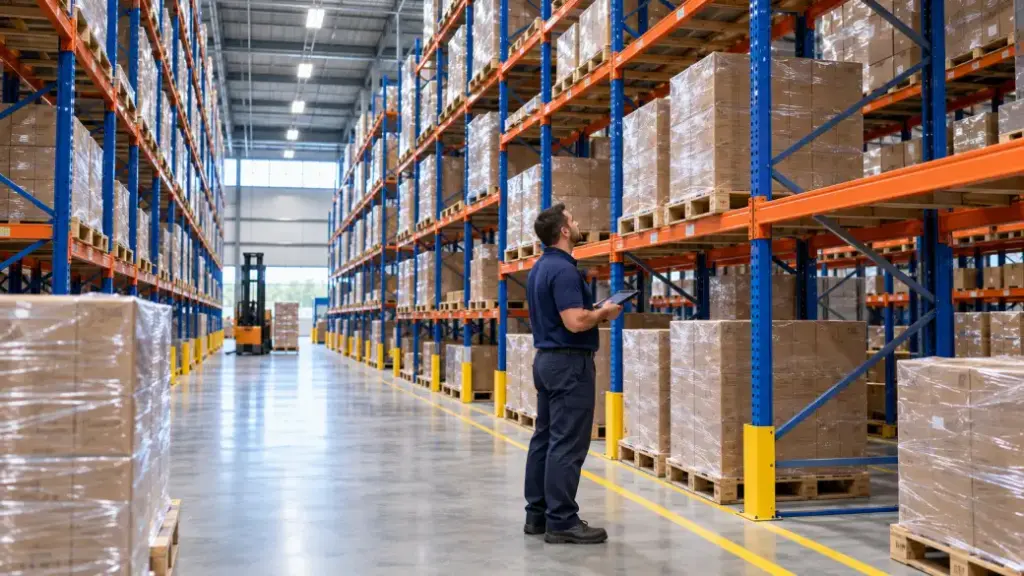
- 1. Inventory is positioned locally. The product has to already be in a warehouse close to the customer. Same-day delivery is only possible within a delivery radius of a stocked fulfillment location — typically a metro area.
- 2. The order beats the cutoff. Every same-day program has a cutoff time (e.g., 12:00 p.m. local). Orders placed before it qualify for same-day; orders after it roll to the next day.
- 3. The warehouse fulfills immediately. The order is picked, packed, and staged within hours — same-day fulfillment in action. This requires real-time inventory accuracy and prioritized picking.
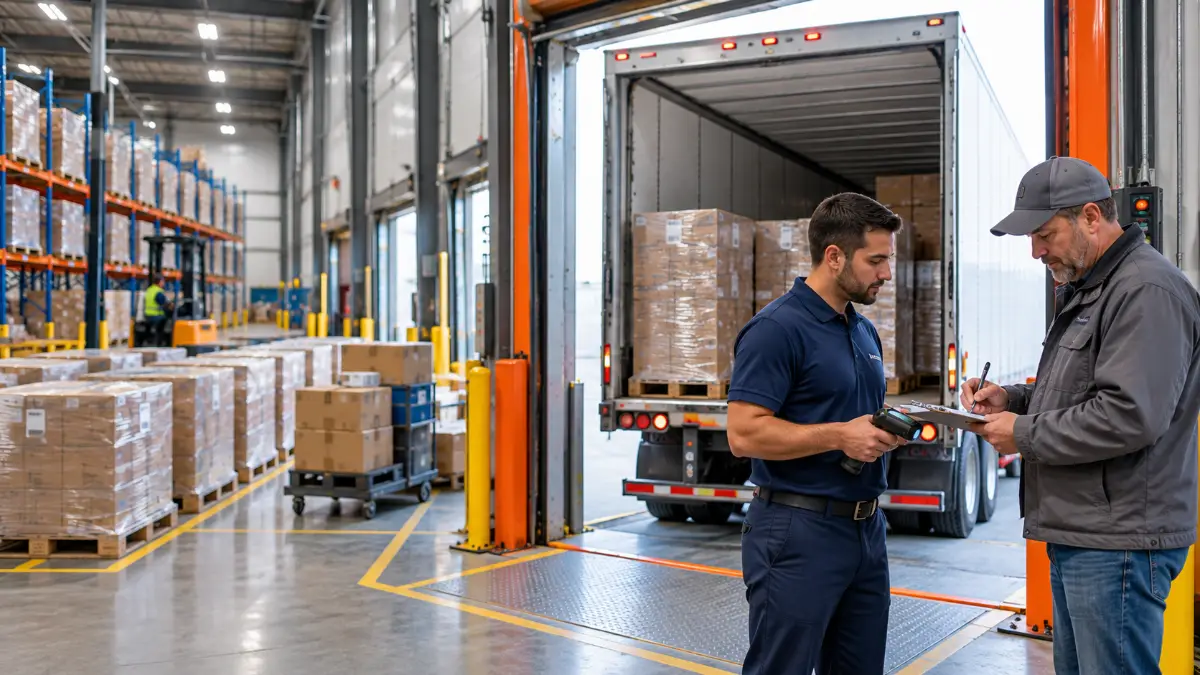
- 4. A local carrier handles last mile. A regional courier, gig-network driver, or same-day carrier collects the parcel and delivers it within hours, often with live tracking.
Miss any one of these and the promise breaks — which is why most brands run same-day delivery through a 3PL that already has local warehouse coverage and carrier relationships rather than building it alone.
Same-Day Delivery vs. Other Shipping Speeds
Understanding where same-day fits against expedited and standard options helps you set the right customer expectations, particularly for brands running an omnichannel retail strategy:
| Option | Delivery Window | Relative Cost | Best For |
|---|---|---|---|
| Same-day delivery | Within hours, same day | Highest | Urgent, local, high-value or impulse orders |
| Next-day delivery | Next business day | High | Time-sensitive but not urgent |
| Expedited (1–2 day) | 1–2 business days | Moderate | Premium experience at lower cost |
| Standard shipping | 3–7 business days | Lowest | Price-sensitive, non-urgent orders |
A common search is “expedited shipping 1 business day vs same day delivery.” The distinction is simple: expedited still adds at least one business day in transit, while same-day delivery removes the overnight wait entirely. Same-day costs more because it demands local stock and a dedicated last-mile run.
What Does Same-Day Delivery Cost?
Same-day delivery is the most expensive fulfillment tier because it can’t be batched or consolidated the way standard shipping is. Cost drivers include:
- Last-mile premium: dedicated or on-demand courier runs cost far more per parcel than batched ground shipping.
- Distributed inventory: stocking product in multiple metro warehouses to cover more same-day zones raises carrying costs.
- Labor prioritization: same-day orders jump the queue, which can mean overtime or dedicated picking staff.
Most brands offset this by charging a same-day delivery fee, setting an order-value threshold, or limiting same-day to their highest-margin products and densest metro markets.
When Is Same-Day Delivery Worth It?
Volume is what makes the maths work. According to the U.S. Census Bureau, US ecommerce reached $340.2 billion in the second quarter of 2026, 17.1% of all retail sales and 12.2% up year on year. Same-day only pays when enough of that demand sits inside one delivery radius — density, not ambition, is the deciding factor.
Same-day delivery isn’t right for every business. It pays off when:
- You sell urgent or impulse products where speed drives the purchase (replacement parts, consumables, gifts, B2B supplies).
- Your customers are concentrated in metro areas you can cover from a local warehouse.
- Your margins or order values are high enough to absorb or pass on the last-mile cost.
- Competitors already offer it and delivery speed is costing you conversions.
If your orders are low-margin, geographically scattered, or not time-sensitive, expedited or next-day shipping usually delivers better ROI than same-day.
Which Products and Industries Fit Same-Day Delivery Best
Some categories are almost purpose-built for same-day delivery, while others rarely justify the cost. The strongest fits share one trait: the customer’s need is immediate, so speed directly drives the sale.
- Replacement and repair parts: auto parts, industrial components, and electronics where downtime is expensive and the buyer needs the item today.
- Consumables and essentials: health, beauty, pet, and household products customers run out of and want now.
- B2B supplies: office, medical, or production materials that keep a business running.
- High-value and gifting items: products where customers will pay a premium to avoid waiting.
Categories with thin margins, large or freight-class dimensions, or low urgency — bulk commodities, heavy furniture, non-essential bulk goods — usually see better returns from next-day or expedited service instead.
Common Same-Day Delivery Challenges (and How to Avoid Them)
Most same-day delivery failures aren’t about the carrier — they trace back to operations. The recurring problem areas:
- Inventory inaccuracy: if the system shows stock that isn’t physically there, same-day orders fail at the picking stage. Real-time inventory visibility is non-negotiable.
- Unrealistic delivery zones: promising same-day outside your warehouse’s practical radius leads to missed windows. Define zones by what you can actually fulfill.
- Cutoff-time confusion: customers who don’t clearly see the cutoff feel misled when their order ships the next day. Display it prominently at checkout.
- Carrier capacity gaps: relying on a single courier creates risk during peak demand. A 3PL with multiple last-mile partners absorbs surges.
- Unprofitable promises: offering free same-day on every order erodes margin fast. Tie it to thresholds, fees, or specific SKUs.
How to Offer Same-Day Delivery Through a 3PL
For most ecommerce and B2B brands, building same-day delivery in-house — multiple metro warehouses, real-time inventory, courier contracts — is too costly. A 3PL makes it accessible by providing same-day delivery as a service: distributed warehouse coverage, ecommerce fulfillment operations with same-day cut-offs, and established last-mile carrier networks. That lets even a small business offer same-day delivery in select markets without owning the infrastructure — the same trade-off that decides when to outsource shipping in the first place. The brand sets the cutoff and the zones; the 3PL executes the fulfillment and hands off to the carrier.
The practical test with any provider, Cura Resource Group included, is the cut-off time and what happens when it slips. Ask what the daily order deadline is, how far the delivery radius reaches from the facility holding your stock, and who absorbs the cost when a promised same-day order goes out late. Vague answers to those three questions usually mean the service is aspirational.
Final Word
Same-day delivery is a powerful conversion and retention lever — but only when the operations behind it are sound. It lives or dies on local inventory, disciplined cutoffs, fast same-day fulfillment, and reliable last-mile carriers. Decide where it’s worth it (your dense, high-value markets), price it to protect margin, and lean on a 3PL with the warehouse footprint and carrier relationships to deliver on the promise consistently. Done right, a same-day delivery service turns shipping speed from a cost center into a competitive advantage.
Same-day only holds if the stock position is already right when the order lands. That depends on inventory control: accurate counts, forward-positioned stock, and replenishment that keeps the fast movers available.
Ready to offer same-day delivery without building the infrastructure yourself?
Frequently Asked Questions
What has to happen for same-day delivery to succeed?
Same-day delivery works by combining locally stocked inventory, a fixed order cutoff time, immediate same-day fulfillment in the warehouse, and a same-day-capable last-mile carrier. An order placed before the cutoff is picked, packed, and dispatched within hours and delivered to the customer the same day, usually within a metro delivery radius.
What is the difference between same-day delivery and same-day fulfillment?
Same-day fulfillment means the warehouse picks, packs, and ships the order on the same day it’s received — but the carrier may still take one or more days to deliver. Same-day delivery means the order actually reaches the customer the same day. Same-day fulfillment is the operational step that makes same-day delivery possible.
What is the difference between expedited shipping and same-day delivery?
Expedited shipping is faster than standard but still adds at least one business day in transit (often 1–2 days). Same-day delivery removes the overnight wait entirely, delivering the order the same day it’s placed. Same-day costs more because it requires local inventory and a dedicated last-mile run.
How much does same-day delivery cost?
Same-day delivery is the most expensive shipping tier because it can’t be batched like standard ground shipping. Costs depend on the last-mile courier premium, the expense of holding inventory in multiple metro warehouses, and prioritized warehouse labor. Brands typically charge a same-day fee, set an order-value minimum, or limit it to high-margin products and dense markets.
Is same-day delivery worth it for a small business?
It can be, if your customers are concentrated in metro areas, your products are urgent or high-margin, and delivery speed is influencing purchase decisions. Small businesses usually offer same-day delivery through a 3PL that already has local warehouse coverage and carrier relationships, avoiding the cost of building the infrastructure in-house.
What are the disadvantages of same-day delivery?
It is the most expensive way to move a parcel, and the margin only works on higher-value baskets. You also need inventory positioned close to the customer, accurate real-time stock counts, and a hard daily cut-off. Miss any of those and you are promising something the operation cannot reliably keep.
What is the meaning of same-day delivery?
It means the customer receives the order on the same calendar day they placed it, not merely that it shipped that day. The distinction matters: same-day shipping only commits to dispatch, while same-day delivery commits to arrival, which is a far harder promise to hold.