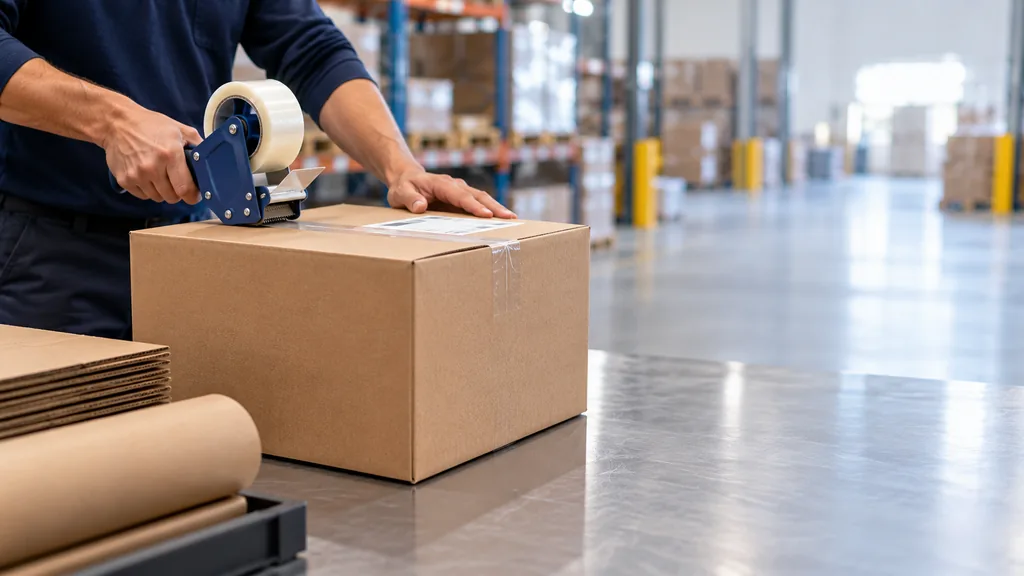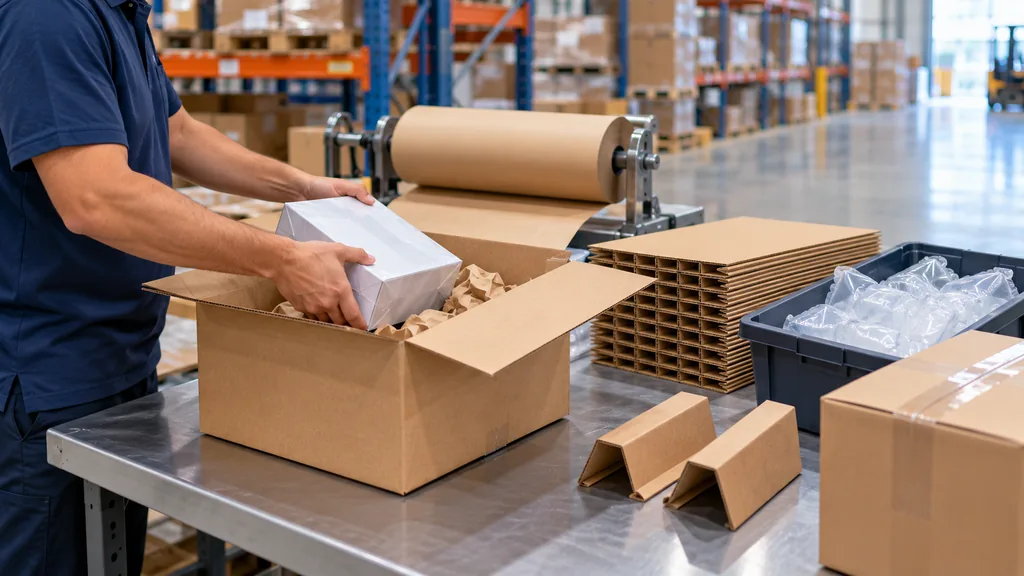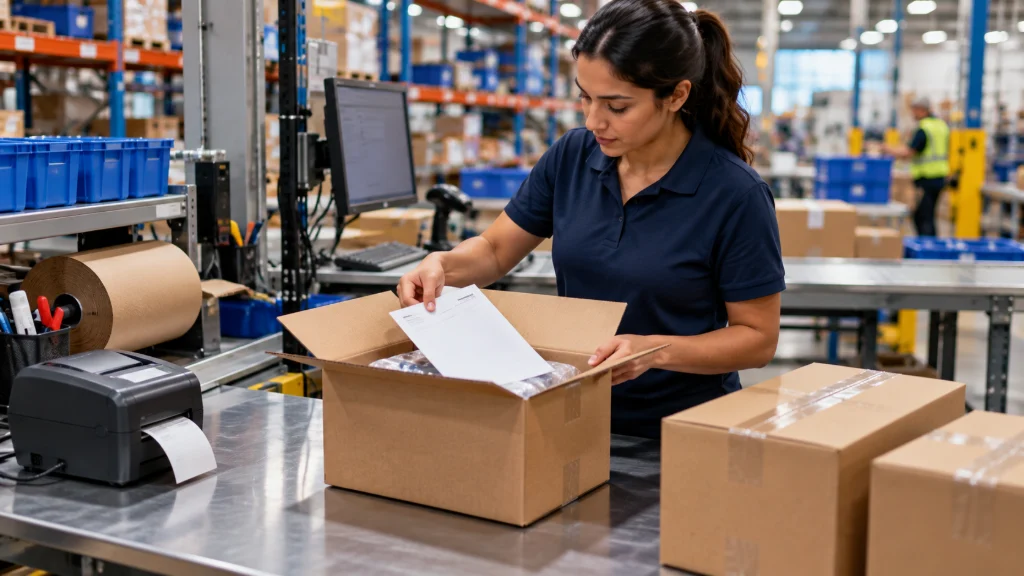
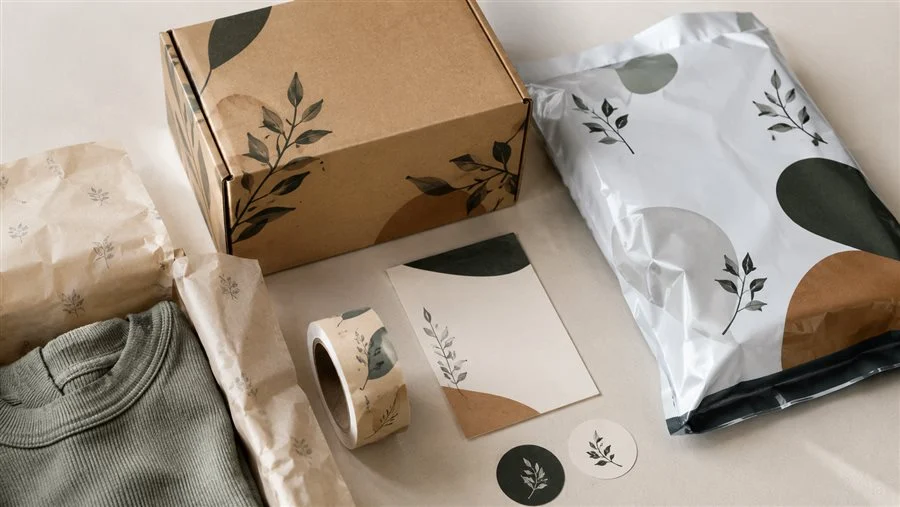

Custom packaging fulfillment — also called branded packaging fulfillment — is the operational half of the job: storing your boxes, mailers and inserts, and assembling them correctly on every order that leaves the building. The packaging itself is made by a supplier — getting it onto each order consistently, at speed, without adding cost you did’t plan for, is a fulfillment problem. This guide covers what custom packaging is, the five main types, what it costs once per-order labor is counted, and how a fulfillment center executes it on every shipment.
What Is Custom Packaging?
Custom packaging is packaging designed and produced specifically for a brand’s products, incorporating its branding, sizing, and protective needs instead of using off-the-shelf boxes. It includes the outer box or mailer, interior protection, and branded finishing touches like printed tape, tissue paper, stickers, and inserts. The goal is twofold: protect the product in transit and reinforce the brand the moment the customer opens the parcel.
Custom packaging spans a spectrum — from simple branded tape and stickers on a standard box up to fully custom-printed, right-sized boxes with designed inserts. Brands typically scale up as order volume and margin allow.
Why Does Custom Packaging Matter?
Custom packaging matters because it is the only marketing you ship with the product itself, and the only brand impression a customer physically holds. According to the U.S. Census Bureau, US ecommerce reached $340.2 billion in the second quarter of 2026, 17.1% of all retail sales and up 12.2% year on year. For a growing share of purchases there is no store, no shelf and no salesperson — just the package that turns up.
Custom packaging matters because the unboxing moment is often the only physical, tangible interaction a customer has with an online brand. That moment shapes perception, drives loyalty, and increasingly gets shared on social media. The concrete benefits:
- Higher retention: a memorable unboxing experience makes customers more likely to buy again.
- Free marketing: distinctive packaging drives organic “unboxing” content and social sharing.
- Perceived value: quality packaging raises the perceived value of the product inside, supporting premium pricing.
- Fewer damages and returns: right-sized, protective custom packaging reduces in-transit damage and the returns that come with it.
- Brand consistency: packaging that matches your brand builds recognition across every order.
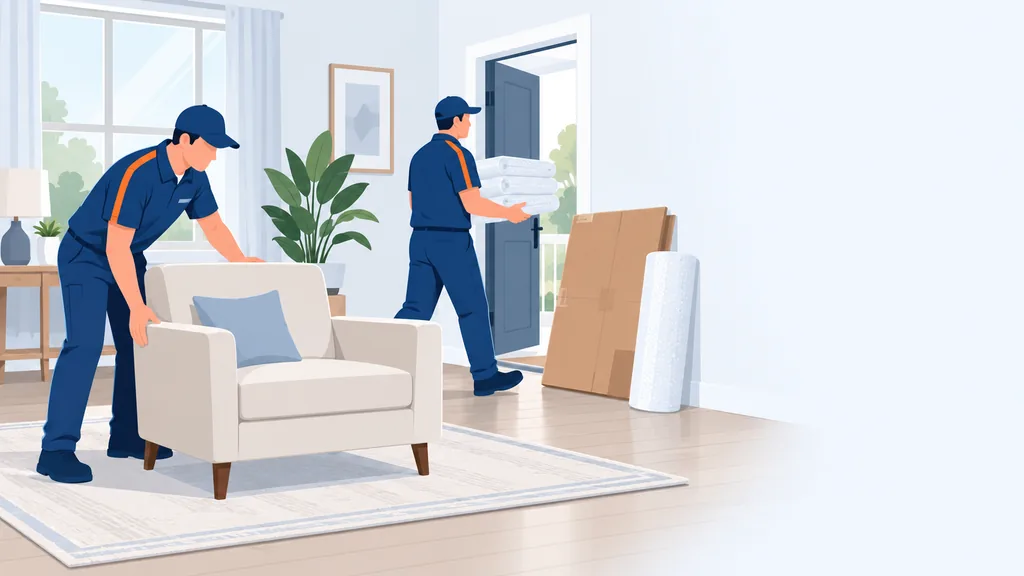
One delivery method changes who gets that moment. On a white glove delivery, the crew unpacks the item and removes the packaging, so the box is handled by the carrier rather than opened by the customer.
What Is the Difference Between Custom and Standard Packaging?
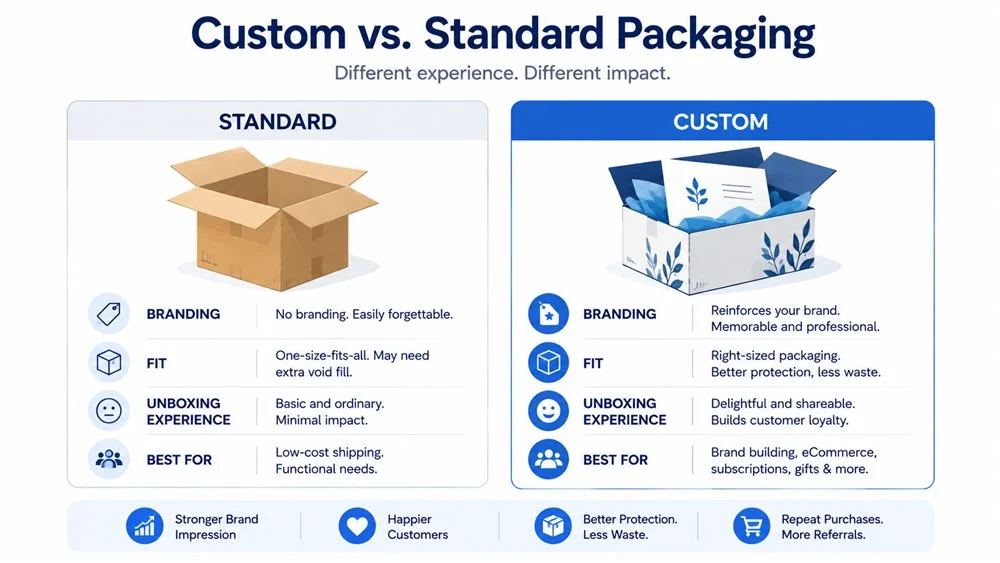
The difference between custom and standard packaging comes down to brand impact and fit versus upfront cost and simplicity:
| Factor | Standard Packaging | Custom Packaging |
|---|---|---|
| Branding | None — plain box | Full brand presence |
| Fit | Generic sizes | Right-sized to product |
| Upfront cost | Low | Higher (drops at volume) |
| Unboxing experience | Forgettable | Memorable, shareable |
| Best for | Testing, very low volume | Brand building, retention |
Most brands begin with standard packaging plus light branding and graduate to fully custom packaging as volume and margins justify the investment. Some categories go the other way and need discreet packaging instead, where the box deliberately says nothing.
What Are the Types of Custom Packaging?
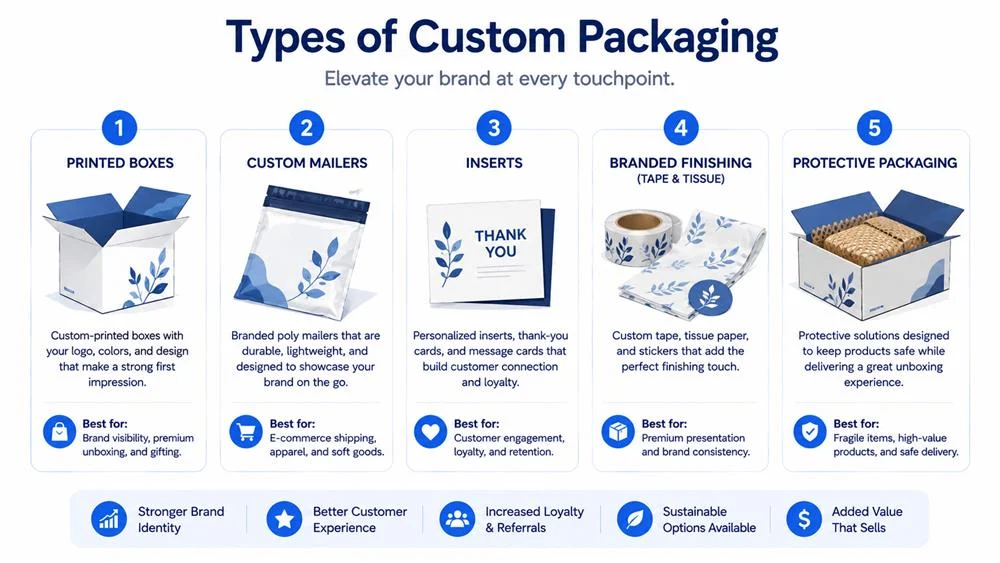
The five types of custom packaging are printed boxes, custom mailers, packaging inserts, branded finishing, and protective packaging — chosen based on product, budget, and brand goals:
- Custom printed boxes: right-sized corrugated or rigid boxes printed with brand colors, logo, and messaging.
- Custom mailers: branded poly mailers or padded mailers for apparel and soft goods, lighter and cheaper than boxes.
- Packaging inserts: thank-you cards, discount codes, product guides, and samples that deepen the customer relationship.
- Branded finishing: custom tissue paper, printed tape, stickers, and void fill that upgrade a standard box.
- Protective packaging: custom foam, inserts, dividers and other dunnage that hold fragile or multi-item orders securely.
What Does a 3PL Do With Your Custom Packaging?
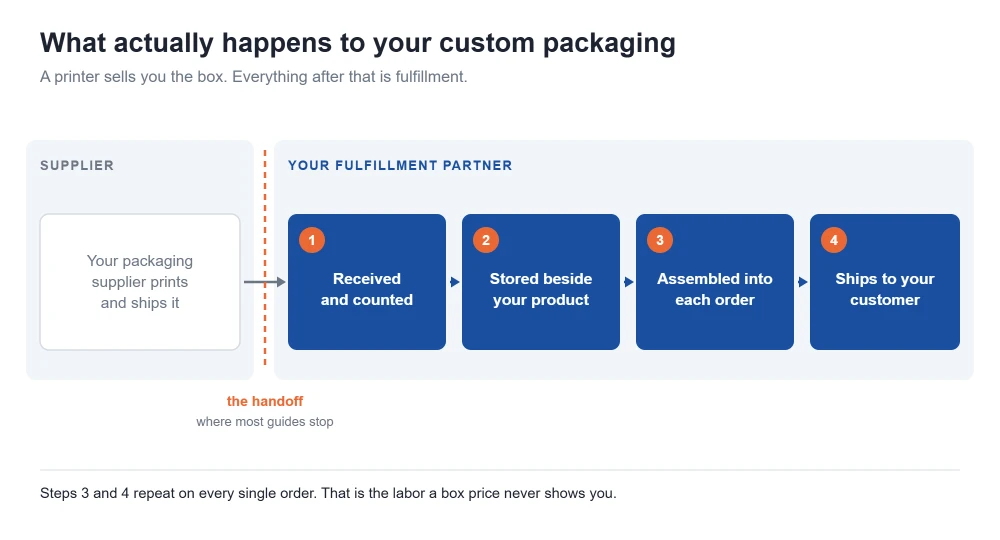
A 3PL receives your custom packaging, stores it alongside your product, and assembles it into each order as that order ships — the work usually sold as branded packaging fulfillment. It integrates custom packaging directly into the order fulfillment process, so every parcel is packed to brand spec at the pick-and-pack stage without you touching a single box.
This is closely tied to kitting and assembly services: a 3PL can store your custom boxes, mailers, and inserts, then assemble branded, multi-item, or subscription-style packages on demand. Custom packaging and kitting services together let a brand deliver a designed unboxing experience at scale, with the 3PL managing packaging inventory, right-sizing to control shipping cost, and keeping quality consistent across thousands of orders.
This is the distinction most guides skip, because most of them are written by packaging printers. A printer sells you the box; someone still has to receive the pallets, store them, and correctly assemble each order at pick time. Cura Resource Group sits on that second half — holding the packaging stock alongside your inventory so the right insert, mailer and tissue go into the right order without your team touching it.
Can Small Businesses Afford Custom Packaging?
Custom packaging is no longer just for large brands — small businesses can access it affordably through low-minimum suppliers and 3PL partners. The key for a small business is starting simple: branded tape, stickers, and a printed insert transform a plain box at minimal cost, then fully custom boxes follow as volume grows. Partnering with a 3PL means a small business doesn’t need to store pallets of packaging or pack orders by hand — the fulfillment partner holds the materials and applies them per order, making a professional unboxing experience achievable at any size.
What Is Different About Branded Retail Packaging?
Branded retail packaging has to satisfy the retailer as well as your brand, which is what separates it from ecommerce packaging. Retail buyers set their own rules on case labeling, carton markings, pallet configuration and delivery windows, and charge the supplier back when any of them is missed.
That changes what the packaging has to do. An ecommerce mailer is built to survive a parcel network and look good on camera; a retail case is built to be scanned, stacked and shelved. A brand selling through both channels usually needs two packaging specifications drawn from the same inventory, and custom retail packaging has to be assembled to the retailer’s spec rather than only to yours.
If you sell direct and into retail at the same time, decide early which channel each unit of stock is destined for, because repacking finished goods from one format to the other is the expensive way to find out. That decision belongs with whoever runs your kitting and assembly.
Sustainable Custom Packaging
Sustainable custom packaging uses recyclable, compostable, or reduced-material designs to lower environmental impact — and it’s increasingly what customers expect. Beyond goodwill, sustainable packaging often cuts cost by using less material and right-sizing to reduce dimensional-weight shipping charges. Common approaches include recyclable corrugated boxes, paper-based void fill and mailers, soy-based inks, and eliminating unnecessary layers. For many brands, “less but better” packaging signals quality and responsibility at the same time, and a 3PL can help standardize these materials across every order.
How Much Does Custom Packaging Cost?
Custom packaging cost is set by five things — material and type, order quantity, print and finish, size and weight, and the per-order fulfillment labor to assemble it:
- Material and type: printed rigid boxes cost more than mailers, tape, or stickers.
- Order quantity: unit cost drops sharply at higher volumes, so minimums matter for small businesses.
- Print and finish: full-color printing, special finishes, and custom inserts add cost.
- Size and weight: right-sizing reduces both material and shipping cost, while oversized packaging inflates dimensional-weight charges.
- Fulfillment handling: assembling inserts or kitting adds per-order labor, usually billed by a 3PL per unit.
The smartest approach is to weigh packaging spend against its return — repeat purchases, fewer damages, and social reach — rather than treating it as pure cost.
Minimum order quantities vary widely between suppliers, so the volume at which custom packaging starts to pay is set by your supplier’s terms rather than by any general rule — ask for the minimum before you design to it. What a 3PL adds on top is per-order labor: warehouse and storage labor averaged $26.84 an hour in June 2026, according to the U.S. Bureau of Labor Statistics, and every insert placed or box folded by hand draws on it. Ask your fulfillment partner what packaging assembly adds per order before you commit to a design.
How Do You Set Up Custom Packaging Fulfillment?
Setting up custom packaging fulfillment takes four steps — decide what the packaging must do, source it from a supplier, get it into your fulfillment partner’s hands, and agree who assembles what on each order:
- Start with your goal: decide whether packaging should signal premium quality, drive social sharing, or simply look consistent.
- Right-size first: match packaging to product dimensions to cut shipping cost and reduce damage before adding flourishes.
- Layer branding by budget: begin with tape, stickers, and inserts, then move to fully printed boxes as volume supports it.
- Plan for fulfillment: confirm your 3PL can store and apply your custom packaging consistently across every order.
- Measure impact: track repeat purchase rate, damage/return rates, and social mentions to prove ROI.
Final Word
Custom packaging turns a routine delivery into a brand moment — and, done right, into repeat revenue. It protects your product, raises perceived value, and earns free marketing through the unboxing experience. The brands that get the most from it treat packaging as part of fulfillment, not an afterthought: designed for the product, right-sized for cost, and applied consistently on every order by a 3PL that handles the packaging inventory, kitting, and pick-and-pack. Whether you’re a small business adding branded touches or a scaling brand building a signature unboxing experience, custom packaging is one of the most cost-effective ways to grow loyalty. Start where your budget allows, right-size for cost, lean on a fulfillment partner to keep it consistent, and let the results — repeat orders and organic reach — fund the next upgrade.
Ready to bring a branded unboxing experience to every order?
Packaging decisions land directly on the shipping bill too, because carriers price on dimensional weight and an oversized box is billed as though it were heavy. That link between the box and the invoice is covered in small business shipping costs.
Frequently Asked Questions
What makes packaging custom?
Custom packaging is branded, custom packaging designed specifically for a brand’s products — including printed boxes, custom mailers, inserts, tissue, and branded tape — rather than generic off-the-shelf boxes. It protects the product in transit while reinforcing the brand at the unboxing moment.
Why is custom packaging important?
Custom packaging is important because the unboxing moment is often a customer’s only physical interaction with an online brand. Memorable, branded packaging increases repeat purchases, drives organic social sharing, raises perceived value, and — when right-sized and protective — reduces in-transit damage and returns.
Which custom packaging options exist?
The common types are printed corrugated mailers and shipping boxes, folding cartons for retail-ready products, poly mailers for soft goods, custom inserts and void fill that hold a product in place, branded tape and tissue, and printed labels. Combine two or three rather than customizing everything at once.
Does custom packaging make sense at low order volumes?
Yes. Small businesses can start affordably with branded tape, stickers, and printed inserts on standard boxes, then move to fully custom boxes as volume grows. Partnering with a 3PL removes the need to store packaging or pack by hand, making a professional unboxing experience achievable at any size.
How does a 3PL handle custom packaging?
A 3PL stores your custom boxes, mailers, and inserts and applies them to every order at the pick-and-pack stage, integrated with kitting and assembly services. This lets brands deliver a consistent, designed unboxing experience at scale while the 3PL manages packaging inventory, right-sizing, and quality control.
How do I get custom packaging for my product?
Start with the product dimensions and how it needs protecting, then get a dieline drawn to those measurements. Order a physical sample before any full run — colors and board strength rarely match the screen. Confirm who stores the finished stock and who assembles it, because that is usually the hidden cost.
Do you need custom packaging?
Not always. It earns its place on higher-margin or gift-oriented products where unboxing gets photographed and shared, or where a stock box cannot protect the item. For thin-margin goods shipped in volume, a plain box with a branded label captures most of the benefit at a fraction of the cost.
Who stores my custom packaging, me or the 3PL?
Your fulfillment partner normally receives and stores it, because the packaging has to be at the pack bench when orders are picked. That storage occupies space and is usually billable, so confirm how packaging inventory is counted and charged before your first shipment arrives.
What are the 5 requirements of packaging?
Lists vary by source, but the five most commonly named are protection, preservation, convenience, communication, and sustainability. For ecommerce the first and fourth carry the most weight: the box has to survive a parcel network, and it has to tell the customer who sent it.