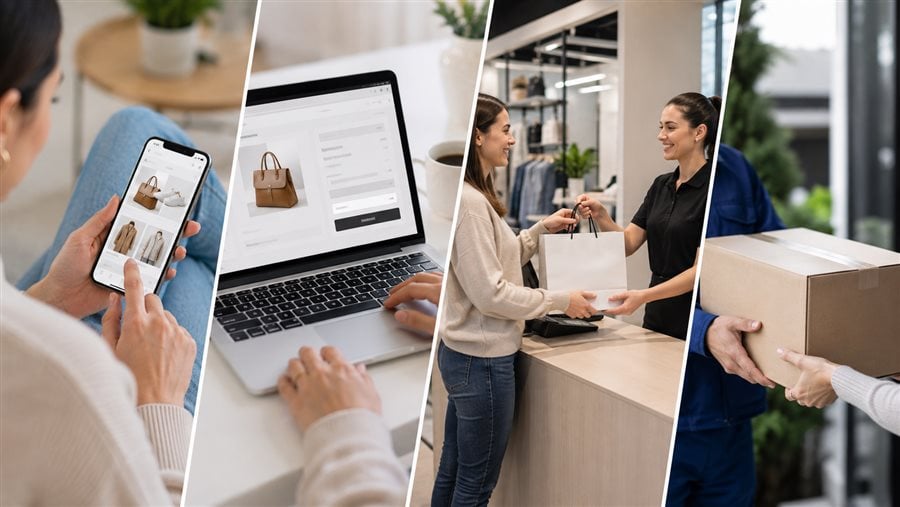

Omnichannel retail is a sales strategy that unifies every channel a customer uses into one connected experience. That means the online store, mobile app, marketplaces, social, and the physical shop all work as one.
A shopper can browse on their phone, buy on a laptop, pick up in store, and return by mail. The brand treats all of it as a single continuous journey.
The promise is simple; the execution is hard. True omnichannel retail depends on one thing that is easy to underestimate: unified inventory and fulfillment behind the scenes.
This guide covers what omnichannel retail is, how it differs from multichannel, the benefits, and 5 steps to implement it. It also covers the fulfillment backbone — often run by a fulfillment center or 3PL — that actually makes it work.
What Is Omnichannel Retail?
Omnichannel retail is an approach to selling in which all channels share the same inventory, customer data, and order management. Omnichannel in retail means every channel draws on one shared system rather than running its own.
The prefix omni means all — every channel works as one system rather than as separate silos. You will also see it written as omni channel retail or omni-channel retail; the spaced and hyphenated forms mean the same thing.
A shopper cart, loyalty points, order history, and stock availability stay in sync across web, mobile, marketplace, and store. The experience stays consistent no matter where they shop.
The practical test of omnichannel retail is continuity. A shopper can start, switch, and finish a purchase across channels without losing context or hitting a dead end.
What Is the Difference Between Omnichannel and Multichannel Retail?
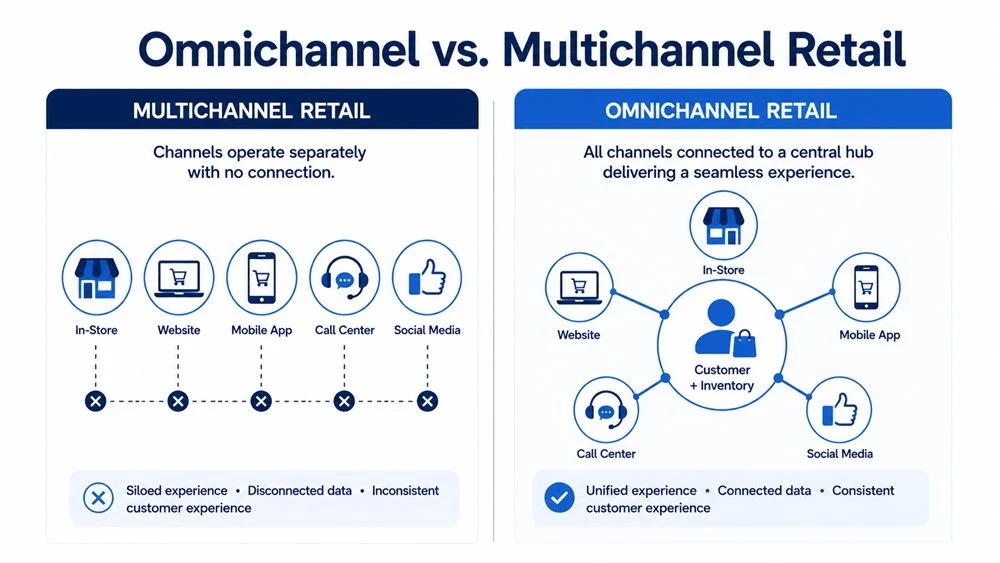
The difference between omnichannel and multichannel retail comes down to integration. Multichannel means a brand sells on several channels that operate independently; omnichannel means those channels are connected and share one source of truth.
| Factor | Multichannel Retail | Omnichannel Retail |
|---|---|---|
| Channels | Multiple, but siloed | Multiple, fully integrated |
| Inventory | Separate per channel | Unified, real-time across all |
| Customer data | Fragmented | Single connected profile |
| Experience | Channel-by-channel | Consistent across channels |
| Focus | The channel | The customer |
In short: every omnichannel retailer is multichannel, but not every multichannel retailer is omnichannel. The leap is connecting the channels around the customer and a single inventory pool.
What Are the Benefits of Omnichannel Retail?
Omnichannel retail increases revenue and loyalty because it removes friction from the buying journey. The main benefits:
- Higher customer lifetime value: shoppers who use more than one channel tend to spend more and buy more often than single-channel customers.
- Fewer lost sales: unified inventory means a product out of stock in one channel can still be sold and fulfilled from another.
- Better customer experience: consistent pricing, availability, and service across every touchpoint builds trust.
- Flexible fulfillment: options like buy-online-pickup-in-store (BOPIS), ship-from-store, and easy cross-channel returns meet customers where they are.
- Richer data: a single customer profile across channels powers smarter marketing and merchandising.
What Does Omnichannel Retail Require From Fulfillment?
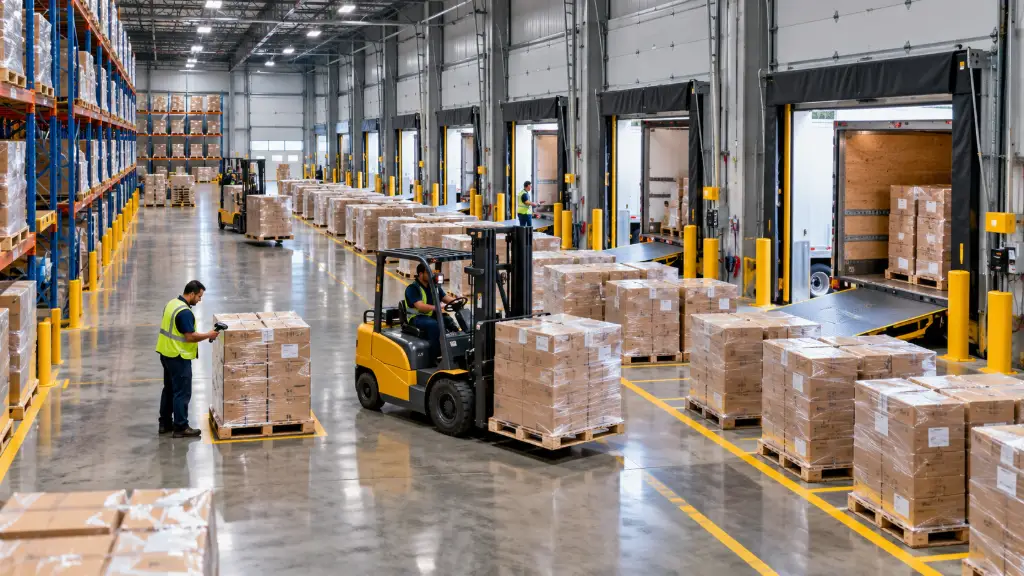
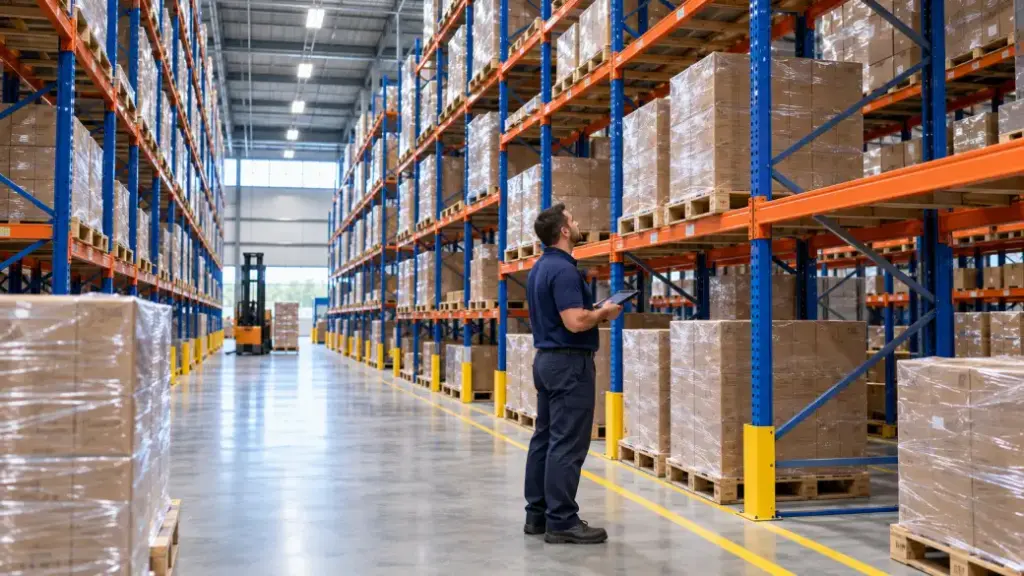
Omnichannel retail requires one thing from fulfillment above all others: a single, accurate, real-time view of stock that every channel reads from. Without it the customer experience breaks — you oversell, you disappoint, and you lose the sale.
The reason this matters now is scale. According to the U.S. Census Bureau, US ecommerce reached $340.2 billion in the second quarter of 2026. That was 17.1% of all retail sales, up 12.2% year on year.
Digital is no longer a channel bolted onto the store. For many retailers it is now the channel the others have to keep up with.
Three of the models that make omnichannel work happen inside the store itself, which is what separates them from ordinary ecommerce shipping:
- Buy online, pick up in store (BOPIS): the customer orders online and collects in store, blending ecommerce convenience with immediate pickup.
- Buy online, return in store (BORIS): customers return online purchases to a physical location, which speeds refunds and drives in-store traffic.
- Endless aisle: in-store shoppers order out-of-stock items for home delivery from the brand’s full online catalog.
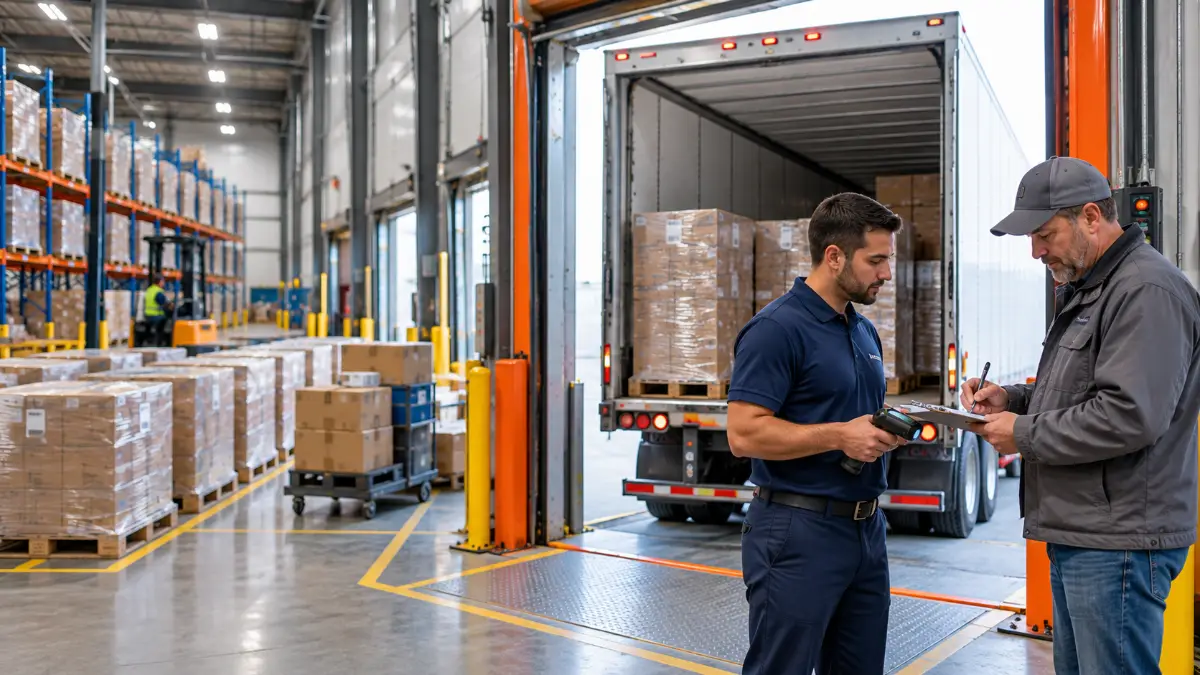
Everything behind those moments is a separate discipline. That covers how each order is routed, which location ships it, the delivery methods available, and how a third-party logistics partner runs the operation.
That side is covered in full in omnichannel fulfillment. The pieces it rests on have guides of their own. Start with the order fulfillment process end to end and the ecommerce fulfillment warehouse that holds the shared stock. Then look at same-day delivery, where speed is the differentiator.
Cura Resource Group runs that layer for omnichannel retailers selling across all of them.
What Are the Common Omnichannel Retail Challenges?
The recurring omnichannel retail failures are disconnected systems, split inventory, inconsistent pricing, and fragmented returns — operational problems rather than strategic ones. The recurring challenges:
- Inventory silos: when channels don’t share one real-time stock count, the result is overselling, stockouts, and broken promises.
- Disconnected systems: an ecommerce platform, POS, and warehouse that don’t talk to each other force manual work and create errors.
- Fragmented customer data: separate profiles per channel make a truly unified experience impossible.
- Fulfillment complexity: juggling BOPIS, ship-from-store, and cross-channel returns without the right logistics partner overwhelms most in-house teams.
The common thread is integration — and almost every fix starts with unifying inventory and fulfillment.
How Do You Implement Omnichannel Retail?
Implementing omnichannel retail is a sequence of connecting systems and aligning operations around the customer. The core steps:
- Centralize inventory: connect all channels to one inventory and order management system so stock is tracked in real time.
- Integrate your tech stack: link your ecommerce platform, POS, marketplaces, and fulfillment so data flows automatically.
- Unify customer data: build a single customer profile that follows the shopper across channels.
- Enable flexible fulfillment: add BOPIS, ship-from-store, and cross-channel returns once inventory is unified.
- Partner for logistics: use a 3PL to provide the distributed warehousing and fulfillment muscle behind the experience.
Omnichannel Retail Trends to Watch
Omnichannel retail continues to evolve toward faster, more personalized, and more flexible experiences. Current trends include social commerce and marketplace selling as first-class channels, plus growing demand for same-day and next-day delivery.
The other two are AI-driven personalization across touchpoints and unified returns as a loyalty driver rather than a cost. Underneath all of them the constant is the same: no retail omnichannel trend works without a unified inventory and fulfillment foundation behind it.
What Are Some Examples of Omnichannel Retail?
Omnichannel retail shows up in everyday shopping patterns where channels work together smoothly. Common examples:
- A shopper adds an item to their cart on a mobile app, then completes the purchase later on a laptop with the cart intact.
- A customer buys online and picks up in store the same day, skipping shipping entirely.
- A buyer orders an out-of-stock size in store and has it shipped to their home from a warehouse.
- A customer returns an online order to a nearby store for an instant refund.
- Loyalty points earned in store apply automatically to an online purchase, and vice versa.
In every case, the experience feels effortless to the customer precisely because the inventory, data, and fulfillment are unified behind the scenes.
Final Word
Omnichannel retail is no longer a differentiator — it is the baseline customers expect. But the smooth front-end experience is only as good as the inventory and fulfillment behind it.
Omnichannel retailers that win treat fulfillment as the foundation, not an afterthought. That means one inventory pool, flexible fulfillment options, and connected returns, often powered by a 3PL partner. Get that backbone right and every channel reinforces the others instead of competing with them.
Returns are where omnichannel promises get tested hardest, because a buy-online-return-in-store flow touches both networks at once. Handling that cleanly is returns management, not an afterthought to fulfillment.
Ready to give your omnichannel retail strategy the fulfillment network behind it?
Frequently Asked Questions
What does omnichannel retail mean?
Omnichannel retail is a sales strategy that unifies a brand’s channels into one connected experience. That includes online store, mobile app, marketplaces, social, and physical stores, built around shared inventory, customer data, and order management. A customer can move between channels during a single purchase journey without losing context.
Is omnichannel the same as multichannel?
Multichannel retail means selling across several channels that operate independently, each with its own inventory and data. Omnichannel retail connects those channels around a single source of truth, so inventory, customer profiles, and the experience are unified. Every omnichannel retailer is multichannel, but not every multichannel retailer is omnichannel.
Why do retailers move to omnichannel?
Customers get a consistent experience whichever channel they use, which lifts repeat purchase and average order value. Operationally the bigger win is inventory. One pooled stock position serving every channel means less overstock and fewer missed sales. It also lets you fulfill an online order from whichever location is closest.
Why is fulfillment important in omnichannel retail?
Fulfillment is the operational core of omnichannel retail because a unified customer experience requires unified, real-time inventory behind it. Without a single accurate view of stock and flexible fulfillment across locations, channels oversell, disappoint customers, and lose sales. Many brands use a 3PL to provide this backbone.
Where should you start with omnichannel?
Start by centralizing inventory in one order management system. Integrate your ecommerce platform, POS, marketplaces, and fulfillment, then unify customer data into a single profile. Enable flexible options like BOPIS and cross-channel returns, and partner with a 3PL for the warehousing and fulfillment behind it.
Which retailers do omnichannel well?
Walmart and Target are the clearest US examples. Both offer buy online, pick up in store, ship from store, and returns accepted anywhere regardless of where the order was placed. Zara does the same in fashion, letting shoppers check store-level stock online and return online orders to any branch.
How do you manage inventory across omnichannel retail?
Hold one shared stock pool that every channel reads from in real time, rather than allocating separate quantities per channel. That means a single system of record and live sync to each storefront. A routing rule then decides which location fulfils each order, so two channels never sell the same unit.
What are the four C’s of omnichannel?
Lists vary by source, but the four most commonly named are consistency, convenience, context, and continuity. That means the same pricing and messaging everywhere, plus minimal friction on whichever channel the customer picks. It also means purchase history that informs the next interaction, and switching channels without starting over.