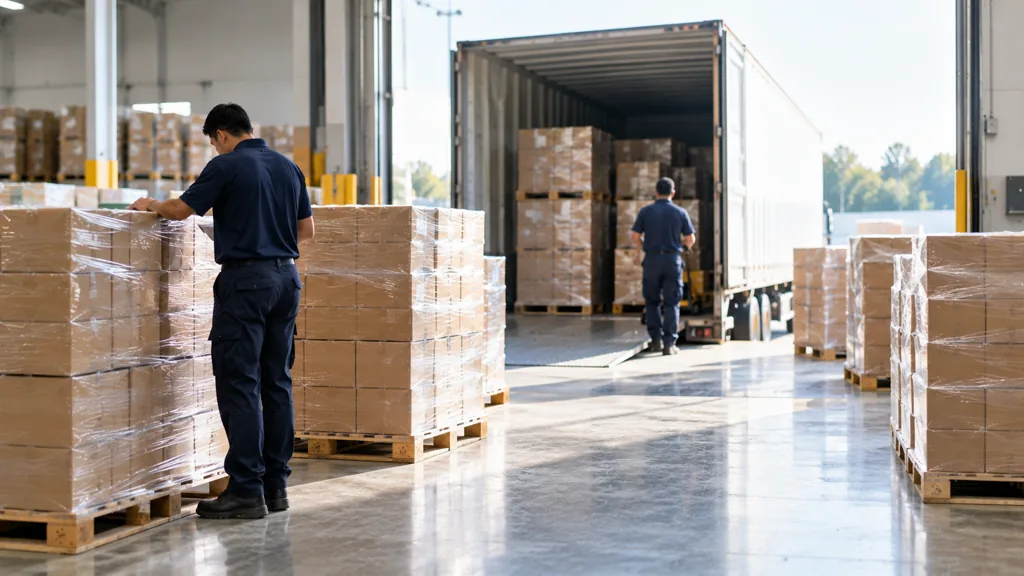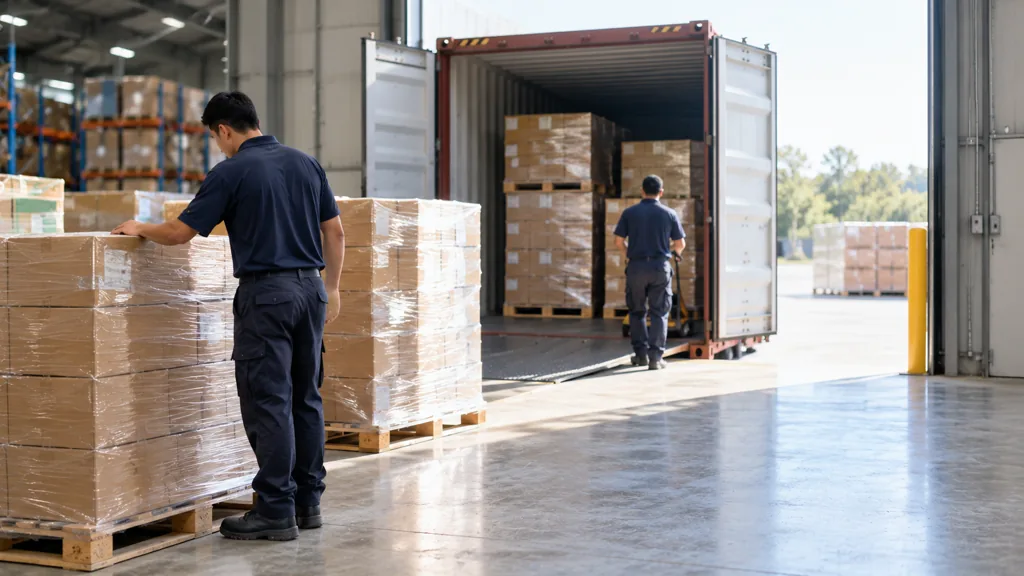
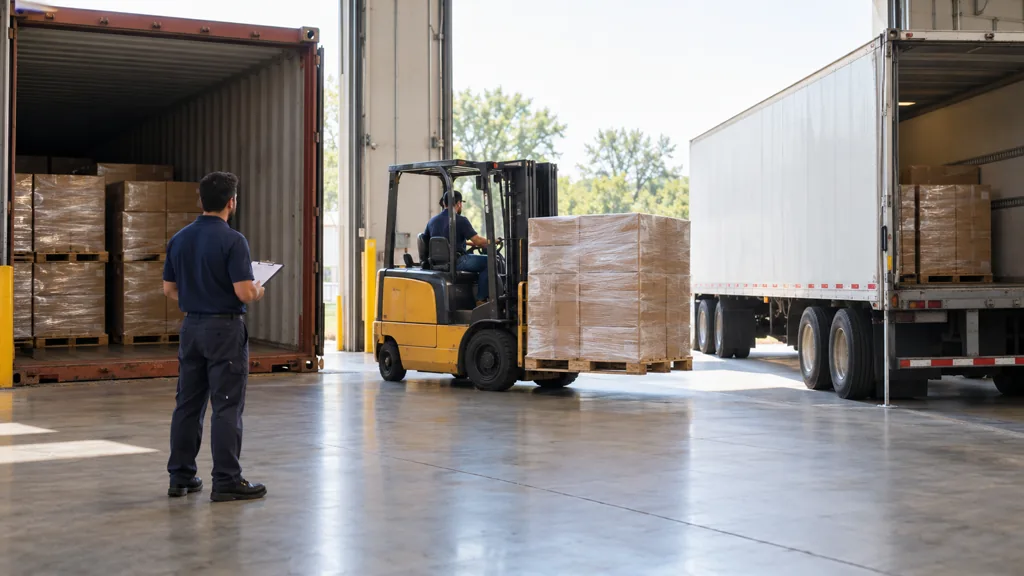

Transloading moves freight from one mode of transport to another without unpacking it. Goods come off a railcar or out of an ocean container and go onto a truck, still on their pallets.
This guide covers what transloading is, how it runs, the types in common use and what it costs. It also draws the lines against cross-docking and drayage, which are the two things it gets confused with most.
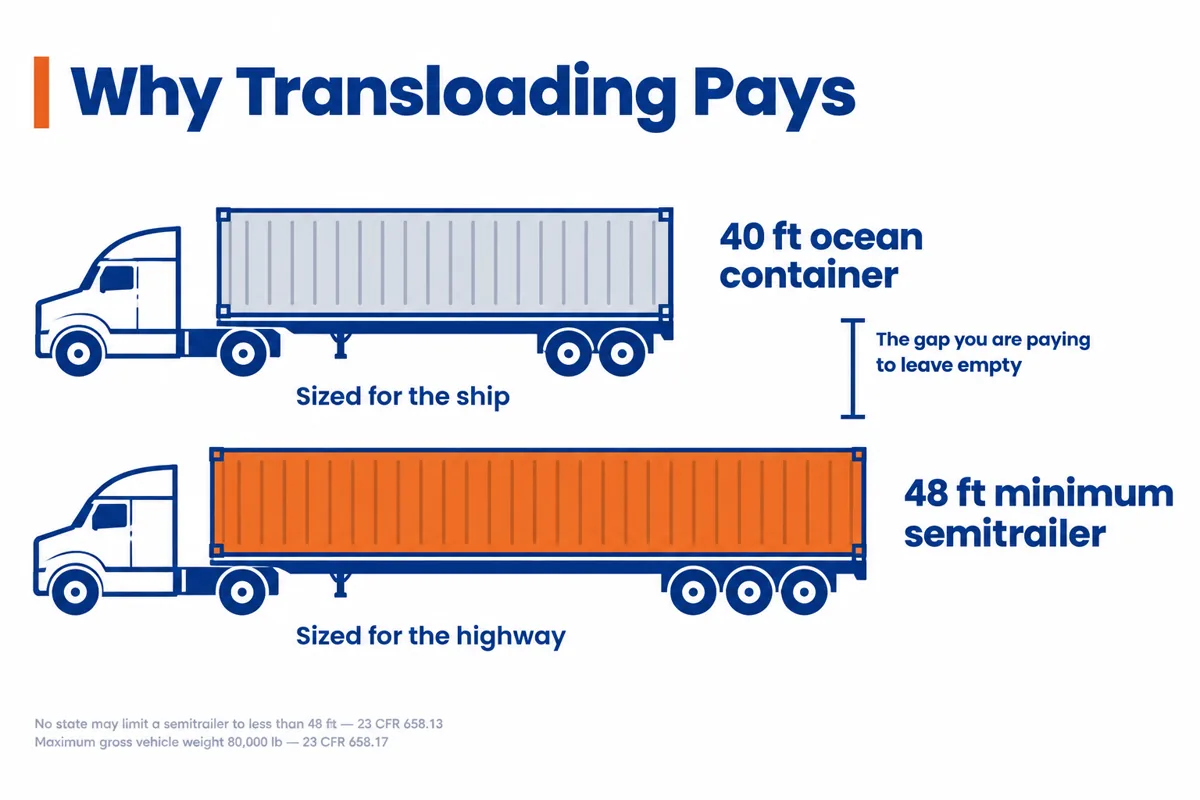
The reason it pays is written into federal law. Under 23 CFR 658.13, no state may impose a length limit of less than 48 feet on a semitrailer. Domestic trailers are built longer than the ocean containers arriving at the port.
What Is Transloading?
Transloading is the transfer of freight between transport modes at a facility built for the job. The product itself is not broken down, repacked or sold on. It simply changes vehicle.
That distinction matters. A transload facility is not a warehouse where your stock lives, and it is not a fulfillment operation. It is a place where freight changes mode and keeps moving.
The freight usually stays on its original pallets or in its original packaging. What changes is the equipment underneath it.
Transloading services are the outsourced version of that work. A provider runs the dock, the labor and the outbound paperwork, so you do not need a facility beside the port or the rail ramp.
How Transloading Works, Step by Step
Transloading runs in four steps, from the arriving vehicle to the departing one. The whole sequence usually happens inside a day.
Step 1: Arrival
Arrival brings the loaded vehicle to the transload facility. A railcar is spotted at the dock, or a container arrives by truck from the port or rail ramp.
Step 2: Unloading and Check
Unloading takes the freight out of the inbound equipment and onto the dock. The team counts it, checks it against the paperwork and notes any damage before it moves again.
Step 3: Transfer
Transfer puts the freight into the outbound vehicle, usually a domestic trailer. Because that trailer is longer than an ocean container, the load is restacked to use the extra space rather than copied across one for one.
Step 4: Departure
Departure releases the outbound truck with new paperwork for the next leg. The inbound equipment goes back to the port or the railroad, which is what stops the clock on holding charges.
The Types of Transloading
The three types in common use are rail-to-truck, container transloading and bulk transfer. They differ by what the freight arrives in and what it leaves in.
- Rail-to-truck. Freight arrives by railcar and leaves by truck. Rail handles the long haul cheaply, trucks handle the last few hundred miles.
- Container transloading. Goods are moved out of a 20 or 40 foot ocean container into domestic trailers for inland delivery.
- Bulk transfer. Loose or liquid commodities move between rail, truck and storage using dedicated equipment rather than pallets.
Rail-to-truck and container transloading are the two that most shippers meet. Bulk transfer is a specialist operation, and transload facilities built for it carry their own equipment.
Why the Equipment Changes
Because a domestic trailer holds more than an ocean container, and that gap is where the saving sits. Ocean boxes are sized for ships, not for American highways.
23 CFR 658.13 requires that no state limit a semitrailer to less than 48 feet in a truck tractor-semitrailer combination, and 53 foot trailers are the domestic standard.
So the freight from several 40 foot containers can be restacked into fewer domestic trailers. You pay for fewer inland moves than the arriving equipment implies.
There is still a weight ceiling. The maximum gross vehicle weight on the Interstate system is 80,000 pounds under 23 CFR 658.17, except where the bridge formula requires less. Dense freight fills a trailer by weight before it fills it by space.
What Transloading Saves You
Inland miles, equipment charges and the cost of the long haul. The savings come from three places.
The long haul moves on the cheaper mode. Rail costs less per mile than trucking over distance. Transloading lets you use rail where it is strong and trucks only where they are necessary.
Equipment goes back faster. Ocean containers and railcars both accrue charges while you hold them, and emptying them promptly is what stops those charges building.
Fewer trailers make the inland trip, because the load is restacked into longer equipment rather than moved across one container to one truck.
The trade is an extra handling step. Freight that is fragile, or that nobody should touch twice, may be better off traveling in the box it arrived in.
Transloading vs Cross-Docking
Transloading changes the mode; cross-docking changes the vehicle but not usually the mode. Both avoid putting freight into storage, which is why they get confused.
Cross-docking moves freight from inbound to outbound at the same facility, with sorting or consolidation along the way. The inbound and outbound vehicles are often both trucks.
Transloading is defined by the mode change. Rail to road, or ocean container to domestic trailer, is transloading even when nothing is sorted. Our guide to how cross-docking works covers the four types in detail.
Transloading vs Drayage
Drayage is the move; transloading is what happens at the end of it. They sit next to each other in the same journey, which is why the terms blur.
Drayage is the short truck trip from a port or rail ramp to the next stop, often a transload facility. It is a transport service measured in miles.
Transloading is the handling that happens once the container arrives. Our guide to drayage services covers the six types and what the move costs.
What Transloading Costs
It is priced on the handling, not the distance. A transload quote is built from the work of moving freight between vehicles, which makes it different from a freight rate.
- Handling. Charged per pallet, per hundredweight or per container, depending on the facility and the freight.
- Equipment and labor. Forklifts, dock time and crew, which rise with how awkward the freight is to move.
- Short-term storage. Floor space if the outbound truck is not there the same day.
- Accessorials. Restacking, shrink wrapping, palletizing floor-loaded freight and waiting time.
Floor-loaded containers are the line item that surprises people. Freight loaded loose into a container has to be palletized before it can go on a trailer, and that is labor nobody quoted for.
Compare a transload quote against the alternative, not against zero. The question is whether handling plus inland trucking beats moving the original equipment the whole way.
Transloading With Cura Resource Group
Cura Resource Group transloads freight from ocean containers to domestic carriers. Goods landing at a port continue inland in equipment sized for the road.
Our transloading services cover consolidation and break-bulk work at the same docks. Several inbound shipments can leave as one load, or one inbound load can be split for several destinations.
Our Memphis site is the one to know about for rail. It is served by five of the six long-haul Class I railroads in North America, according to Memphis Moves. Only four US cities have that level of access.
That matters because containers landing on either coast can reach Memphis by rail instead of long-haul truck. It lowers the cost per mile on the longest leg of the trip.
We arrange the drayage from the port or rail ramp as part of the same job. The container move and the transfer are not two separate conversations.
Transloading sits inside a wider warehousing and distribution operation. Freight that needs to wait has somewhere to wait, and freight that needs consolidating can be handled on the same floor.
Pricing is quoted to your freight and your lane rather than read off a list, and a minimum applies. Get a quote with your inbound equipment, your destination and whether the container is palletized or floor loaded. We respond within 24 to 48 business hours.
Sources and Further Reading
- Legal Information Institute, 23 CFR 658.13, Length — no state may limit a semitrailer to less than 48 feet in a truck tractor-semitrailer combination.
- Legal Information Institute, 23 CFR 658.17, Weight — the 80,000 pound maximum gross vehicle weight on the Interstate system.
Frequently Asked Questions
What is transloading?
Transloading is the transfer of freight from one mode of transport to another, such as rail to truck or ocean container to domestic trailer. The product is not unpacked or repacked. It stays on its pallets and simply changes vehicle for the next leg of the journey.
What is a transloading fee?
A transloading fee covers the handling rather than the distance. It is normally charged per pallet, per hundredweight or per container. Separate lines cover labor, equipment, any short-term storage and accessorials such as restacking or palletizing floor-loaded freight.
What is the difference between transloading and cross-docking?
Transloading is defined by a change of transport mode, such as rail to road. Cross-docking moves freight from inbound to outbound at the same facility, with sorting or consolidation, and both vehicles are often trucks. Neither puts the freight into storage.
What is the difference between drayage and transloading?
Drayage is the short truck move from a port or rail ramp to the next stop, measured in miles. Transloading is the handling that happens when the container arrives and its contents move into other equipment. One is transport, the other is work at a dock.
What are the types of transloading?
The three in common use are rail-to-truck, container transloading and bulk transfer. Rail-to-truck pairs cheap long-haul rail with local trucking. Container transloading moves goods out of ocean boxes into domestic trailers. Bulk transfer handles loose or liquid commodities with dedicated equipment.
Why not just truck the container all the way?
Because ocean containers are sized for ships rather than American highways. Domestic trailers are longer, so the same freight fills fewer of them and fewer inland moves are needed. The empty container also goes back to the port sooner, instead of accruing charges while it travels inland and returns.
How long does transloading take?
Usually within a day of the freight arriving, since the point is to keep it moving rather than store it. Floor-loaded containers take longer than palletized ones. Every carton has to be handled and built into a pallet before it can go on a trailer.