
Inbound logistics is everything that happens to your goods before they are yours to sell. Suppliers ship, carriers deliver, and someone has to receive, check and put it all away.
This guide covers what inbound logistics is, the stages it runs in and how it differs from outbound. It also covers what goes wrong, and the federal rule that decides whether a demurrage bill is payable at all.
What Is Inbound Logistics?
Inbound logistics is the movement of goods from your suppliers into your business. It covers sourcing, transport, arrival, receiving, inspection and putaway. The goods may be finished stock for resale, or raw materials and components feeding a manufacturing line.
It ends the moment stock is counted, recorded and available to sell or build with. Everything after that is storage or outbound.
It is the first half of your supply chain, and it is mostly invisible when it goes well. It tends to get attention only after a bad month of shortages or surprise charges.
An example. You order forty cartons from an overseas supplier. The container lands, is drayed to the warehouse, emptied, counted against the purchase order and put away. Only at that last step does the stock become sellable. Everything before it is inbound.
Inbound vs Outbound Logistics
Inbound is goods coming in from suppliers; outbound is goods going out to customers. They run in opposite directions and they fail in opposite ways.
Inbound failures show up as stockouts, line stoppages and unexpected charges. Outbound failures show up as late deliveries, chargebacks and refunds.
They also differ in who holds the power. You choose your suppliers and can set terms with them. Your customers set the terms with you. Outbound logistics covers the other half of the journey.
The Stages of Inbound Logistics
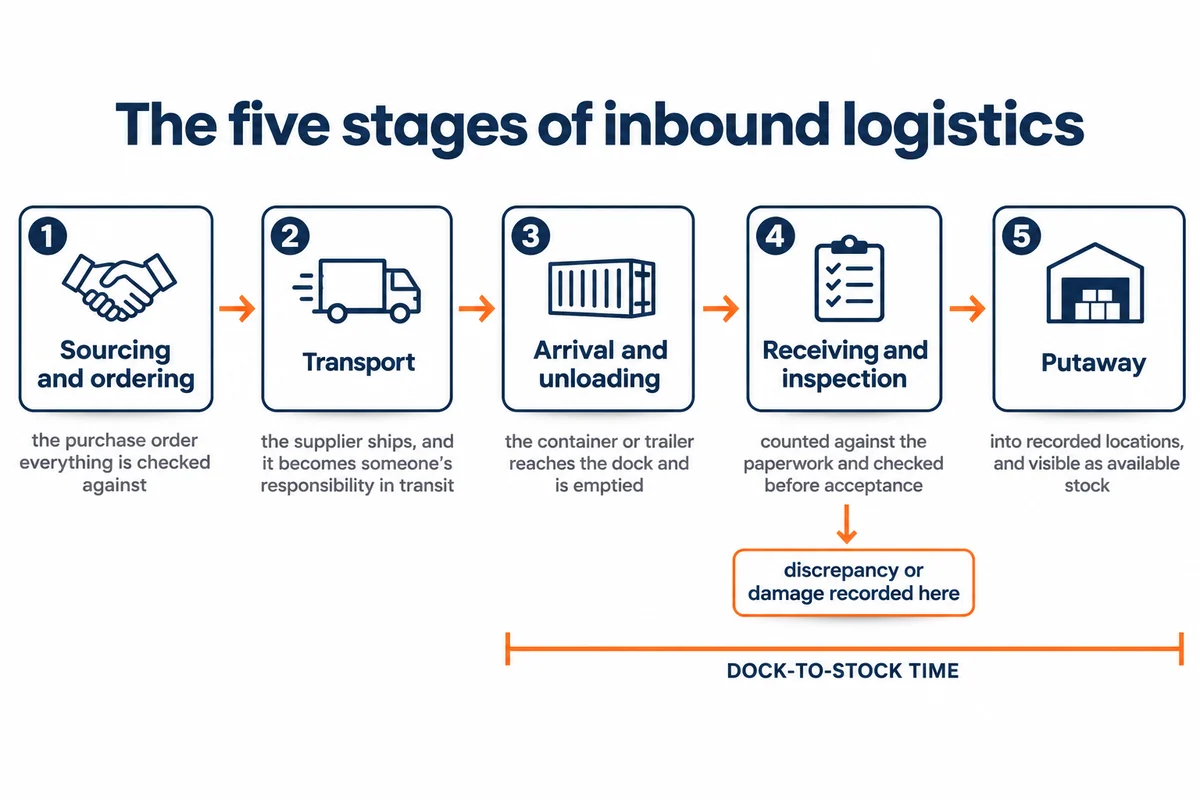
Five stages carry goods from a purchase order to available stock.
- Sourcing and ordering. Choosing suppliers and raising the purchase order that everything downstream is checked against.
- Transport. The supplier ships, by ocean, air, rail or road, and the goods become someone’s responsibility in transit.
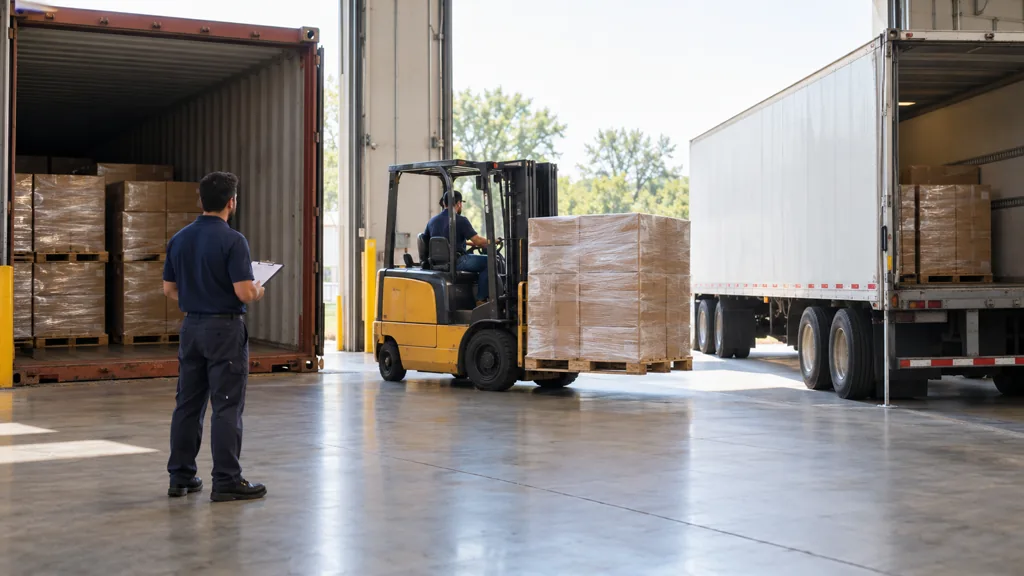
- Arrival and unloading. The container or trailer reaches the warehouse and is emptied.
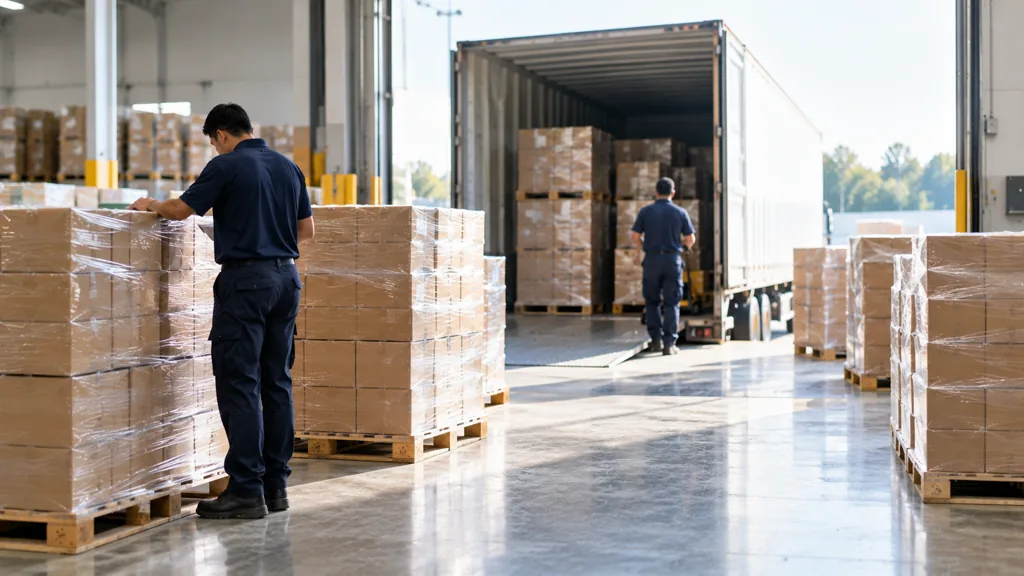
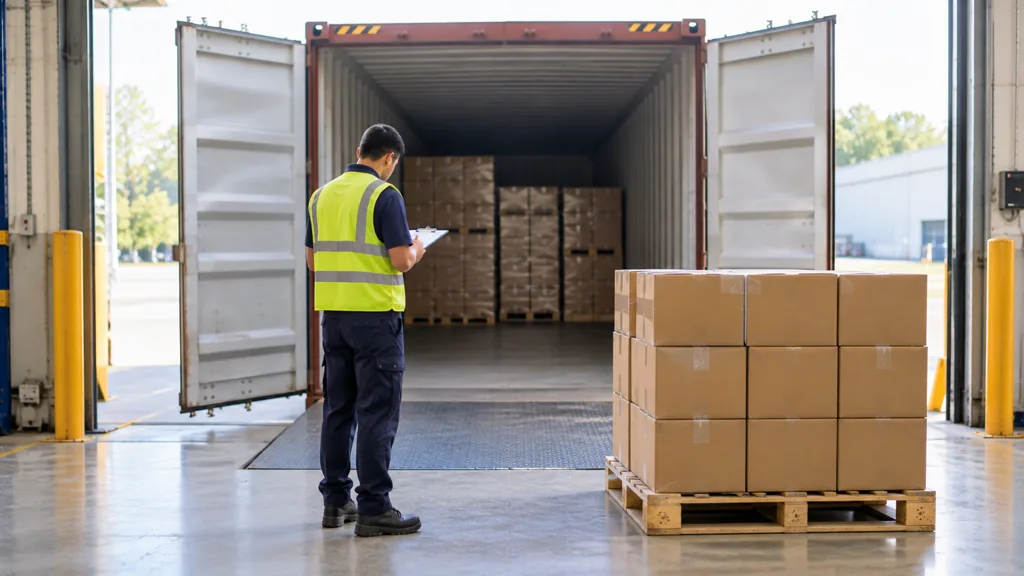
- Receiving and inspection. What arrived is counted against the paperwork and checked before anyone accepts it.
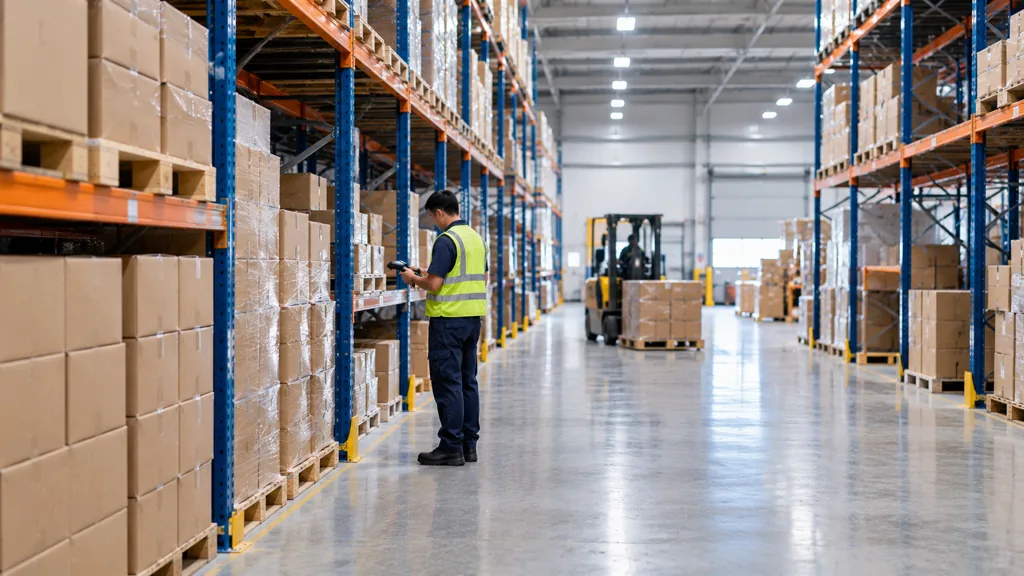
- Putaway. Stock goes into recorded locations and becomes visible as available inventory.
Skip or rush any one of them and the error surfaces later, usually as a count that does not match what the system says.
Scheduling What Arrives
Deliveries have to be booked, not just sent. A warehouse that accepts whatever turns up will have four trucks at once on Tuesday and an empty yard on Wednesday.
Appointment scheduling spreads arrivals across the week so there are people and space to handle each one. It also gives you a record of which supplier actually arrived when they said they would.
Checking What Actually Arrived
Count it against the purchase order before anyone signs for it. The moment you accept a delivery without checking, any shortage becomes your problem rather than your supplier’s.
Two checks matter. The count tells you whether the quantity matches the order, and the condition check tells you whether what arrived is sellable.
Damage and discrepancies have to be recorded at receipt, because a claim raised days later is a much weaker claim.
Supplier Compliance
Supplier compliance is holding your suppliers to the way you need goods to arrive. It is the inbound mirror of the routing guides retailers impose on you.
It usually covers advance shipping notices, labeling, carton and pallet standards, and booking requirements. When a supplier ignores them, the cost of sorting it out is real, and chargebacks are how that cost gets passed back.
The case for a compliance program makes itself the second time a supplier sends an unannounced pallet of mislabeled cartons.
What Demurrage and Detention Really Cost
There is no single national rate. Each billing party charges from its own tariff or service contract, so the only figure that matters is the one in yours.
Demurrage is charged for containers sitting at the terminal; detention is for equipment held outside it. Both accrue daily, and both escalate.
One published tariff shows the shape of it. The Port of Los Angeles publishes one, effective December 1, 2025. It sets $52.77 a day for the first five days on a nine to thirteen meter container. Days six to ten run $105.47. From day eleven it is $210.93.
Read that as an example, not a quote. The Port publishes the chart as a computing aid and tells readers to verify rates against the current tariff. It also does not define when day one begins.
The billing side is regulated, though, and that is where the leverage sits. Under 46 CFR 541.2 the part governs any demurrage or detention invoice issued by an ocean common carrier, marine terminal operator or non-vessel-operating common carrier.
Three of those rules decide whether you owe the charge at all.
- The invoice has a deadline. 46 CFR 541.7 requires it to be issued within thirty calendar days of the date the charge was last incurred. Miss that and the billed party is not required to pay. Where the billing party is an NVOCC, its thirty days run instead from the issuance date of the invoice it received.
- The invoice has required contents. 46 CFR 541.6 lists around twenty items across five groups: identifying, timing, rate, dispute and certification information. That covers the free time allowed and its start and end dates. It also covers the dates actually charged, the tariff rule behind the rate, and how to request a refund.
- Missing information voids the charge. 46 CFR 541.5 states that failure to include any of the required minimum information eliminates any obligation of the billed party to pay. Not a discount, and not grounds for a conversation. The obligation goes.
You also get time to argue. 46 CFR 541.8 gives the billed party at least thirty calendar days from the invoice issuance date to request mitigation, a refund or a waiver. The billing party must then try to resolve it within thirty days, or by a later date if both sides agree.
So before paying one, do two things. Check the issue date against the last day the charge ran, then check the invoice against the required contents. Those charges attach to the drayage move from the terminal.
Common Inbound Logistics Problems
Four problems recur, and none of them starts in the warehouse itself.
- Suppliers who ship late or early. Early is not a gift; it is stock you are paying to hold sooner than planned.
- Unannounced deliveries. No appointment, no notice, no space booked.
- Paperwork that does not match the pallet. The count, the packing list and the purchase order disagree, and someone has to reconcile them.
- Equipment charges nobody was watching. Demurrage and detention accrue quietly and arrive as an invoice weeks later.
How to Measure Inbound Performance
Four measures tell you whether inbound is working, and they are all about suppliers rather than staff.
- On-time delivery rate. What share of supplier deliveries arrive inside the agreed window.
- Dock-to-stock time. How long between a truck arriving and the stock being available to sell.
- Receiving accuracy. How often the quantity received matches the purchase order.
- Damage rate at receipt. What share of inbound units arrive unsellable.
Dock-to-stock is the one most worth tracking. Stock that has arrived but is not yet recorded cannot be sold, and you did not know you had it.
Inbound Logistics With Cura Resource Group
Cura Resource Group takes inbound from the port or the ramp through to recorded, available stock. We arrange the drayage, unload the container at our own warehouse and put the goods away.
We accept inbound shipments from your suppliers, verify quantities against your purchase order and log every SKU into our system. Deliveries are booked in, receipts are checked for damage and discrepancy, and supplier compliance is handled as part of the account.
We handle the terminal side too: appointments, chassis and chasing the demurrage and per diem charges that follow. Riverside works with Los Angeles and Long Beach, Memphis with the rail ramps, and Carolina with San Juan. We can also move freight in bond.
Inbound sits inside a wider warehousing and distribution operation. Goods that arrive have somewhere to go, and freight that needs consolidating runs through our Carolina, Puerto Rico warehouse.
Get a quote with your inbound volumes, your origin ports and how your suppliers ship today. We come back within 24 to 48 business hours.
Sources and Further Reading
- Legal Information Institute, 46 CFR 541.2, Scope and applicability — which invoices the part governs.
- Legal Information Institute, 46 CFR 541.5, Failure to include required information — omitting any required item eliminates the obligation to pay.
- Legal Information Institute, 46 CFR 541.7, Issuance of demurrage and detention invoices — the thirty-day issuing deadline, and the separate NVOCC clock.
- Legal Information Institute, 46 CFR 541.8, Requests for fee mitigation, refund, or waiver — the thirty-day window to dispute an invoice.
- Legal Information Institute, 46 CFR 541.6, Contents of invoice — the full required contents, around twenty items across identifying, timing, rate, dispute and certification information.
- Port of Los Angeles, Demurrage Rates Chart — per-day and cumulative demurrage rates by container size, effective December 1, 2025.
Frequently Asked Questions
What is inbound logistics?
Inbound logistics is the movement of goods from suppliers into your business, covering sourcing, transport, arrival, unloading, receiving, inspection and putaway. It ends when stock is counted, recorded and available to sell. Everything after that point is storage or outbound logistics.
What is the difference between inbound and outbound logistics?
Inbound brings goods in from suppliers; outbound sends goods out to customers. Inbound failures appear as stockouts and surprise charges, outbound failures as late deliveries and chargebacks. You set terms with your suppliers, while your customers set terms with you.
What are the stages of inbound logistics?
Five: sourcing and ordering, transport from the supplier, arrival and unloading, receiving and inspection against the paperwork, then putaway into recorded locations. The process ends when stock becomes visible as available inventory, not when the truck leaves the yard. Stock that has arrived but is unrecorded cannot be sold.
What is demurrage, and do I always have to pay it?
Demurrage is the charge for leaving a container at the terminal beyond its free time. Not always, no. Under 46 CFR 541.7 the invoice must be issued within thirty calendar days of the date the charge was last incurred. Under 46 CFR 541.5, omitting any required information eliminates the obligation to pay.
What should a demurrage invoice contain?
Around twenty items, set out in 46 CFR 541.6 across five groups: identifying, timing, rate, dispute and certification information. That covers the bill of lading and container numbers, the free time allowed, the dates charged and the tariff rule behind the rate. Under 46 CFR 541.5, leaving any of them out eliminates the obligation to pay.
What is supplier compliance in inbound logistics?
Supplier compliance is holding suppliers to how you need goods to arrive, covering advance shipping notices, labeling, carton and pallet standards and booking requirements. It mirrors the routing guides retailers impose on their suppliers, and chargebacks are how the cost of non-compliance gets passed back.
Which inbound logistics KPIs matter most?
Supplier on-time delivery, dock-to-stock time, receiving accuracy against the purchase order, and damage rate at receipt. Dock-to-stock is the most revealing. Stock that has arrived but is not yet recorded cannot be sold, and does not show in available inventory.