
Pallet storage is warehouse space rented by the pallet position and billed by the month, with the warehouse receiving and releasing your goods. It averaged $20.17 per pallet per month in 2026, in a survey of more than 600 North American warehouses by The Fulfillment Advisor.
This guide covers what a pallet position costs, the 4 ways warehouses charge, the fees that sit around storage and how to check a quote. A rate card looks simple. The invoice is the rate plus everything attached to it.
Space itself is getting more expensive. US industrial asking rents reached $10.45 per square foot in the second quarter of 2026, with vacancy at 6.8%, according to JLL. Rent is one input into every storage rate you are quoted.
What Is Pallet Storage?
Pallet storage is space rented by the pallet position inside someone else’s warehouse. You pay monthly for each position your goods occupy, and the warehouse receives, stores and releases them for you.
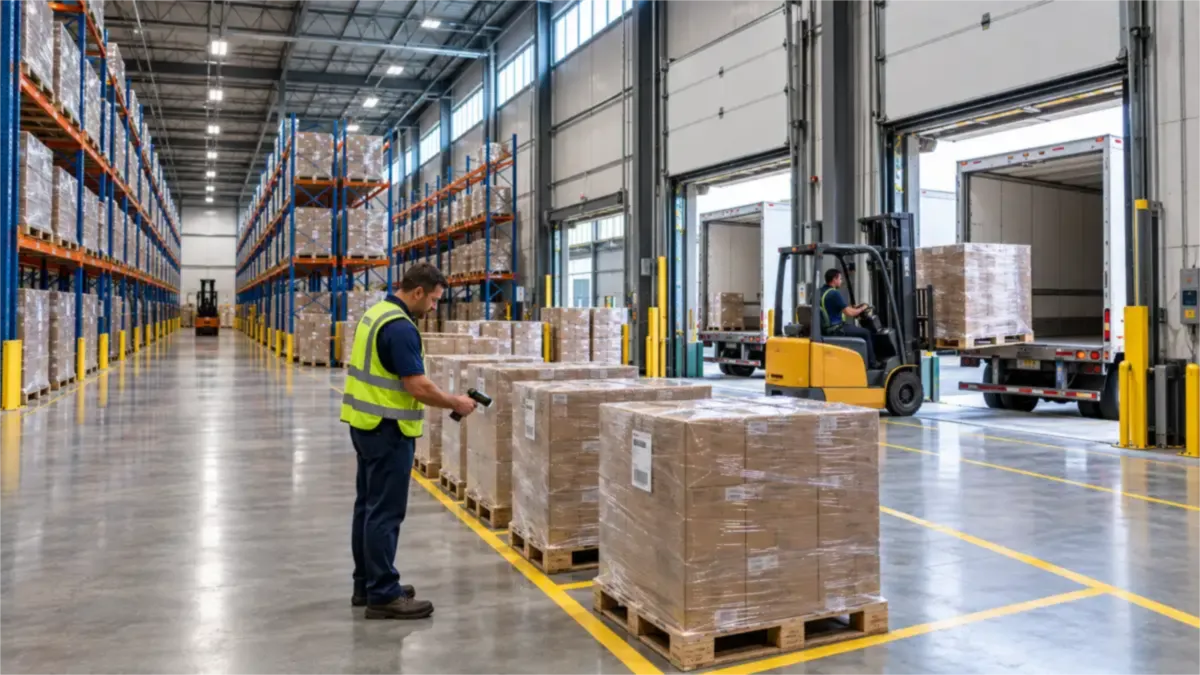
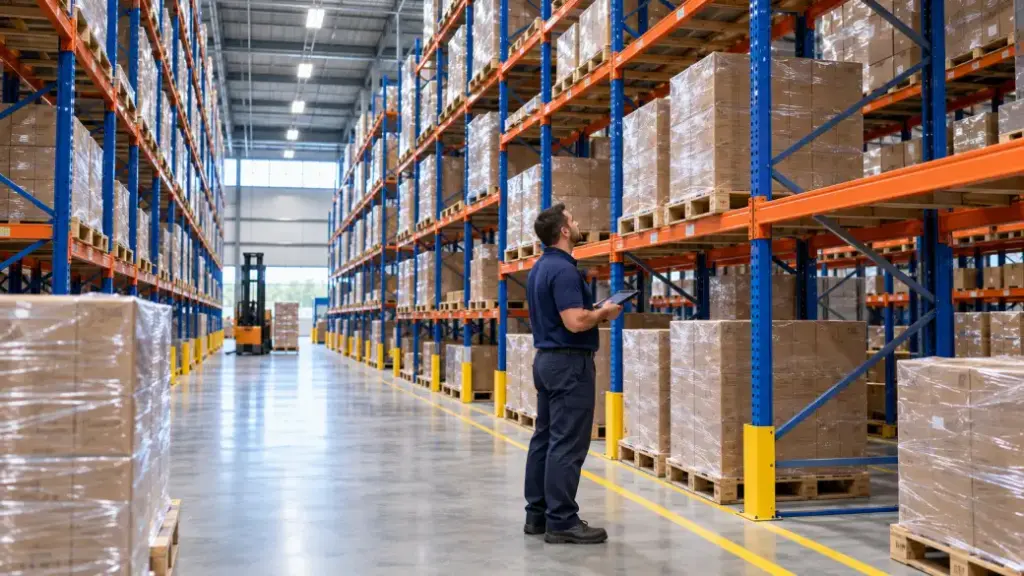
A pallet position is the space one standard 48 by 40 inch pallet takes up, in a rack or on the floor. You buy positions, not square feet, so racking height works in your favor rather than the landlord’s.
Storage is one stage inside how warehousing and distribution work end to end, from the receiving dock to the outbound truck.
How Much Does Pallet Storage Cost per Month?
Pallet storage costs $18 to $25 per pallet per month for dry goods. That rate is the base of your warehouse storage cost. The average was $20.17 in The Fulfillment Advisor’s 2026 survey of more than 600 North American warehouses.
Cold space costs more. Olimp Warehousing publishes $25 to $50 per pallet per month for temperature-controlled storage in its 2026 rate guide, against $18 to $25 for dry storage.
Volume moves the number too. About 42% of warehouses give a 5% to 10% break above 100 pallets a month, in the same Fulfillment Advisor survey.
| What you are storing | Typical range per pallet, per month | Average |
|---|---|---|
| Dry goods, ambient | $18 to $25 | $20.17 |
| Temperature-controlled | $25 to $50 | Not published |
| High volume, 100+ pallets | 5% to 10% below list | Not published |
The 4 Ways Warehouses Charge for Storage
Warehouses price storage 4 ways: per pallet position, per square foot, per cubic foot or per bin. Which one you are quoted changes what you pay for the same goods, so ask before you compare two quotes.
Per Pallet Position
Per pallet pricing charges for each position your goods occupy, at an average of $20.17 per pallet per month in The Fulfillment Advisor’s 2026 survey. It suits full, stackable pallets of one product.
It works against you when pallets are half empty. You pay for the position, not for what is on it.
Per Square Foot
Per square foot pricing charges for floor area. The same survey puts warehouse storage rates at $1.73 per square foot per month, ranging from $1.25 to $2.25. It is common when you take a marked-off area rather than individual positions.
Height is the thing to check. Paying by the floor and stacking three pallets high is cheaper than paying by the position.
Per Cubic Foot
Per cubic foot pricing charges for the volume your goods fill, averaging $0.46 per cubic foot per month, with most rates between $0.35 and $0.60. It fits odd shapes and part pallets that would waste a full position.
Per Bin or Shelf
Bin pricing charges per bin or shelf location, averaging $3.08 per bin per month and typically $2.50 to $4.00. It is the model for small parts and slow ecommerce SKUs that never fill a pallet.
What Else Appears on a Storage Invoice
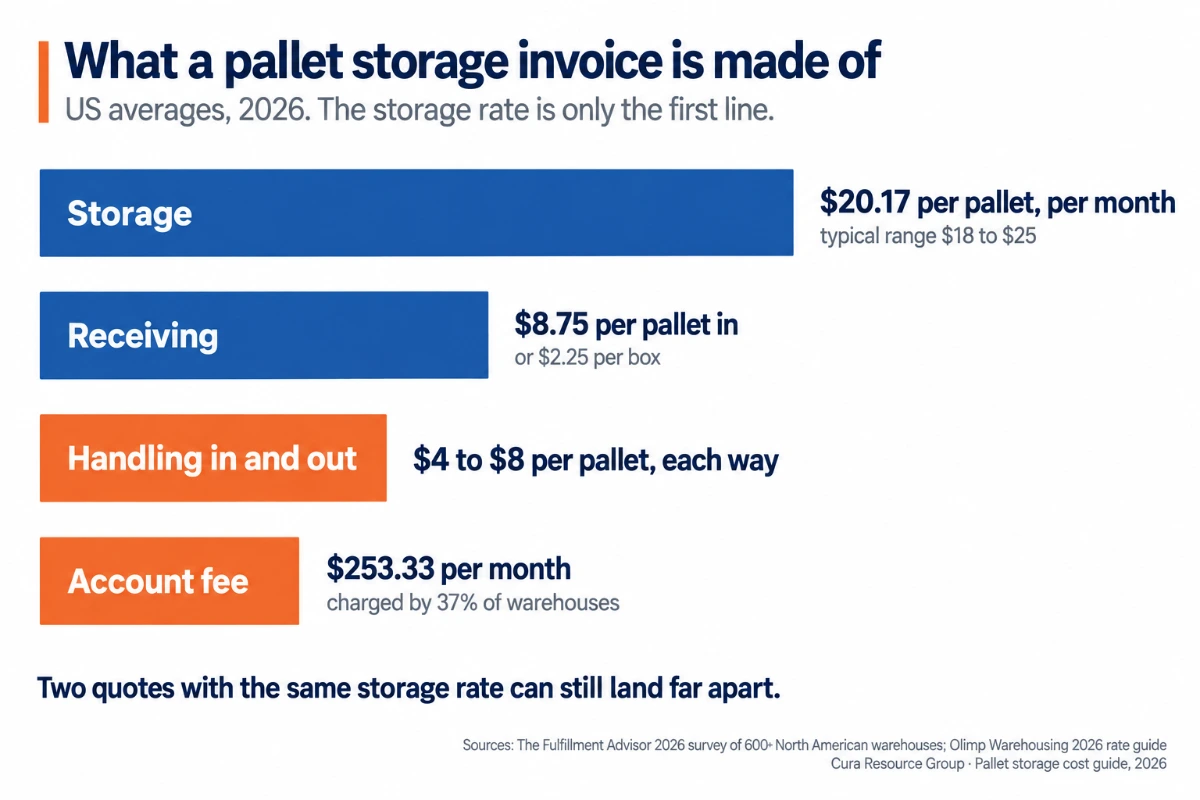
Storage is one line on the bill. Receiving, account fees and charges for goods that sit too long make up the rest, and they are where a cheap headline rate gets expensive.
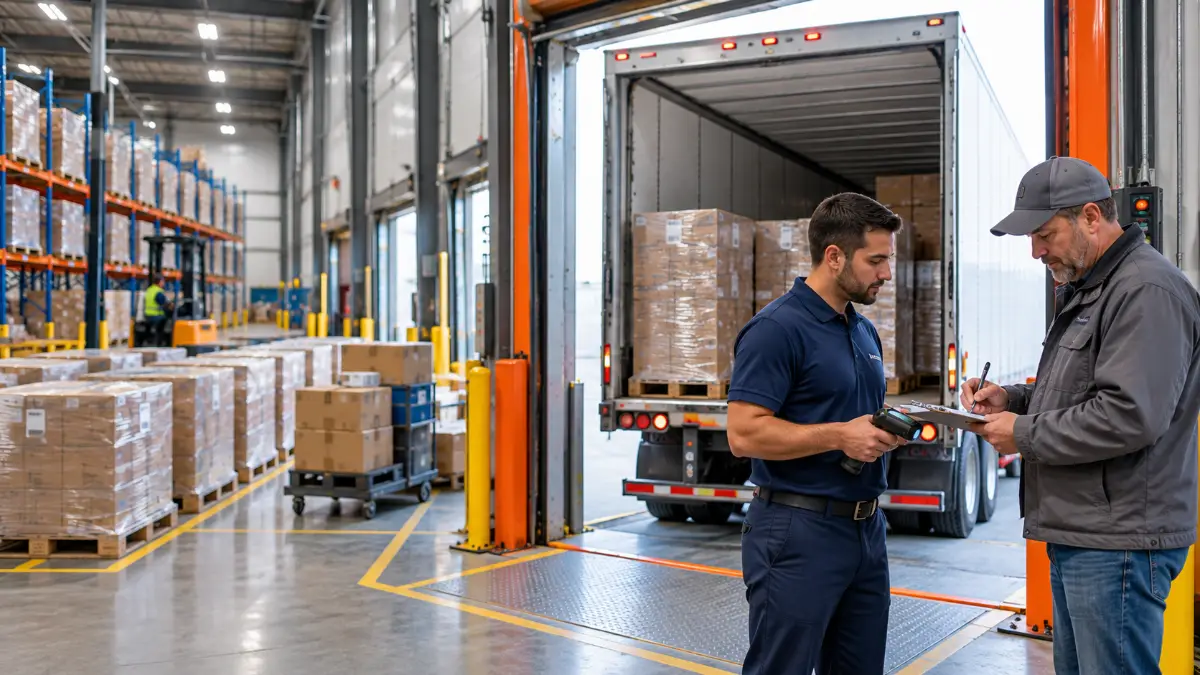
- Receiving. Unloading and booking goods in averages $8.75 per pallet or $2.25 per box, in The Fulfillment Advisor’s 2026 data.
- Handling in and out. Olimp Warehousing lists $4 to $8 per pallet each way in its 2026 guide, charged every time a pallet moves.
- Account management. About 37% of warehouses charge a monthly account fee, averaging $253.33 in the 2026 Fulfillment Advisor data.
- Long-term storage. Around 41% of warehouses charged a fee on aging stock in 2026, down from 48.6% the year before.
Get each of these written next to the storage rate. Two quotes with the same per pallet price can land a long way apart once handling and account fees are counted.
What Changes Your Rate
Five things move a storage quote: location, temperature, volume, term length and how much handling your goods need. The first two set the floor, and the last three decide where inside the range you land.
- Location. Rates track industrial rent, which JLL put at $10.45 per square foot nationally in the second quarter of 2026. Coastal markets sit above that, inland markets below.
- Temperature. Chilled and frozen space carries its own equipment and power bill, which is why published cold rates start where dry rates end.
- Volume. More pallets earn a discount, and the survey puts that break at 5% to 10% above 100 pallets.
- Term. A month-to-month arrangement prices higher than a committed one, because the warehouse carries the risk of the space emptying.
- Handling. Goods that move constantly cost more to hold than goods that sit, since labor is what a warehouse really sells.
How to Calculate Your Monthly Storage Bill
Your monthly warehouse storage cost is the pallet count times the rate, plus receiving and any account fee. Use your real pallet count across a month, not your peak, or the number will flatter itself.
Take 120 pallets at the 2026 average of $20.17. Storage is $2,420.40. Receiving 40 inbound pallets at $8.75 adds $350, and an account fee at the $253.33 average takes it to roughly $3,024 a month.
Those are published survey averages, not a quote. Run the same math with the numbers on your own rate card and the gaps show up quickly.
How to Lower Pallet Storage Costs
You cut storage costs 5 ways. Use the height you pay for, store fewer slow SKUs, commit volume, keep stock moving and hold it near your customers.
Use the Height You Are Paying For
Stacking taller cuts the positions you need, and double-stacking two pallets into one position halves that line on the invoice. Ask what your racking allows and whether your cartons can carry the weight.
Store Fewer Slow SKUs
Slow stock quietly fills positions for months. Pull an aging report, then sell through, consolidate or write off what has not moved. The warehouse charges the same for a busy pallet and a dead one.
Commit Volume for the Break
Volume discounts are real and worth asking for, at 5% to 10% above 100 pallets in the 2026 survey. Put your yearly average in front of the provider rather than your quietest month.
Keep Stock Moving
Long-term storage fees only bite goods that sit. With 41% of warehouses charging them in 2026, ask at what age they start and build that date into your reorder plan.
Put Stock Near Demand
Cheap space far from your customers costs more once freight is counted. Compare rent, handling and outbound freight together, since outbound logistics runs from order processing to final delivery and carries its own bill.
Pallet Storage vs Contract Warehousing
Pallet storage is bought by the position and can end when your stock does. Contract warehousing reserves space for a fixed term at agreed rates, which costs less per unit once your volume is steady.
The test is how predictable your volume is. Rent positions while it moves around, and commit once it holds, which is also when dedicated space with your own team starts to make sense.
Pallet Storage With Cura Resource Group
Cura Resource Group rents pallet storage on its own, with no fulfillment attached, and takes short term pallet storage and overflow stock. Every one of our warehouses can hold storage-only inventory.
How we price it depends on your profile, so we quote the model that fits your goods rather than forcing one on you. A minimum applies, and our warehousing services team will tell you what it is.
You see your stock as it moves, because clients get a real-time view of inventory. Get a quote with your pallet count and how long you need the space.
Sources and Further Reading
- The Fulfillment Advisor, Pallet and Warehouse Storage Costs, January 2026 — per pallet, per square foot, per cubic foot and per bin averages from a survey of more than 600 warehouses.
- The Fulfillment Advisor, Warehousing Pricing and Fees, January 2026 — receiving, account management and long-term storage fee data.
- Olimp Warehousing, Pallet Storage and Cold Storage Rates, updated July 2026 — cold storage and handling ranges.
- JLL, US Industrial Market Dynamics, Q2 2026 — national asking rent and vacancy.
Frequently Asked Questions
How much does pallet storage cost per month?
Dry pallet storage runs $18 to $25 per pallet per month in the US, averaging $20.17 in the 2026 survey by The Fulfillment Advisor. Temperature-controlled space is quoted higher, from $25 to $50 per pallet. Receiving and handling fees are billed on top of the storage rate.
What is a pallet position?
A pallet position is the space one standard 48 by 40 inch pallet occupies, either in racking or on the floor. Warehouses sell positions rather than square feet, so taller racking gets more inventory into the same footprint. You pay for the position whether the pallet is full or half empty.
How do warehouses charge for storage?
There are four models: (1) per pallet position, averaging $20.17 a month, (2) per square foot at $1.73, (3) per cubic foot at $0.46, and (4) per bin at $3.08, all from the 2026 Fulfillment Advisor survey. Ask which model a quote uses before comparing two providers.
How many pallets fit in a warehouse?
It depends on racking height, aisle width and how the building is laid out, so square footage alone will not tell you. Ask a provider for pallet positions instead of square feet. That number is what you are billed on and what limits how much stock you can hold.
Does pallet storage include handling?
Not by default. Storage covers the space your pallets occupy, and moving them in and out is billed separately, per pallet each way. Receiving averages $8.75 per pallet in the 2026 Fulfillment Advisor data. Ask which movements are billable before you sign anything.
What is the cheapest way to store pallets?
The cheapest route is fewer, fuller positions. Stack to the height your racking and cartons allow, clear slow stock, then put your yearly volume in front of the provider. Around 42% of warehouses cut 5% to 10% above 100 pallets a month.
How long can goods stay in pallet storage?
As long as you keep paying, but watch for fees on aging stock. About 41% of warehouses charged long-term storage fees in 2026, down from 48.6% in 2025, in Fulfillment Advisor data. Ask at what age the charge starts and what it adds.
Is there a minimum for pallet storage?
Providers set their own, as a pallet count, a monthly amount or both, so the only reliable answer comes from asking. Cura Resource Group applies a minimum and will tell you what it is when you request a quote for short term pallet storage.