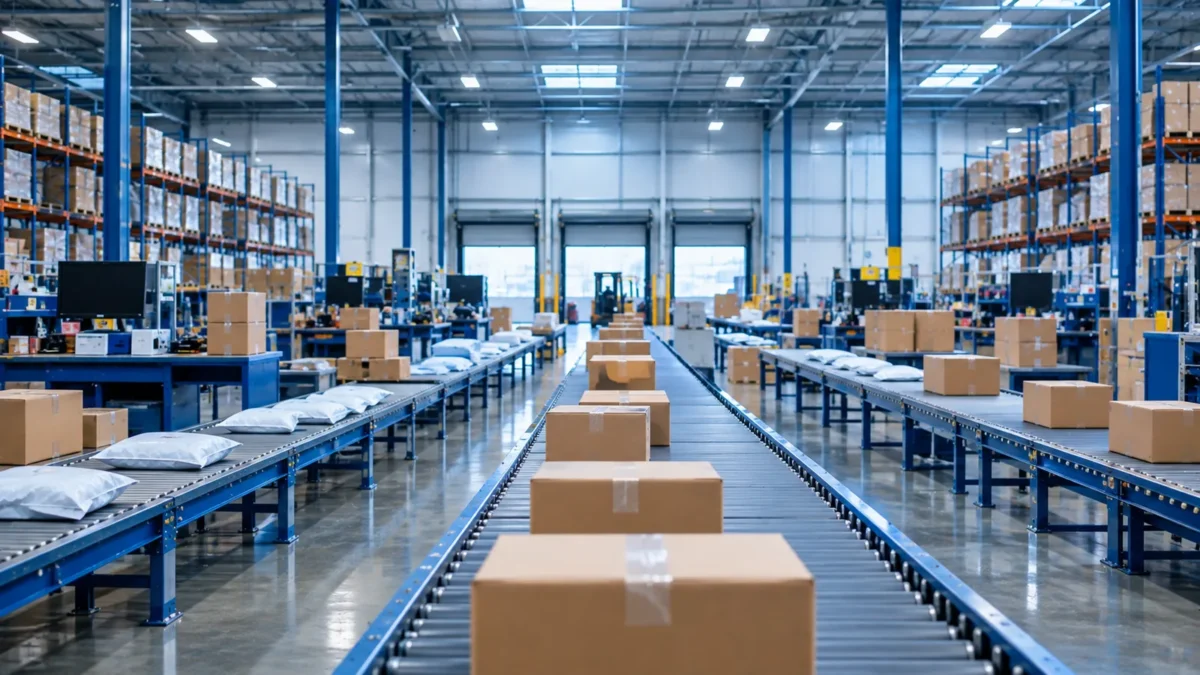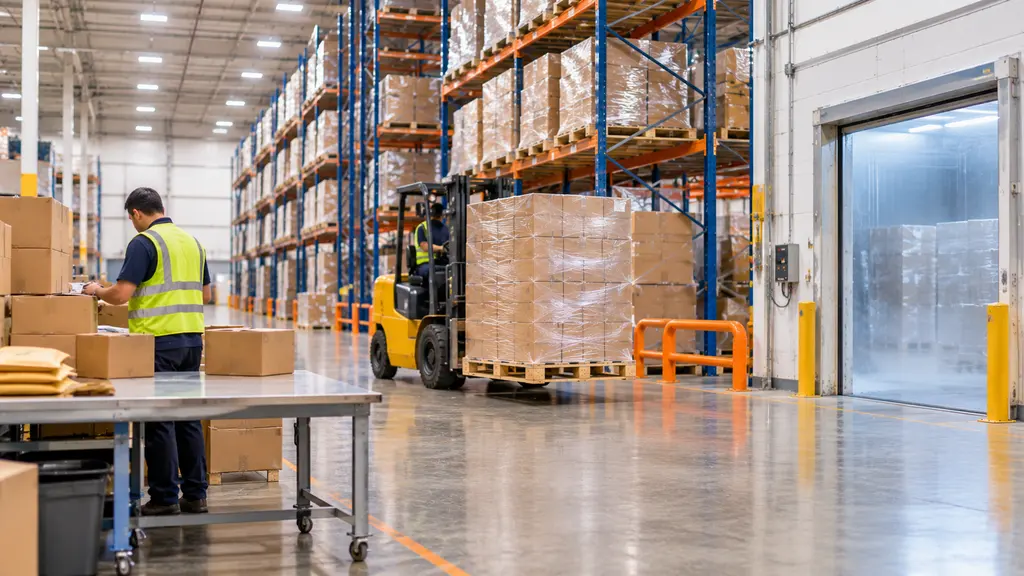
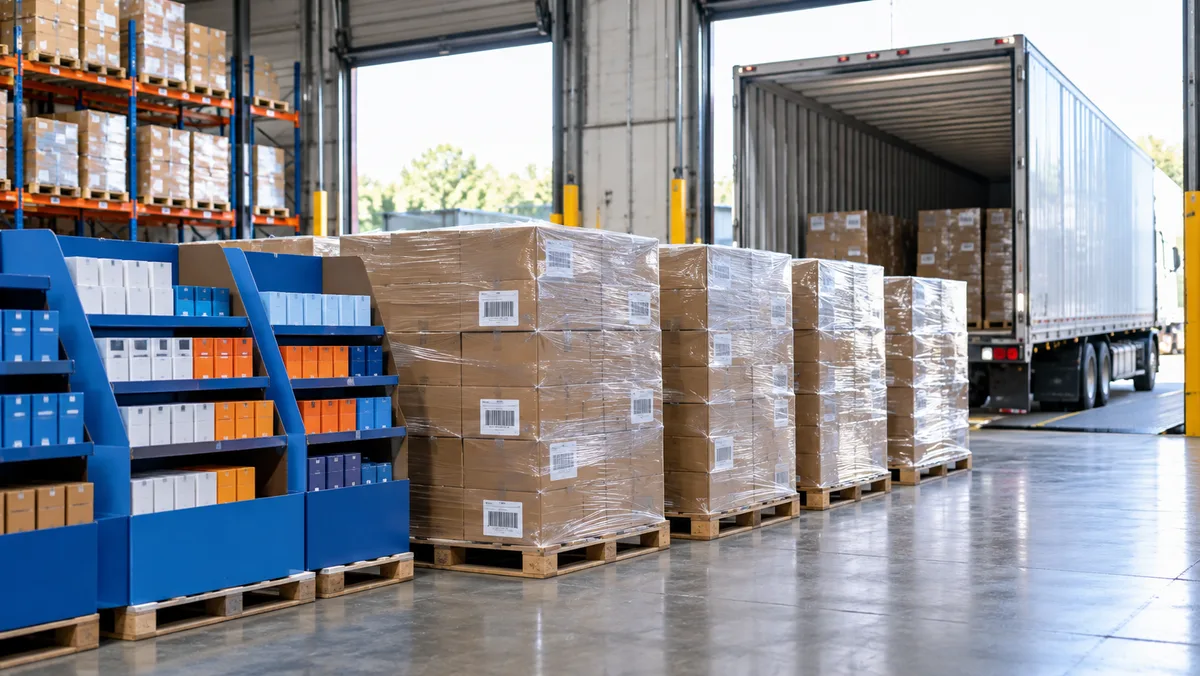
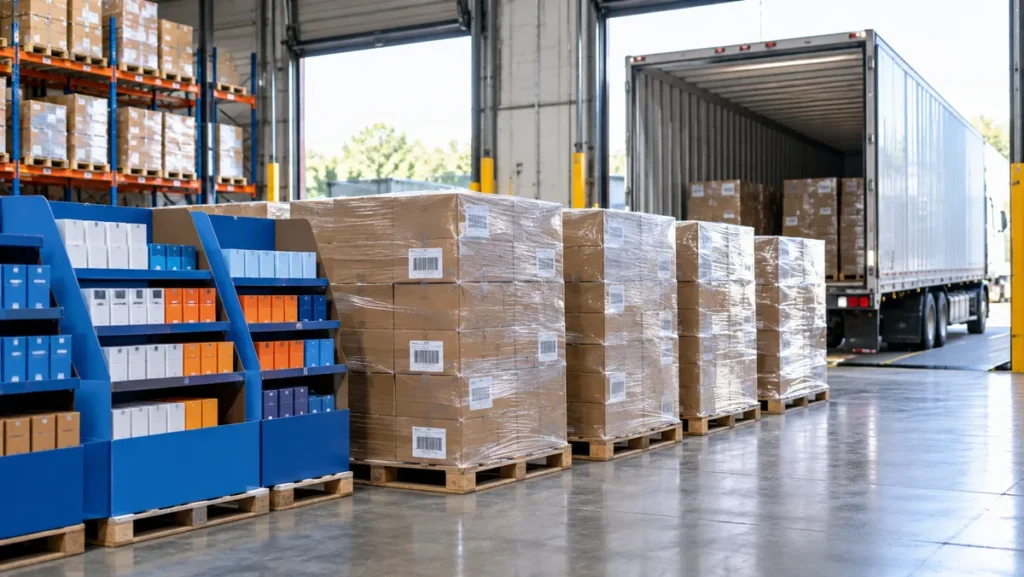

Retail fulfillment is storing a brand’s stock and shipping it to retailers. Cases and pallets go to their distribution centers and stores, and drop-ship orders go to their online shoppers. Every shipment follows the retailer’s own rules for labels, paperwork and delivery times.
Stores still carry most retail sales. E-commerce made up 17.1% of US retail sales in the second quarter of 2026, according to the Census Bureau. The rest moves through physical retail, and that freight runs on retailer rules.
Cura Resource Group runs retail fulfillment from three US warehouses for brands that sell to big-box chains, regional stores and wholesale buyers. Get a retail fulfillment quote with your retailer list and order volume.
Retail Fulfillment vs DTC Fulfillment
A store chain buys cases and pallets against a purchase order and fines any broken rule, while an online shopper buys one parcel. Direct-to-consumer (DTC) shipping sends that parcel straight to the shopper’s door.
| Retail fulfillment | DTC fulfillment | |
|---|---|---|
| Who orders | A retailer, through a purchase order (PO) | A shopper, through your online store |
| What ships | Cases and pallets | Single parcels |
| Labels | GS1-128 carton and pallet labels the retailer specifies | A carrier parcel label |
| Paperwork | Advance ship notice (ASN), bill of lading, packing list | Packing slip |
| Delivery | Booked appointment at a DC or store | Carrier drop-off at the door |
| Mistakes cost | Chargebacks deducted from your invoice | A refund or a reship |
A brand can run both. Our guide to ecommerce fulfillment services covers the parcel side.
The Retail Order, Step by Step
Six steps take a PO to a scored delivery: PO in, pick, label, send the ASN, book the slot, and take the score.

The Purchase Order Arrives
Large retailers send POs over EDI, the electronic format their systems use. The PO lists the items, quantities, ship window and destination, and the clock starts when it lands.
Allocate and Pick by Case or Pallet
The warehouse reserves stock for the PO and picks it in the unit the retailer ordered. Retail picks run by the case or the full pallet, not by the single item as in a fulfillment center serving online shoppers.
Label and Build Pallets to the Routing Guide
Each carton gets a GS1-128 label with a serial shipping container code (SSCC). The warehouse then builds pallets to the retailer’s height, weight and layout rules. GS1 US publishes the label standard behind these labels.
Send the Advance Ship Notice
The ASN tells the retailer what is on the truck before it arrives, down to each carton’s label. The retailer matches the ASN to the PO and to the cartons it receives.
Book the Delivery Appointment
DCs and stores take deliveries in booked time slots. The retailer can turn away or fine a truck that arrives outside its slot.
Deliver and Get Scored
The retailer checks the delivery against the PO and the ASN, then scores it. Late, short or mislabeled loads show up on your vendor scorecard and can lead to chargebacks.
What Retailers Require From Suppliers
Five rulebooks apply to every shipment: the routing guide, GS1-128 labels, ASNs, delivery appointments and on-time, in-full (OTIF) scores.
Routing Guides
This rulebook sets the carriers, pallet specs, labels and paperwork a vendor must use when shipping to a chain. Walmart and Target each publish their own, and a 3PL has to follow each one to the letter.
GS1-128 Labels
Retailers scan GS1-128 labels at the dock to receive cartons without opening them. A missing or unreadable label sends the carton to manual handling, and the retailer bills for that work.
Advance Ship Notices
The ASN has to arrive before the truck and match it exactly. A late ASN, or one that lists cartons the truck does not carry, triggers a compliance charge.
Delivery Appointments
Each DC sets its own booking rules and windows. Missing an appointment can push the delivery back several days and cost an OTIF point.
OTIF Scorecards
OTIF measures whether each order arrived on time and in full. Walmart, Target and other chains score suppliers on it, and low scores lead to fines and fewer orders.
Chargebacks: Why Retailers Deduct From Your Invoice
A store chain fines you by cutting what it pays on your invoice whenever a shipment breaks its rules. The table lists six common causes, each with a warehouse-side fix.
| Cause | What it looks like | The fix |
|---|---|---|
| Late or early delivery | Truck misses the booked slot | Book appointments early and ship to the window |
| Short or over shipment | Cartons received do not match the PO | Pick and count against the PO before loading |
| Missing or wrong labels | Unscannable or misplaced GS1-128 labels | Print from the ASN data and check placement |
| ASN errors | ASN late, missing or not matching the truck | Send the ASN from the same scan data as the load |
| Pallet violations | Overheight, overweight or mixed pallets | Build pallets to the routing guide and measure them |
| Wrong carrier | Shipped with a carrier the guide does not allow | Follow the routing guide’s carrier rules |
Every chargeback has a dispute window, and a warehouse with clean scan records can prove the shipment was right. Our retail distribution services include chargeback disputes with that proof.
Store-Ready Pallets, Displays and Drop-Ship Orders
Beyond DC freight, a 3PL can deliver straight to shops, build stocked stand-up units and ship a chain’s online purchases to its shoppers.
Store Deliveries and Route Sequencing
Some retailers want freight delivered straight to stores instead of their DCs. The warehouse builds pallets store by store and loads them in route order, so the driver unloads the next stop first. Our page on store and route sequencing explains how that loading works.
Shelf-Ready Packaging and In-Store Displays
Cases that open straight onto a shelf, and stand-up units that arrive already stocked, save store staff the setup work. Both need assembly in the warehouse before they ship, with custom packaging built for each retailer when needed.
Retailer Drop-Ship Orders
A chain can list items online that it never stocks, then pass each web sale to the brand to ship. The parcel goes out under the retailer’s packing slip, so the shopper sees the retailer’s name, not yours.
Running Retail and DTC From One Stock Count
One inventory pool can serve retail POs, wholesale orders and online shoppers at the same time. That avoids splitting stock between warehouses and lets each channel draw from the same count. Our guide to an omnichannel fulfillment strategy covers the planning side.
At Cura, all three warehouses run retail and DTC orders from a single stock count. Retail freight leaves from the same racks as parcel orders, with outbound logistics planned for each channel.
Choosing Retail Fulfillment Services
A good partner proves it can follow each chain’s rules, not just store pallets. Ask every provider of retail fulfillment services these six questions before you sign.
| Question to ask | What a good answer includes |
|---|---|
| Which retailers’ routing guides do you ship to today? | Named retailers and how they track rule changes |
| Do you send ASNs and receive POs over EDI? | Live EDI connections, not manual email |
| How do you print and check GS1-128 labels? | Labels printed from scan data and checked before loading |
| How do you handle chargebacks? | A dispute process backed by photos and scan records |
| Can you run DTC and retail from one inventory? | One stock count across channels |
| Do you deliver to stores and ship drop-ship orders? | Yes to both, with the retailer’s paperwork |
Retail fulfillment solutions also sit inside a wider warehouse plan. The pillar guide on how warehousing and distribution work together covers storage types and site choice.
What Drives Retail Fulfillment Costs
Handling and compliance work sit on the bill next to storage. A 3PL quote for retail freight breaks into the lines below, and the retailer’s rules decide how much of each you use.
| Cost line | What it covers |
|---|---|
| Receiving and storage | Unloading your inbound stock and holding it by pallet or bin |
| Case and pallet picks | Pulling full cases or pallets for each PO |
| Labels and pallet builds | GS1-128 labels and building pallets to the routing guide |
| EDI and ASNs | Receiving POs and sending ship notices electronically |
| Value-added work | Displays, shelf-ready packs and retailer-specific packaging |
| Freight | The carrier move to the DC or store |
Ask each provider to price the same sample month of POs, so the totals compare like with like.
How Cura Handles Retail Fulfillment
Our warehouses in Memphis, Tennessee; Riverside, California; and Carolina, Puerto Rico all run this work. Each site receives POs over EDI, prints GS1-128 labels, sends ASNs and books DC appointments.
Our team builds pallets to each retailer’s routing guide, assembles displays and shelf-ready packs, and ships retailer drop-ship orders. We also help you track OTIF scorecards and dispute chargebacks with scan records.
Request a quote for retail fulfillment with your retailer list, monthly POs and any routing guides you ship to now.
Frequently Asked Questions
What is retail fulfillment?
A 3PL stores a brand’s stock and ships it to store chains, from pallets for distribution centers to drop-ship parcels for online shoppers. Each shipment follows the chain’s routing guide for labels, paperwork, pallet builds and delivery appointments, and the chain scores every delivery.
How is retail fulfillment different from B2B fulfillment?
Store-chain orders are a subset of B2B work, with stricter rules attached. B2B also covers wholesale buyers, distributors and business customers who order in bulk. Retailers add routing guides, GS1-128 labels, ASNs, appointments and chargebacks, so their orders carry stricter penalties.
What is a retailer routing guide?
Every chain hands its vendors a shipping rulebook that sets the carriers to use, pallet height and weight, label placement, ASN timing and appointment booking. Walmart and Target each publish their own, and breaking any rule in one can lead to a chargeback.
What causes retail chargebacks?
Six common faults trigger these fines: (1) late or early delivery, (2) short or over shipments, (3) missing or wrong GS1-128 labels, (4) late or wrong ASNs, (5) pallets that break the routing guide’s specs and (6) using a carrier the guide does not allow.
How long does retail order fulfillment take?
The ship window on the purchase order sets the timing, not a fixed number of days. The warehouse picks, labels and loads the order inside that window, sends the ASN and books the delivery appointment. Shipping early can break the rules as surely as shipping late.
Can one 3PL handle both DTC and retail orders?
Yes. A 3PL can run DTC parcels, retail POs and wholesale orders from one stock count, so each channel draws from the same inventory. Cura does this at all three of its warehouses, with retail freight and parcel orders leaving from the same racks.
Does fulfillment mean delivered?
Not quite. Fulfillment covers the warehouse work from order to carrier: picking, packing, labeling and handing off the shipment. Delivery is the last step, and in retail the order counts as done only once the retailer receives and scores it.
What does OTIF mean in retail?
On-time, in-full is the score store chains give each supplier delivery, shortened to OTIF. A delivery counts as on time when it arrives inside its window, and in full when every ordered case arrives. Low OTIF scores can lead to fines and smaller orders.
Does Cura ship retailer drop-ship orders?
Yes. Cura ships drop-ship orders for retailers, sending each online order straight to the shopper under the retailer’s packing slip. The retailer sends the order, we pick and pack it from your stock, and the shopper sees the retailer’s name on the parcel.