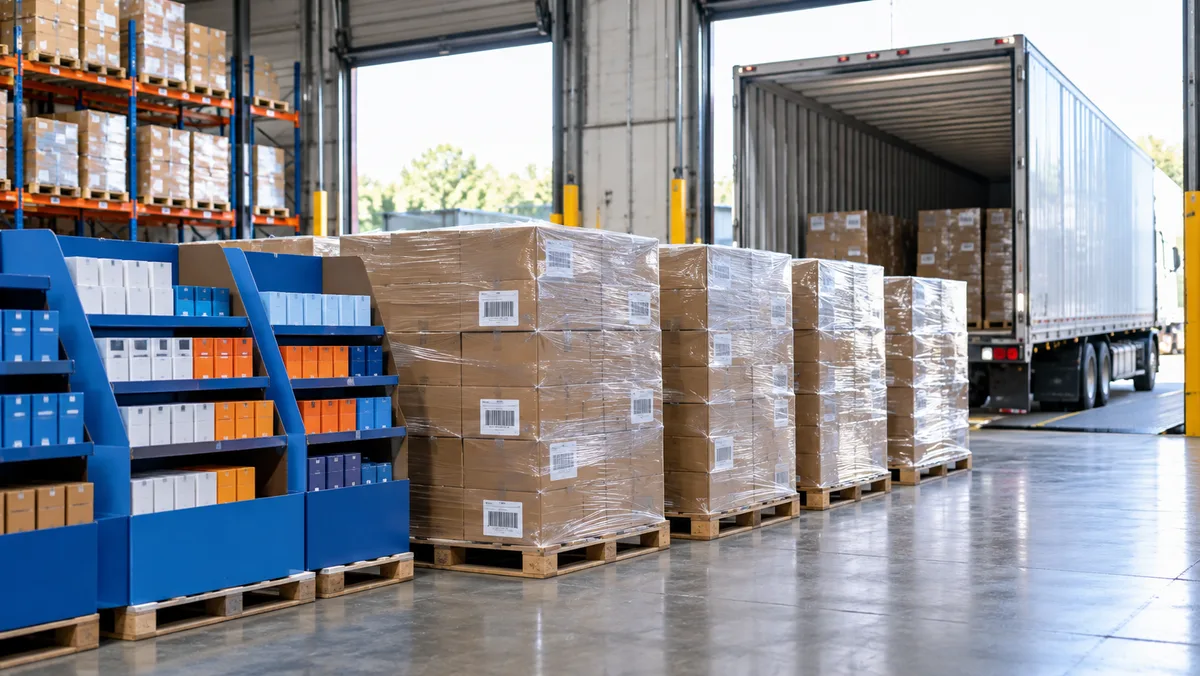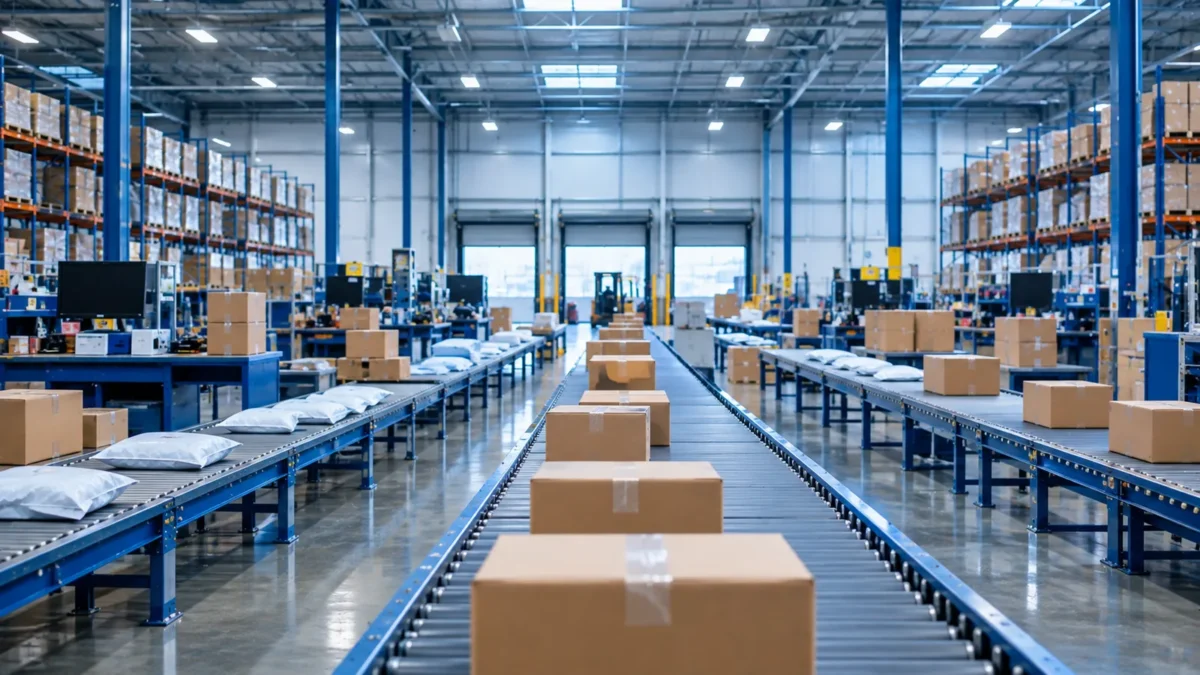



DTC fulfillment is the work of storing a brand’s stock and shipping each online order straight to the shopper who bought it. DTC stands for direct-to-consumer: no store or wholesaler sits in between, so the warehouse becomes the last part of your brand a customer touches.
Online buying keeps growing: e-commerce reached $347.3 billion, or 17.9% of US retail sales, in the third quarter of 2026, according to the Census Bureau. Each of those orders needs a pick, a pack and a parcel.
Cura Resource Group runs direct to consumer fulfillment from three US warehouses, from the same stock that serves your retail and wholesale orders. Get a DTC fulfillment quote with your monthly order count.
DTC vs Retail vs Marketplace Fulfillment
The buyer and the rules change across the three channels. A shopper orders one parcel, a store chain orders cases against a purchase order, and a marketplace sets its own prep and labeling rules.
| DTC fulfillment | Retail fulfillment | Marketplace (FBA prep) | |
|---|---|---|---|
| Who orders | A shopper on your online store | A store chain, by purchase order | The marketplace, by shipment plan |
| What ships | One parcel per order | Cases and pallets | Prepped cartons to its warehouses |
| Packaging | Your brand’s box, inserts and notes | Retailer labels and pallet rules | The marketplace’s prep and label rules |
| Speed pressure | The shopper’s delivery promise | The PO ship window | The inbound appointment |
| Penalties | Refunds and lost repeat buyers | Chargebacks | Rejected or delayed inbound stock |
Our guide to retail fulfillment for store chains covers the retail column, and marketplace prep runs through our FBA prep services.
The DTC Order, From Checkout to Doorstep
Six steps take an online order to the shopper: receive, order in, pick, pack, ship and return.
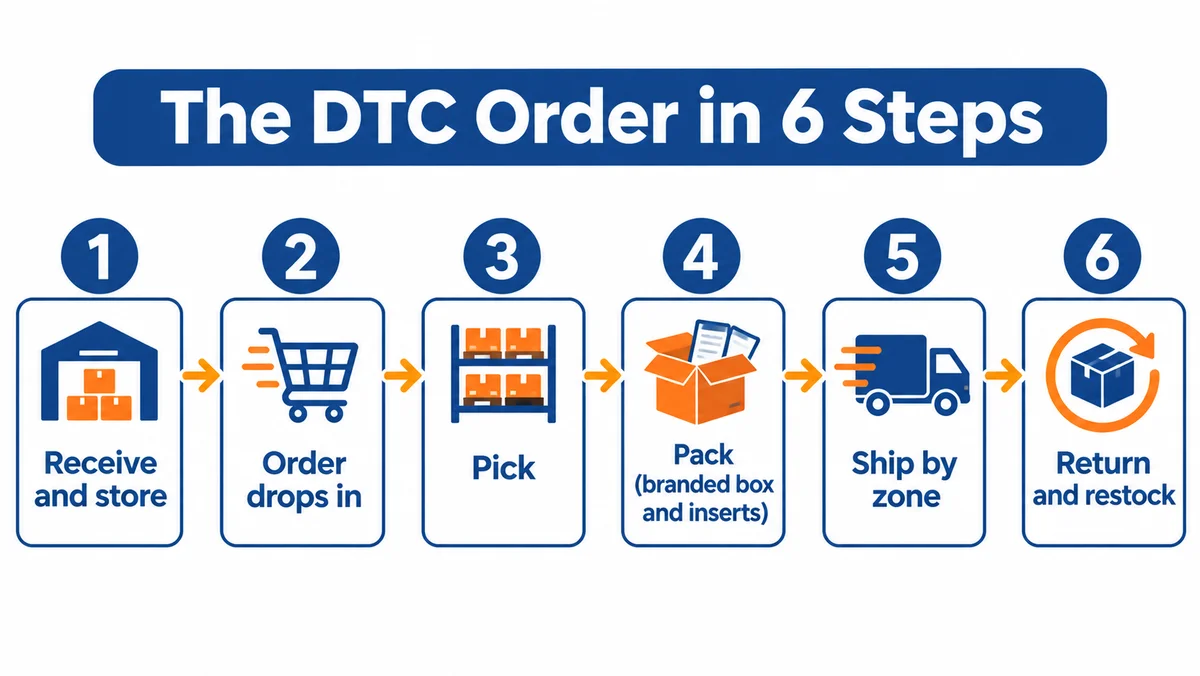
Receive and Store the Stock
The team counts inbound cartons and pallets against your purchase order, then puts them away in bins or racks by item. Accurate counts at this step keep the online store from selling stock you do not have.
The Order Drops In
Orders flow in automatically from your online store and marketplaces as shoppers check out. Each one lands in the warehouse system with the item, the address and the shipping method.
Pick the Items
Warehouse staff pull each product the shopper bought, one unit at a time, sometimes for several orders in one trip. Our guide to pick and pack methods explains the options in detail.
Pack the Order
The packing station checks every item, picks a box that fits and adds any inserts, gift notes or wrap the shopper asked for. The right box size matters, because carriers charge for space as well as weight.
Ship by Zone
A carrier label goes on, and the parcel leaves with that day’s pickup. Carriers price by distance zone, so stock held closer to the shopper costs less to ship and arrives sooner.
Handle the Return
Returned parcels come back to the same warehouse, where the team inspects each item and puts sellable stock back on the shelf. Our ecommerce returns management guide covers grading and restocking.
Packaging and the Unboxing Moment
The box is the first thing a shopper sees from your brand in person. A DTC warehouse can pack orders in branded boxes or mailers, add marketing inserts and thank-you cards, and include gift messages or gift wrap.
Right-sized packing also controls cost. A box that is too big for its contents pays for empty space, since carriers bill by dimensional weight. Our page on right-sized custom packaging for DTC brands shows the options.
Fast Delivery Without Overpromising
Shipping speed comes from three choices: where the stock sits, when the daily cut-off falls and which carrier service you buy.
- Where the stock sits: a warehouse closer to your buyers cuts the number of carrier zones each parcel crosses.
- The daily cut-off: orders that arrive before an agreed cut-off ship the same day.
- The carrier service: ground, expedited and international services trade price against speed.
Shoppers outside the US can also buy from you. A DTC partner that ships international parcels lets you sell abroad without a second warehouse.
Peak Season for DTC Brands
Holiday and sale weeks can multiply daily order counts, and the plan has to start months ahead. Forecast your peak units, book extra carrier capacity and agree surge staffing with your provider before the rush. Our guide to preparing for peak season demand walks through the timeline.
What DTC Fulfillment Costs
Charges for DTC orders build up per order and per item, not per pallet. A quote breaks into the lines below.
| Cost line | What it covers |
|---|---|
| Receiving | Counting and putting away your inbound stock |
| Storage | Bins, shelves or pallet spaces your stock takes up each month |
| Pick and pack | A fee for the first item in an order, plus each extra item |
| Packaging | Boxes, mailers, fill and any branded materials |
| Inserts and gift options | Adding cards, notes or wrap to an order |
| Shipping | The carrier charge for each parcel, set by weight, size and zone |
| Returns | Receiving, inspecting and restocking each returned item |
Ask each provider to price the same sample month of orders, so the totals compare like with like.
When to Outsource DTC Fulfillment
A brand outgrows packing its own orders when shipping takes over the team’s week, storage runs out or delivery promises start slipping. Direct to consumer fulfillment services take over that work and the space it needs.
Ask every provider these questions before you sign:
| Question to ask | What a good answer includes |
|---|---|
| How do orders reach your warehouse? | An automatic feed from your store and marketplaces |
| What is your daily cut-off for same-day shipping? | A firm cut-off, agreed in writing |
| Can you pack in our branded boxes with inserts? | Yes, with your materials stocked on site |
| How do you handle returns? | Inspection, grading and restocking within the same account |
| Can you ship to shoppers abroad? | Yes, from the same stock as domestic orders |
| Can retail and DTC orders draw on the same stock? | One inventory count for every channel |
One Stock Count for DTC, Retail and FBA Prep
A single inventory pool can serve online shoppers, retail POs and marketplace shipments at once. That avoids splitting stock across warehouses and running short in one channel while another sits full. Our omnichannel fulfillment planning guide covers that side.
At Cura, all three warehouses run DTC, retail and FBA prep from one stock count. A brand can add a retail account later without moving its stock.
How Cura Handles DTC Fulfillment
Our warehouses in Memphis, Tennessee; Riverside, California; and Carolina, Puerto Rico all run this work. DTC order fulfillment starts automatically: orders flow in, and anything that arrives before your agreed cut-off ships the same day.
We pack in your branded boxes or mailers, add inserts, thank-you cards, gift notes and wrap, and ship to shoppers in the US and abroad. Returns come back to the same team.
Our page on the full ecommerce fulfillment service sets out every step. Our guide to how a fulfillment center runs day to day explains the building.
Request a DTC fulfillment quote with your monthly orders, item count and the channels you sell on.
Frequently Asked Questions
What is DTC fulfillment?
A warehouse stores a brand’s stock and ships each online order straight to the shopper who placed it, with no store or wholesaler in between. Direct to consumer fulfillment, also written D2C fulfillment, covers receiving, storage, picking, packing, shipping and returns. A brand can hand it to a 3PL so its team can focus on selling.
What does DTC delivery mean?
The parcel goes from the brand’s warehouse straight to the buyer’s door. No retailer handles the item on the way, so the brand controls the packaging, the delivery promise and the customer relationship. A carrier makes the final drop, and the shopper tracks it from the order email.
What is a package from a fulfillment center?
That parcel is an online order a warehouse packed and shipped for the brand you bought from. A brand can hire a 3PL to store their stock and send orders, so the return address shows the warehouse rather than the brand’s office. The contents come from the brand all the same.
Is DTC better than wholesale?
Neither wins outright, since each channel trades margin against reach. Selling direct keeps more of each sale and the customer data, while wholesale moves larger volumes through stores that already have shoppers. A brand can run both, which works well when one warehouse serves every channel from the same stock.
How much does DTC fulfillment cost?
Charges build per order rather than per pallet. A quote lists receiving, storage, a pick fee for the first item plus each extra one, packaging, inserts or gift options, shipping and returns. Pricing the same sample month of orders with each provider shows the real difference between them.
Can a 3PL pack orders in our branded boxes?
Yes. A DTC partner can stock your branded boxes or mailers and pack each order in them, along with marketing inserts, thank-you cards and gift messages. Cura works from the boxes, mailers and printed cards you supply or design, and keeps them on hand for every order.
When should a brand outsource DTC fulfillment?
Outsourcing makes sense once packing orders takes over your team’s week, storage runs out or deliveries start slipping. A provider brings warehouse space, carrier rates and staff for peak weeks. Start talks well before your peak season, so the move finishes before the rush.
Can Cura ship DTC orders outside the US?
Yes. Cura ships DTC parcels to shoppers outside the US, drawing on the same stock as your domestic orders. You can sell abroad without a second warehouse, and international rates come with your quote because parcel costs vary by destination.