
Warehousing and Fulfillment: 8 Differences Between a Warehouse and a Fulfillment Center
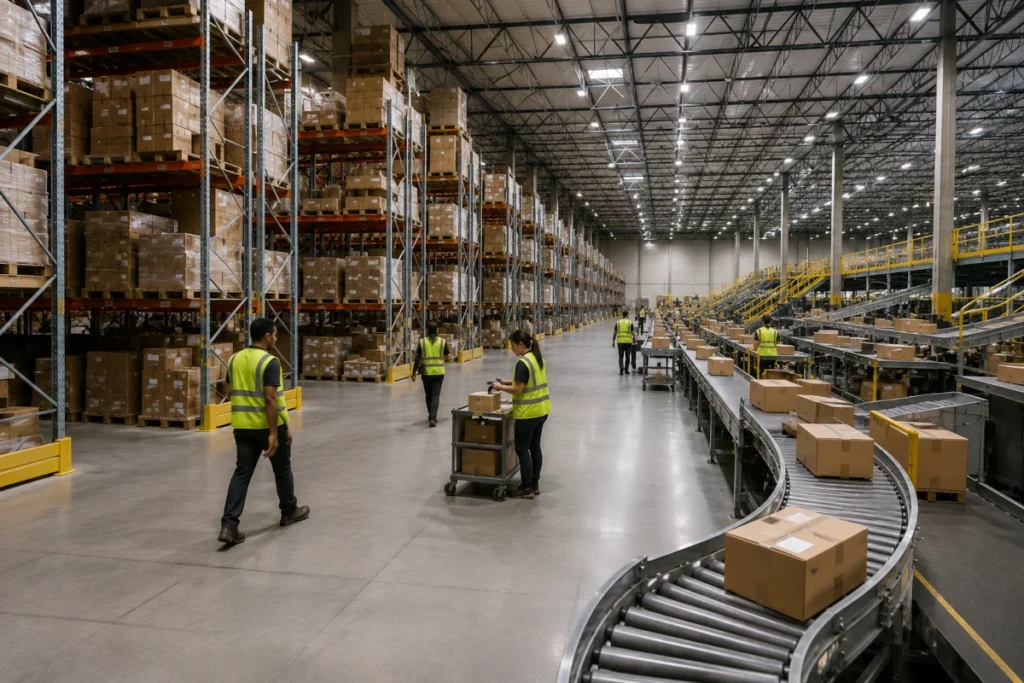
A fulfillment center is a facility built to pick, pack and ship individual customer orders as they arrive, while a warehouse is built to hold inventory in bulk until it is needed. One is measured on how fast product leaves; the other on how cheaply it sits. Fulfillment Center vs. Warehouse isn’t just semantics. It’s […]
Pick and Pack Services: The 7-Step Process, Costs and How to Choose (2026)
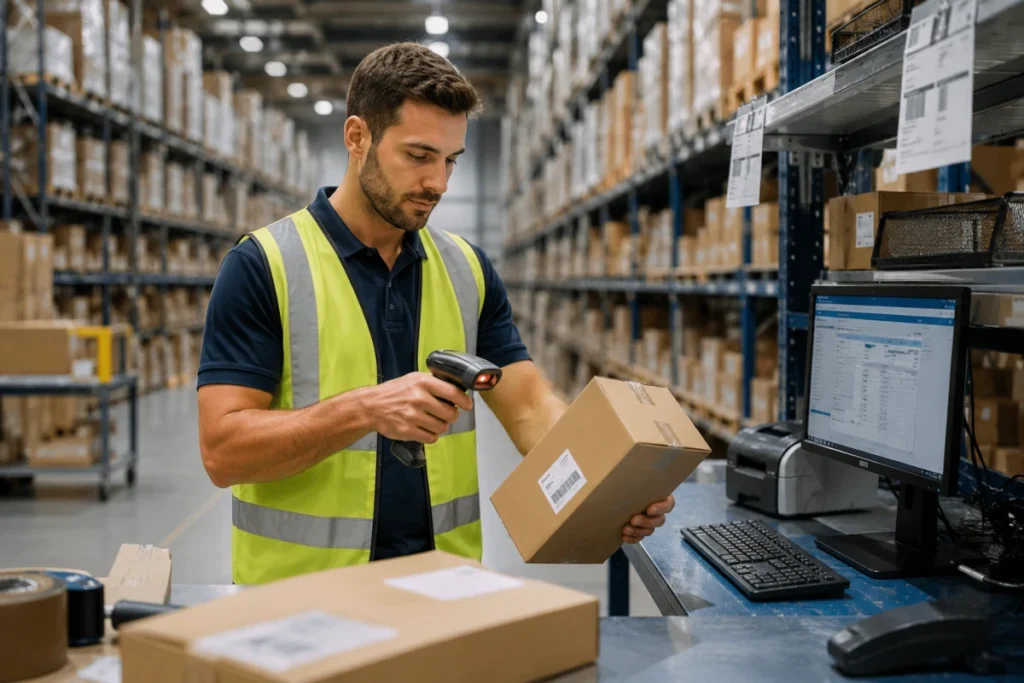
Pick and pack services are third-party fulfillment operations in which a warehouse team or automated system receives your inventory, picks individual items from storage based on customer orders, packs them securely, and ships them directly to the end customer. For ecommerce brands and B2B distributors, outsourcing this process to a 3PL can take a meaningful […]
Real-Time Inventory Visibility: 4 Best Practices and 3 Tool Types

Real-time inventory visibility is stock information that updates as movements happen — every receipt, put-away, pick and ship reflected in the master record within seconds, and pushed to every sales channel by live API. It matters because the two most expensive supply chain failure modes — overselling and over-ordering — both trace back to stale […]
E-Commerce Warehousing Best Practices: 8 Ways Growing Brands Scale Without Breaking Fulfillment

Warehousing best practices are the operational methods that keep a growing brand’s warehouse fast, accurate, and cost-efficient as order volume climbs. They cover how you lay out the space, receive and store inventory, pick and pack orders, track stock, and manage labor and safety. Get them right and the warehouse supports growth; get them wrong […]
The Role of Supply Chain Technology in Modern Logistics: 6 Systems and What They Do
Supply chain technology is the integrated stack of software, hardware, and AI systems that orchestrates the movement of goods, data, and capital across a logistics network. Its role in logistics is to replace fragmented, manual decision-making with predictive, automated workflows—reducing dwell time, lowering carrying costs, and giving operators real-time control over inventory, transportation, and supplier […]
The Future of 3PL and Warehousing Solutions

The future of 3PL is the shift from outsourced storage and transport toward integrated technology, data and network flexibility — providers competing on real-time visibility, forecasting accuracy and distributed capacity rather than warehouse space alone. Six forces are driving it: AI-led forecasting, modular automation, micro-fulfillment close to demand, sustainability pressure on transport emissions, cloud-based warehouse […]
Peak Season Supply Chain Management 2026: How Enterprise Manufacturers Win Q4 and Beyond
Peak season supply chain management is the coordinated preparation of inventory, warehouse, labour and transport capacity to handle a concentrated demand surge — Q4 for most retail and consumer categories, earlier for manufacturing and food. Enterprises that win peak start nine to twelve months out; those that treat it as a Q3 forecasting exercise buy […]
How to Choose the Right 3PL Partner in 2026: A Strategic Guide for Growing Businesses
Choosing the right 3PL partner comes down to four measurable warehouse KPIs — inventory accuracy, on-time shipping, order accuracy and dock-to-stock time — plus systems integration, compliance certifications matching your product, and transparent contract terms. Everything else is decoration. Cost is rarely the deciding factor; operational fit and the exit clause usually are. Supply chains […]
What Is Supply Chain Visibility? 5 Types and 7 Ways to Improve It
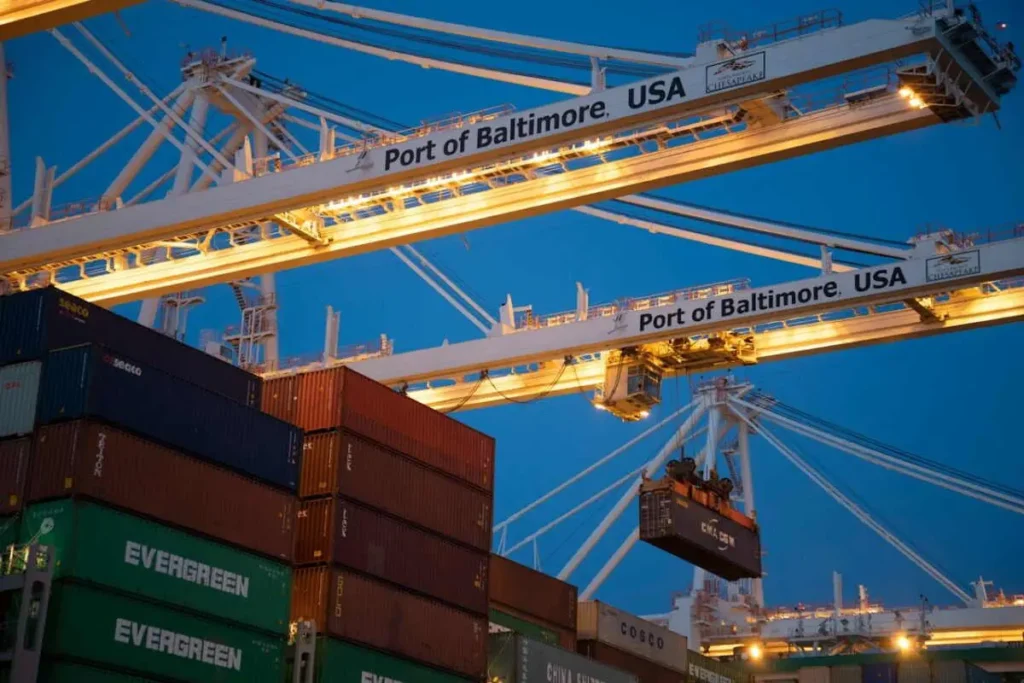
Supply chain visibility is the ability to track inventory, orders and shipments in real time at every stage. That runs from supplier and inbound freight through warehousing to final delivery, so everyone working from the data sees the same position at once. Without it, problems surface late. A missing shipment stops production, a wrong delivery […]