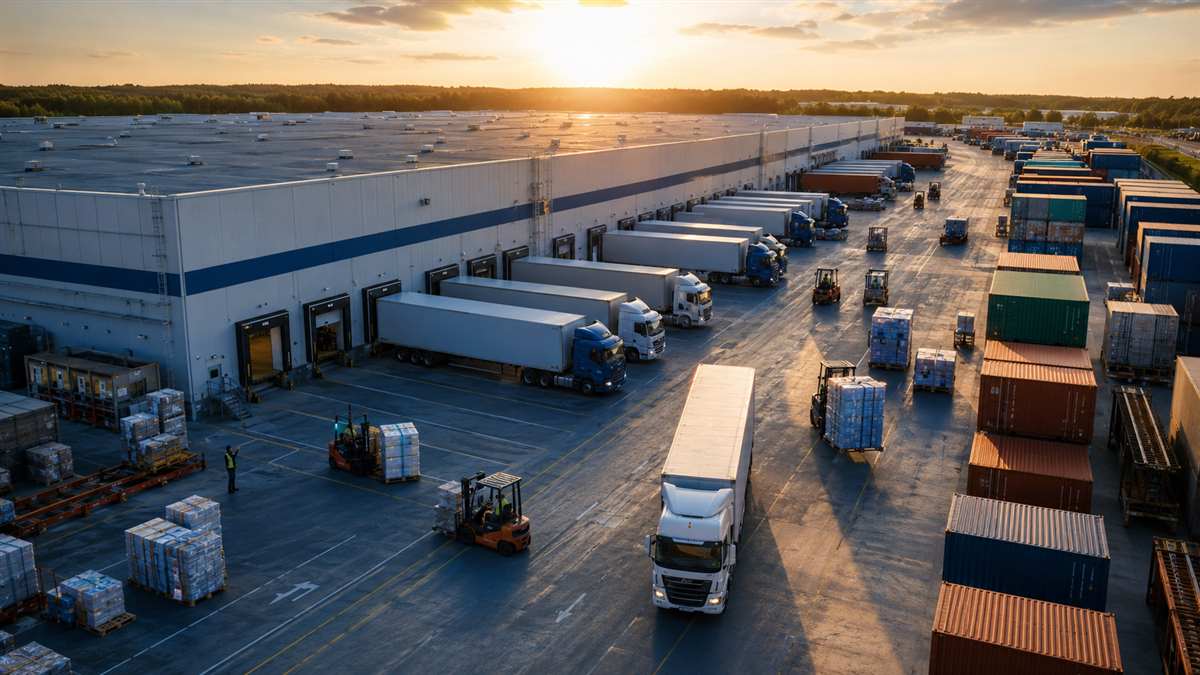

Supply chain logistics is the part of the supply chain that moves and stores goods — transportation, warehousing, inventory, order fulfillment, and returns — from raw materials all the way to the customer’s door. If the supply chain is the full network of suppliers, factories, warehouses, and carriers that turns raw materials into delivered products, logistics is the engine that physically moves product through that network on time and at the right cost. This guide explains what supply chain logistics is, how it differs from supply chain management, its core components, the technology behind it, the challenges operations teams face, and how to make it run better — whether you manage it in-house or outsource it to a partner.
What Is Supply Chain Logistics?
Supply chain logistics is the planning, execution, and control of the movement and storage of goods within a supply chain. It covers how products get from suppliers to production, from production to warehouses, and from warehouses to customers — plus the flow of returns back the other way. In practice, that means managing transportation, warehousing, inventory, order fulfillment, and the data that keeps all of it visible and coordinated.
The word “logistics” comes from military origins — the discipline of supplying troops with what they needed, where and when they needed it. Business logistics applies the same idea to products: coordinate the moving parts so goods arrive on time without tying up too much money in inventory or transportation. Supply chain logistics is simply that discipline applied across the full chain, from the first supplier to the final customer, rather than inside a single warehouse or shipment.
The goal of supply chain logistics is to get the right product to the right place at the right time, in the right condition, for the lowest reasonable cost. Every decision — which carrier to use, where to hold inventory, how to route a shipment — is a trade-off between speed, cost, and reliability. Done well, logistics keeps products flowing and customers happy. Done poorly, it produces delays, stockouts, and rising costs that ripple across the whole business.
Why Supply Chain Logistics Matters for Your Business
Supply chain logistics matters because it sets both your delivery speed and your cost per order, and the volume moving through those systems is what makes the difference material. According to the U.S. Census Bureau, US ecommerce reached $340.2 billion in the second quarter of 2026 — 17.1% of all retail sales, up 12.2% year on year. Every point of that growth lands on someone’s inbound dock and leaves through someone’s outbound one.
Supply chain logistics matters because it decides two things customers notice most: whether their order arrives on time, and whether it arrives correct and undamaged. It also shapes the numbers a business lives on. Transportation and warehousing are often among the largest operating costs, so small logistics improvements flow straight to the bottom line. A one-percent cut in shipping cost or a day shaved off delivery time compounds across thousands of orders.
There’s a competitive edge, too. Brands with strong logistics can promise faster delivery, absorb demand spikes without breaking, and recover from disruptions their competitors can’t. In a market where customers expect two-day and same-day delivery, logistics has moved from a back-office function to a driver of growth and loyalty. Treating it as strategy rather than overhead is what separates the businesses that scale from the ones that stall.
Logistics vs. Supply Chain Management: What’s the Difference?
Logistics and supply chain management are closely related but not the same.
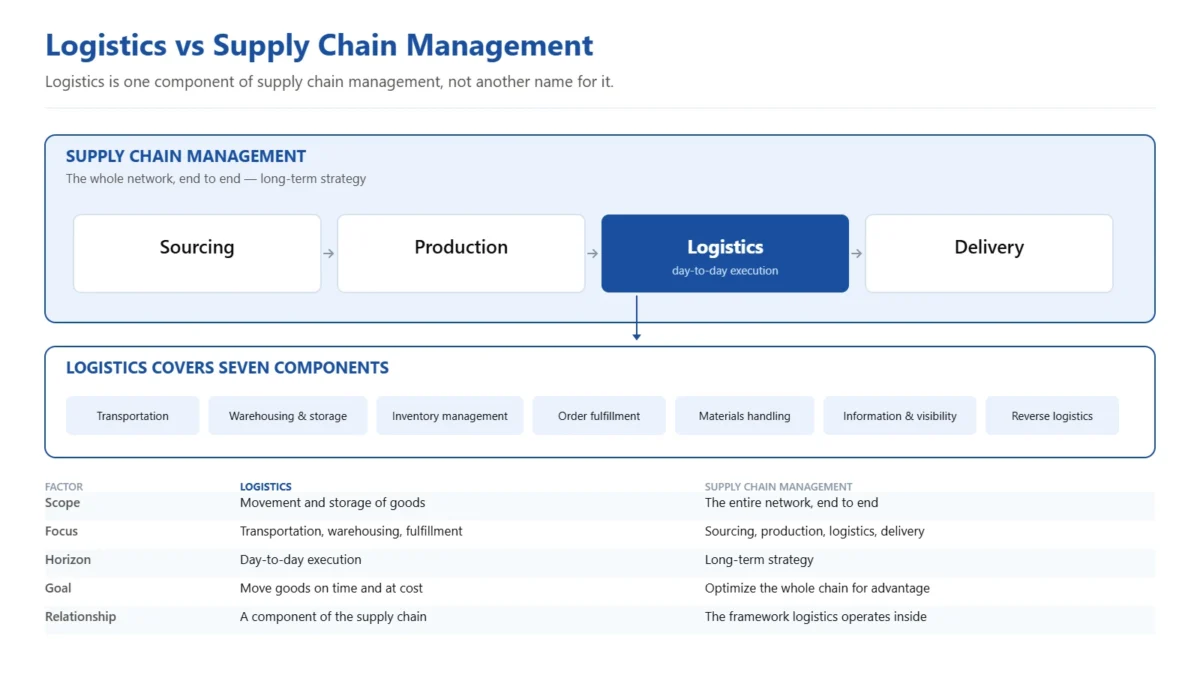
Logistics is a part of supply chain management. Logistics focuses on the movement and storage of goods — transportation, warehousing, and fulfillment — while supply chain management is the broader function that coordinates everything from sourcing raw materials to production, logistics, and final delivery.
The simplest way to see the difference: supply chain management is strategy, logistics is execution. A supply chain manager decides which suppliers to use, where to build facilities, and how to plan for future demand. A logistics manager runs the day-to-day flow of goods within that plan — routing trucks, managing warehouse operations, and hitting delivery windows.
| Factor | Logistics | Supply Chain Management |
|---|---|---|
| Scope | Movement and storage of goods | The entire network, end to end |
| Focus | Transportation, warehousing, fulfillment | Sourcing, production, logistics, delivery |
| Horizon | Day-to-day execution | Long-term strategy |
| Goal | Move goods on time and at cost | Optimize the whole chain for advantage |
| Relationship | A component of the supply chain | The framework logistics operates inside |
They overlap, and the terms are often used together — but logistics answers “how do we move it,” while supply chain management answers “how do we design and run the whole system.”
What Are the Core Components of Supply Chain Logistics?
The seven core components are transportation, warehousing and storage, inventory management, order fulfillment, materials handling and packaging, information and visibility, and reverse logistics. Each one has to work for the whole system to run.
- Transportation: moving goods between suppliers, facilities, and customers by truck, rail, air, or ocean — usually the largest logistics cost.
- Warehousing and storage: holding inventory in the right locations so it’s close to demand and ready to ship.
- Inventory management: tracking what you have, where it is, and how much to reorder so you avoid both stockouts and overstock.
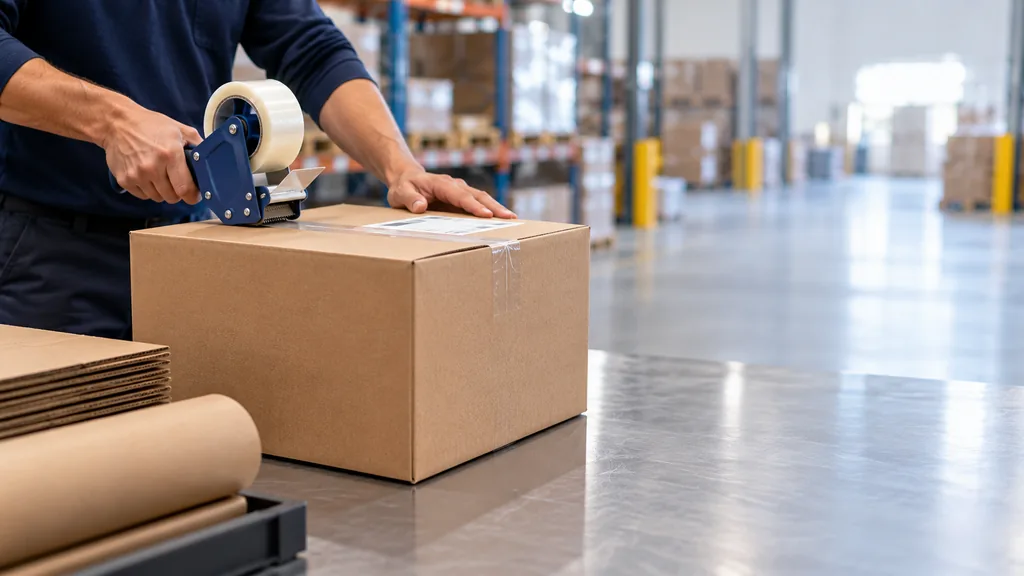
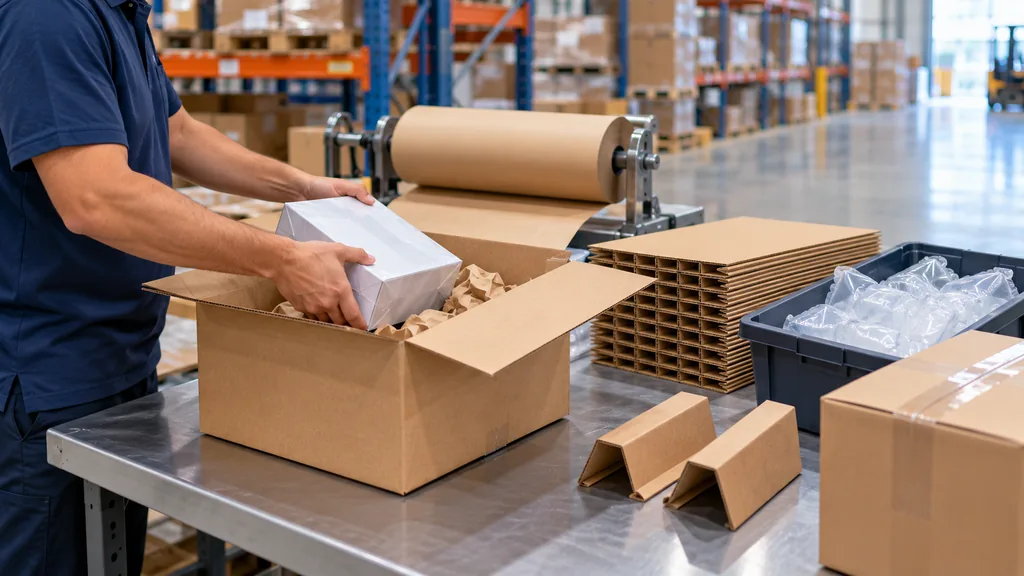
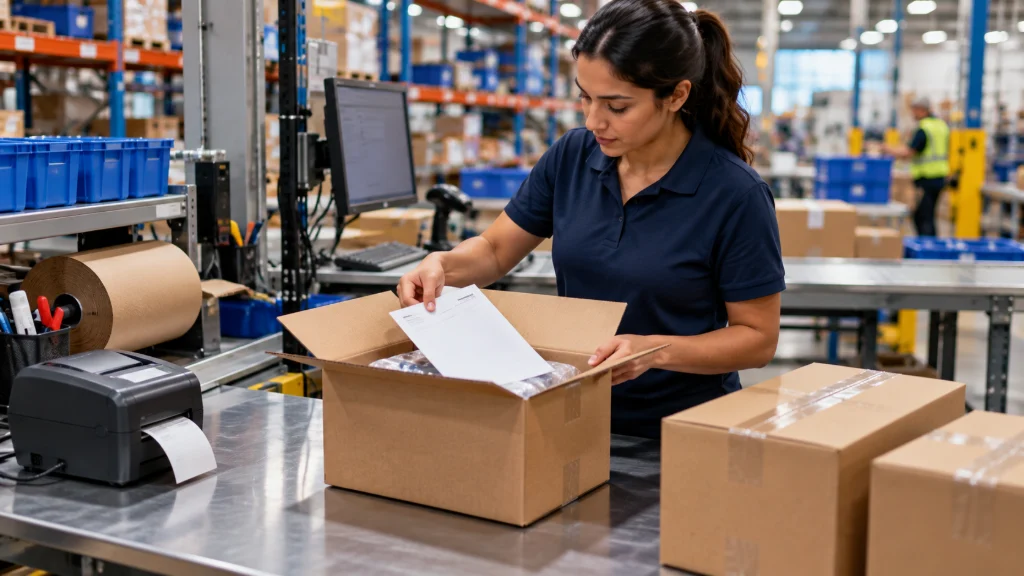
- Order fulfillment: picking, packing, and shipping customer orders — the core order fulfillment process.
- Materials handling and packaging: moving goods safely within a facility and packaging them to arrive undamaged.
- Information and visibility: the data layer — order, inventory, and shipment tracking — that ties every step together.
- Returns (reverse logistics): handling the flow of goods back from customers for returns, repairs, or recycling.
What Are the Main Modes of Transportation in Logistics?
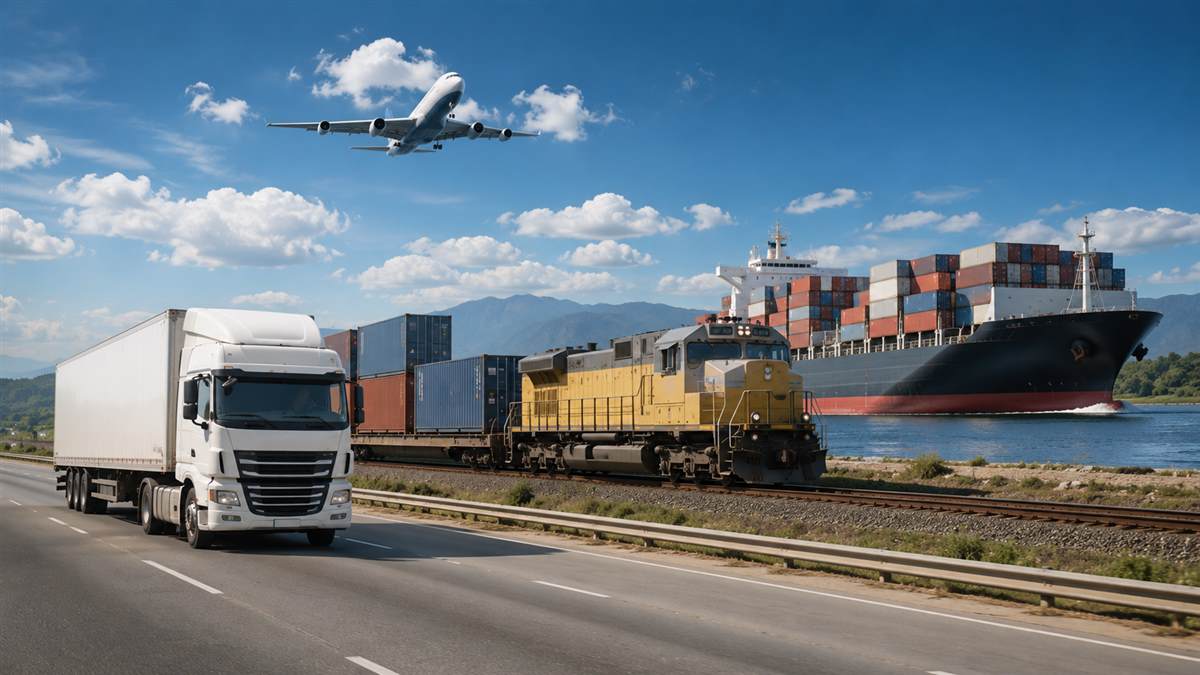
Freight moves by truck, rail, ocean, or air, and each mode trades cost against speed.
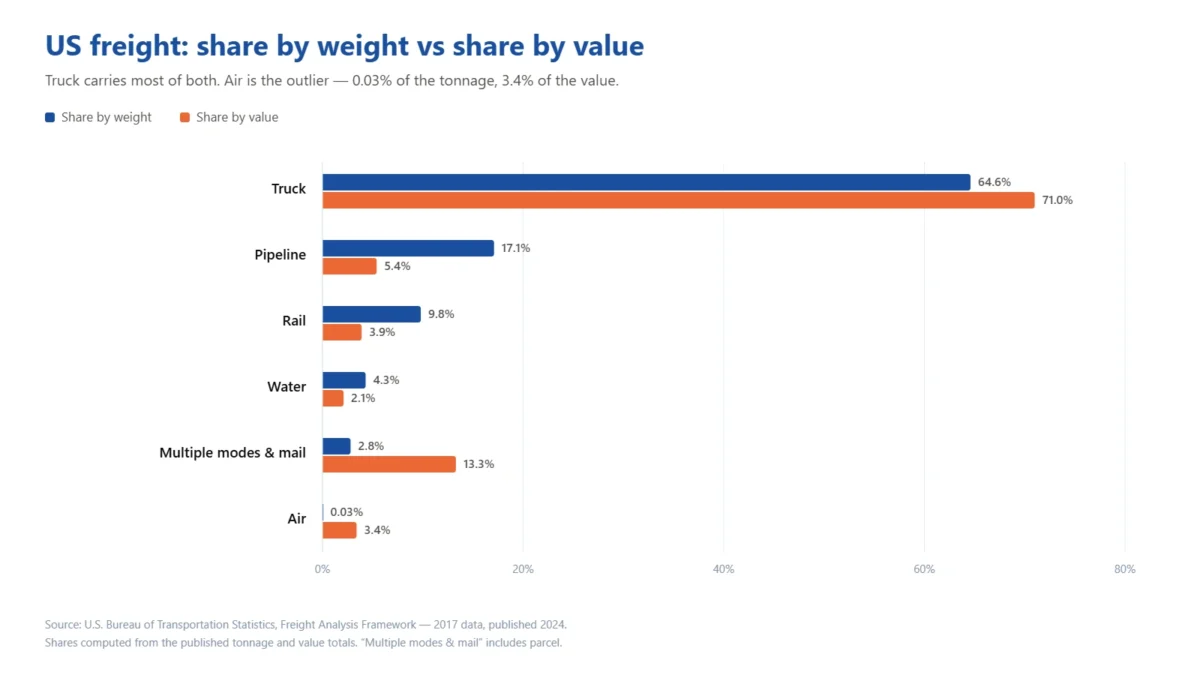
Truck dominates by a wide margin: the Bureau of Transportation Statistics Freight Analysis Framework recorded 11.5 billion of the 17.8 billion tons moved in 2017 travelling by truck — roughly 65% by weight and 71% by value.
| Mode | Best for | Trade-off |
|---|---|---|
| Truck (FTL/LTL) | Flexible domestic freight, door to door | Cost rises sharply with distance |
| Rail | Lowest cost per ton-mile over land, heavy bulk | Slow, fixed terminals, needs drayage |
| Ocean | Cheapest for international volume | Weeks in transit, port congestion risk |
| Air | Speed, high-value or perishable goods | By far the highest cost per kilo |
| Parcel | Individual ecommerce orders | Priced per package, surcharges add up |
Transportation is usually the biggest logistics cost, and choosing the right mode for each shipment is where much of that cost is won or lost. The main options:
- Truckload and less-than-truckload (LTL): road freight is the backbone of domestic logistics — full truckloads for large shipments, LTL for smaller ones that share space to save cost.
- Parcel: small packages shipped through carriers like USPS, UPS, and FedEx — the standard for direct-to-consumer orders.
- Rail: cost-effective for heavy freight over long distances, often paired with trucks in intermodal shipping.
- Air: the fastest and most expensive mode, used for high-value or time-critical goods.
- Ocean: the lowest cost per unit for international freight, but the slowest, used for bulk and overseas sourcing.
In practice you will use a mix, matching mode to each shipment’s size, urgency, and destination. Rate-shopping and combining shipments across modes is one of the most direct ways to cut freight spend without hurting service.
How Does Supply Chain Logistics Work?
Supply chain logistics works as a continuous flow of goods and information in two directions. Product moves forward toward the customer, while data and returns move back. The flow looks like this:
- 1. Inbound logistics. Raw materials or finished goods move from suppliers into your facilities, where they’re received and logged.
- 2. Warehousing and inventory. Goods are stored, counted, and positioned across locations based on where demand is.
- 3. Order processing. When an order arrives, it’s routed to the location that can fill it fastest and cheapest.
- 4. Outbound logistics and fulfillment. The order is picked, packed, and shipped to the customer through the chosen carrier.
- 5. Reverse logistics. Returns come back to be inspected, restocked, or disposed of, and inventory is updated.
Running underneath all of it is the information flow — real-time data on inventory, orders, and shipments that lets managers see problems and adjust before they reach the customer.
Inbound vs. Outbound Logistics: What’s the Difference?
Inbound logistics brings materials and stock in; outbound logistics moves finished goods out to customers.
| Factor | Inbound Logistics | Outbound Logistics |
|---|---|---|
| Direction | Supplier to you | You to the customer |
| Typical freight | Bulk, containers, pallets | Parcels, LTL, final mile |
| Cost driver | Landed cost per unit | Cost per order shipped |
| Fails as | Stockouts and production delays | Late deliveries and refunds |
| Owned by | Procurement and planning | Fulfillment and customer service |
Logistics splits into two directions, and each is managed differently. Inbound logistics is everything that brings goods into your operation — sourcing, receiving, and storing materials from suppliers. Outbound logistics is everything that moves finished orders out to customers — picking, packing, shipping, and delivery. Inbound is about supply and cost control; outbound is about speed and customer experience. A strong logistics operation manages both, because a delay on the inbound side eventually shows up as a stockout on the outbound side.
Reverse Logistics: Managing Returns
Reverse logistics is the flow of goods in the opposite direction — from the customer back to the business. It covers returns, exchanges, repairs, recycling, and disposal. For any brand that sells online, returns are a major cost and a major part of the customer experience. The National Retail Federation and Happy Returns put total US retail returns at $890 billion for 2024, and found 76% of consumers treat free returns as a factor in deciding where to shop — which makes handling them well a commercial question, not just an operational one. Good reverse logistics gets sellable product back on the shelf quickly, recovers value from returned goods, and turns a frustrating moment into a reason customers come back. It’s often the most overlooked part of supply chain logistics, and one of the easiest places to lose money.
The Role of Technology in Supply Chain Logistics
Modern supply chain logistics runs on software. The technology is what turns a manual, reactive operation into one that’s visible, measurable, and fast. The core systems:
- Warehouse management system (WMS): directs receiving, storage, picking, and packing, and tracks every unit in real time.
- Transportation management system (TMS): plans routes, selects carriers, and manages freight cost and delivery.
- Order management system (OMS): pulls orders from every channel and routes them to the best location to fulfill.
- Supply chain logistics software and integrations: connect these systems to your ERP, ecommerce platform, and carriers so data flows without manual entry.
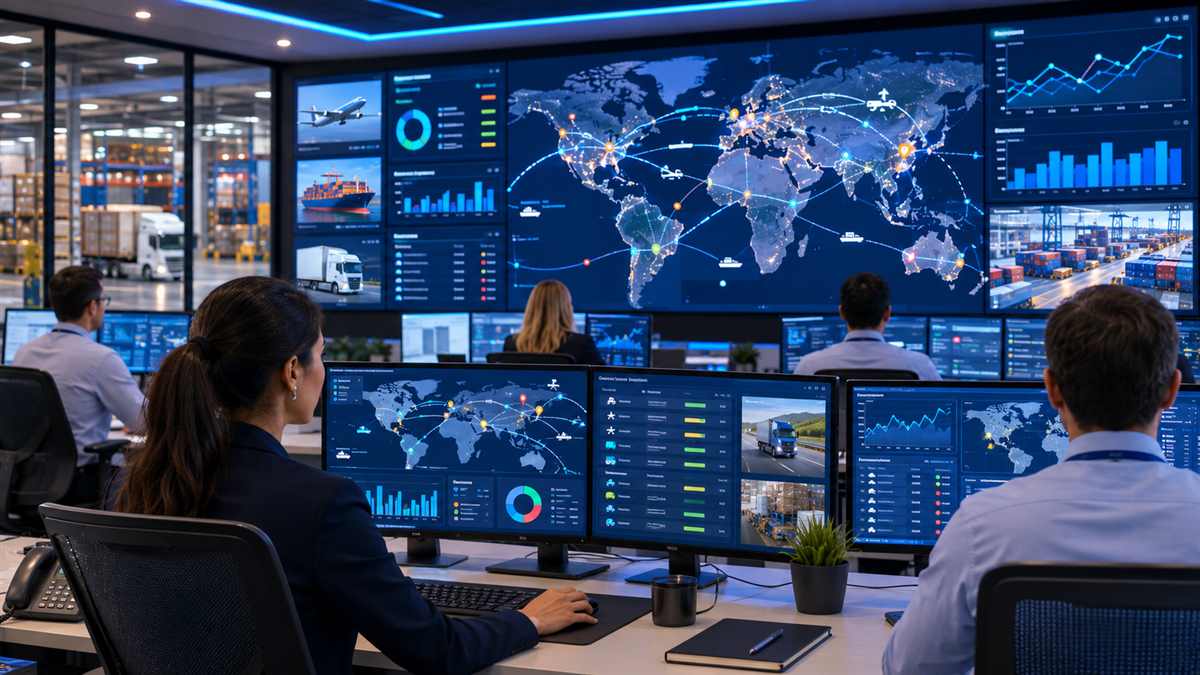
On top of these, AI and data analytics are reshaping logistics — improving demand forecasting, optimizing routes, and flagging risks before they become disruptions. Technologies like IoT sensors, RFID, and real-time tracking give managers a live view of goods in motion. The payoff isn’t the technology itself; it’s the visibility and speed it creates.
Supply Chain Visibility: Why It Matters
Supply chain visibility is the ability to track goods, orders, and inventory across every stage of the logistics flow in real time. It’s what lets a business answer simple but critical questions: where is my inventory, where is this shipment, and will this order arrive on time? Without visibility, teams react to problems after they’ve already hit the customer. With it, they see a delayed shipment or a dropping stock level early enough to act. Visibility has become the foundation of good logistics, and it’s usually the first thing to fix when an operation feels chaotic. How that plays out day to day is the subject of our guide to supply chain visibility, which walks through the same mechanics at the operational level.
Inventory Management in Supply Chain Logistics
Inventory management is the balancing act at the center of logistics: hold enough stock to fill orders, but not so much that cash and space are tied up in goods that aren’t selling. Get it wrong in one direction and you get stockouts and lost sales; wrong in the other and you carry the cost of overstock and storage. The key is accurate, real-time data on what you have and where it is, so reorder decisions are based on facts rather than guesses. This is why real-time tracking has become standard — it prevents overselling, sharpens forecasting, and keeps inventory lean. Our guide explains the importance of real-time inventory visibility across the whole operation.
What Metrics Should You Track in Supply Chain Logistics?
Track six: on-time delivery rate, order accuracy, inventory accuracy, order cycle time, cost per order, and perfect order rate. Perfect order rate is the one that summarises the other five:
- On-time delivery rate: the share of orders delivered by the promised date.
- Order accuracy rate: the percentage of orders shipped correct and complete.
- Inventory accuracy: how closely system counts match physical stock.
- Order cycle time: how long from order placed to delivered.
- Cost per order or per shipment: total logistics cost divided by volume.
- Perfect order rate: orders delivered on time, complete, and undamaged — the single best measure of overall performance.
Common Challenges in Supply Chain Logistics
The six recurring problems are demand swings and peak seasons, rising transportation costs, limited visibility, inventory imbalance, disruptions, and labor or capacity limits. Even well-run operations hit them:
- Demand swings and peak seasons: volume spikes overwhelm capacity that was sized for normal weeks. Preparing your supply chain for peak-season demand ahead of time is what separates brands that scale smoothly from those that break under it.
- Rising transportation costs: fuel, labor, and carrier rate increases hit the largest logistics line item first.
- Limited visibility: gaps in tracking mean problems surface too late to fix.
- Inventory imbalance: stock in the wrong place leads to stockouts in one region and overstock in another.
- Disruptions: weather, supplier delays, and port congestion break the flow and force costly workarounds.
- Labor and capacity limits: finding and keeping warehouse and driver labor is a constant pressure.
Most of these are managed the same way: better data, more flexible capacity, and planning that assumes disruption rather than hoping to avoid it.
How to Optimize Supply Chain Logistics
Optimizing supply chain logistics means cutting cost and delay without hurting service. The moves that matter most:
- Position inventory closer to demand: distributing stock across regions shortens shipping zones, cutting both cost and delivery time.
- Get real-time visibility: you can’t optimize what you can’t see, so start with accurate, live data.
- Use the right technology: a WMS, TMS, and integrations remove manual work and the errors that come with it.
- Rate-shop and consolidate shipments: compare carriers and combine orders to lower freight cost.
- Improve forecasting: better demand planning means fewer stockouts and less overstock.
- Track KPIs and act on them: measure the perfect order rate and cost per order, then fix the biggest gap first.
Optimization is continuous, not a one-time project. The operations teams that win treat logistics as something they refine every quarter, not something they set and forget.
Which Industries Rely Most on Supply Chain Logistics?
The industries that lean hardest are retail and ecommerce, food and beverage, pharmaceuticals, automotive and manufacturing, and healthcare. Every business selling physical products relies on logistics, but those five live or die on it. Retail and ecommerce depend on fast, accurate fulfillment to meet customer expectations. Food and beverage and pharmaceuticals require cold-chain and compliance-driven logistics where a single lapse spoils product or breaks regulations. Automotive and manufacturing run on precise, just-in-time inbound logistics to keep production lines moving. Healthcare depends on reliable delivery of critical supplies. The more time-sensitive or regulated the product, the more the business lives or dies on its logistics.
The logistics requirements differ sharply by industry, which is why many businesses look for a partner with experience in their specific category. A cold-chain operation needs temperature-controlled storage and monitoring; an apparel brand needs fast fashion turnaround and easy returns; an electronics seller needs secure handling and accurate serial tracking. Matching logistics capability to the demands of your product is often the difference between a supply chain that supports growth and one that constantly firefights.
In-House vs. Outsourcing to a 3PL
Running logistics in-house buys control; outsourcing to a 3PL buys speed to scale and turns fixed cost into variable cost.
| Factor | In-House | Outsourced to a 3PL |
|---|---|---|
| Cost shape | Fixed lease, equipment, headcount | Variable, per order and per pallet |
| Speed to scale | Months — lease and hire first | Weeks — capacity already exists |
| Peak season | You carry the overstaffing risk | Absorbed within the agreement |
| Control | Total, hands-on | Through software, SLAs and reporting |
| Carrier rates | Your own volume only | Pooled across the provider’s book |
| Best fit | Specialised handling, steady low volume | Growth, seasonality, multi-channel |
At some point, most growing brands face a choice: keep running logistics in-house or hand it to a specialist. Running it yourself gives full control but demands capital, staff, technology, and expertise. Outsourcing to a third-party logistics provider gives you warehousing, fulfillment, discounted shipping, and technology as a pay-per-use service, so you can scale without building infrastructure. The tipping point usually comes when logistics starts consuming the time and money that should go into the product. For most mid-market brands, a strong 3PL provider delivers better logistics than they could build alone — often through a full-service fulfillment center.
This is the decision Cura Resource Group is usually brought in on, and the honest answer is not always outsource. Below roughly 500 orders a month with simple handling, in-house often still wins. The case for a 3PL sharpens when peaks are spiky, SKUs multiply, or fulfillment starts eating the hours that should go into product and demand.
Supply Chain Logistics Solutions: What to Look For
When businesses look for supply chain logistics solutions — whether software, a consulting partner, or a full-service provider — a few capabilities separate the strong options from the rest:
- End-to-end visibility: real-time tracking of inventory, orders, and shipments in one place.
- Integration: systems that connect to your ecommerce platform, ERP, and carriers without manual data entry.
- Scalable capacity: the ability to handle volume spikes and growth without a rebuild.
- Distributed fulfillment: warehouse locations that put inventory close to your customers.
- Reporting and analytics: the data to measure performance and find the next improvement.
The right solution depends on where your logistics hurts most. A brand drowning in manual work needs better software; one paying too much to ship needs distributed warehousing and carrier discounts; one that can’t see its inventory needs visibility first. Match the solution to the actual bottleneck rather than buying capability you won’t use.
Judge any provider, Cura Resource Group included, on the same three things: whether their system integrates natively with the platform you already sell on, whether they publish accuracy and on-time numbers rather than describing them, and whether the contract flexes when your volume does. Anything that fails those three tends to fail expensively later.
Sustainability and the Future of Supply Chain Logistics
Supply chain logistics is being reshaped by two forces: technology and sustainability. Automation, AI-driven forecasting, and real-time tracking are making logistics faster and more predictable, while pressure to cut emissions is pushing brands toward right-sized packaging, consolidated shipments, and greener transportation. Customer expectations for fast, low-cost delivery keep rising, which means more distributed inventory and smarter routing. The direction is clear: logistics is becoming more data-driven, more visible, and more accountable for its environmental footprint. Brands that treat logistics as a strategic advantage — not just a cost — are the ones best positioned for what’s next.
Final Word
Supply chain logistics is the engine that moves product through the supply chain — transportation, warehousing, inventory, fulfillment, and returns, all tied together by data. Get it right and it becomes a competitive advantage: lower costs, faster delivery, and fewer surprises. Get it wrong and it caps growth. Whether you run logistics in-house or outsource it, the fundamentals are the same — real-time visibility, accurate inventory, the right technology, and constant optimization. Start by measuring where you stand today, fix the biggest gap, and build from there.
Ready to make supply chain logistics a competitive advantage?
Frequently Asked Questions
What does supply chain logistics cover?
Supply chain logistics is the part of the supply chain that moves and stores goods — transportation, warehousing, inventory, order fulfillment, and returns — from raw materials to the customer. It covers the physical flow of products and the data that keeps that flow visible and coordinated.
What is the difference between logistics and supply chain management?
Logistics is a part of supply chain management. Logistics focuses on the movement and storage of goods — transportation, warehousing, and fulfillment — while supply chain management is the broader function coordinating sourcing, production, logistics, and delivery. Supply chain management is strategy; logistics is execution.
What are the main components of supply chain logistics?
The seven components are transportation, warehousing and storage, inventory management, order fulfillment, materials handling and packaging, information and visibility, and reverse logistics for returns. Each hands off to the next, and a delay in any one of them shows up as a late delivery at the end of the chain.
What is the difference between inbound and outbound logistics?
Inbound logistics brings goods into your operation — sourcing, receiving, and storing materials from suppliers. Outbound logistics moves finished orders out to customers — picking, packing, shipping, and delivery. Inbound focuses on supply and cost; outbound focuses on speed and customer experience.
How does technology improve supply chain logistics?
Technology like a WMS, TMS, and order management system removes manual work and gives real-time visibility into inventory, orders, and shipments. AI and data analytics improve forecasting and routing, while IoT and RFID track goods in motion. The result is faster, more accurate, and more predictable logistics.
What are the biggest challenges in supply chain logistics?
Demand volatility that makes forecasting unreliable, fragmented visibility across systems that do not talk to each other, rising transportation and labor costs, supplier concentration risk, and returns volume. Most of these are data problems before they are logistics problems, which is why visibility work usually pays back first.
Should a business outsource supply chain logistics?
Outsourcing to a 3PL makes sense when logistics starts taking time and money away from the product, when shipping costs climb, or when you need to scale without building warehouses and hiring staff. A 3PL provides warehousing, fulfillment, discounted shipping, and technology on a pay-per-use basis.
What is an example of supply chain logistics?
A retailer importing goods by ocean freight, clearing customs, trucking containers to a warehouse, storing and picking stock, then shipping parcels to shoppers and processing their returns is supply chain logistics end to end. Every handoff in that sequence is a place cost and time either accumulate or get removed.
What is 1PL, 2PL, 3PL, 4PL, and 5PL logistics?
1PL moves its own freight with its own assets. 2PL is an asset-based carrier hired for a single leg. 3PL outsources warehousing, fulfillment and transport management. 4PL manages the whole chain and the providers in it, usually without owning assets. 5PL aggregates volume across clients; definitions of 4PL and 5PL vary by source.